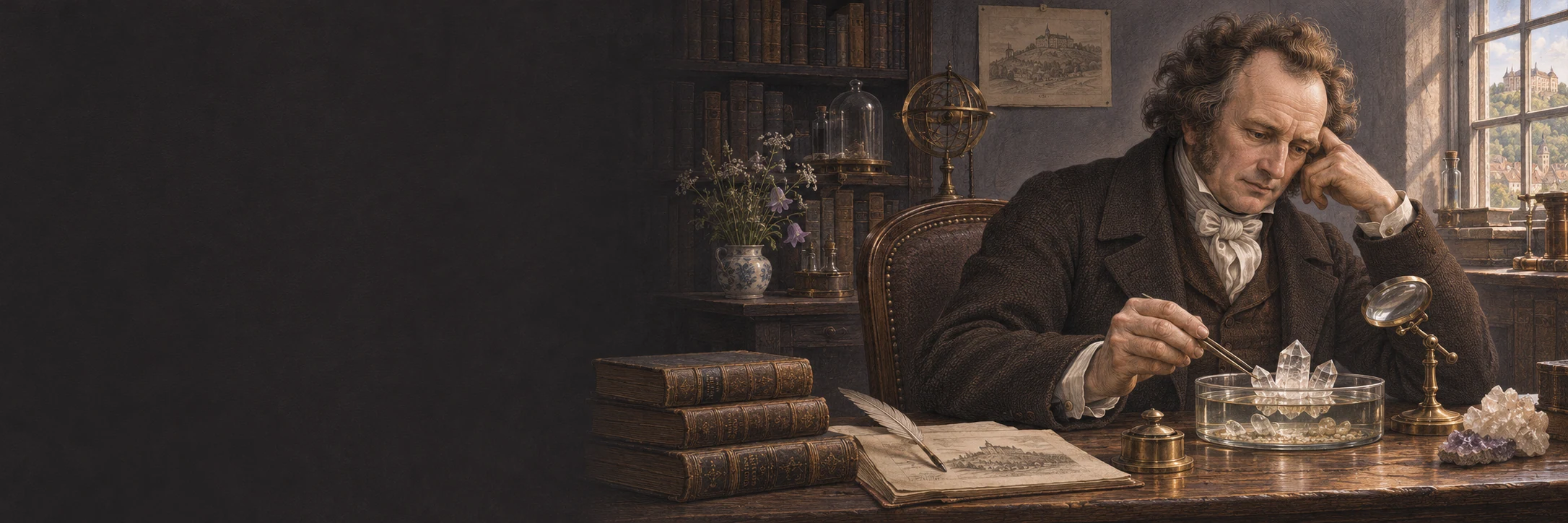
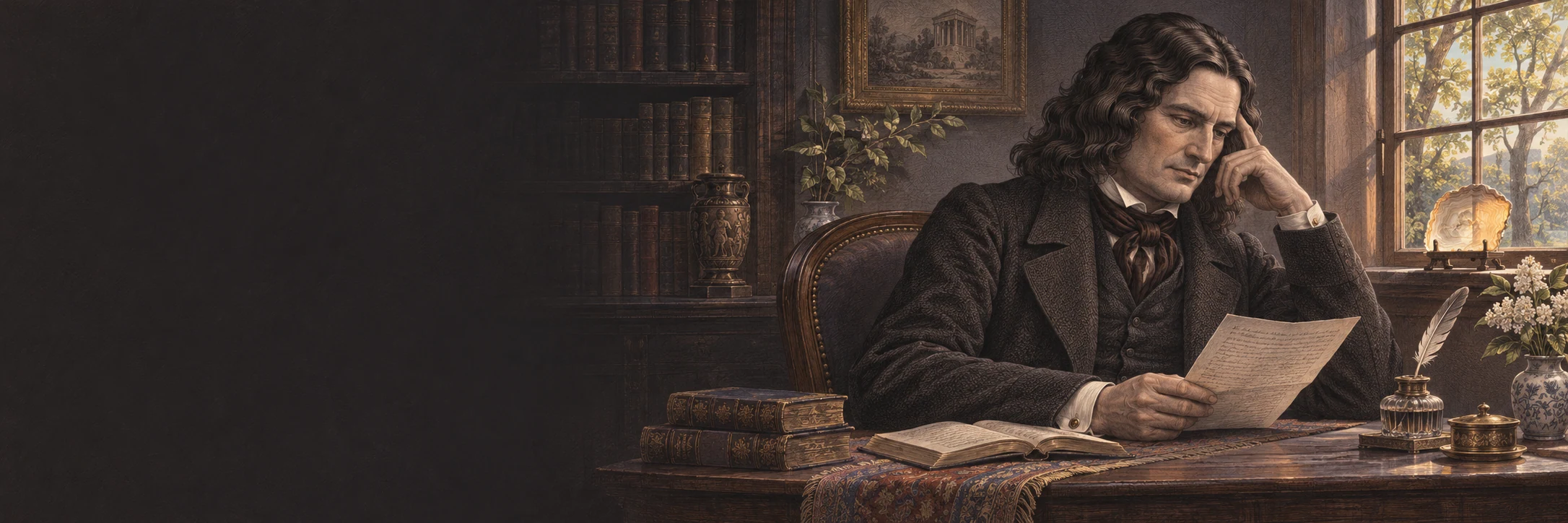
Robert Boyle (1627–1691), an Anglo-Irish natural philosopher, took a diamond to bed with him. He reports this in his book on colours in much the same matter-of-fact voice he uses to describe his experiments with a candle. He was interested in a particular stone that could give off a little light after he had taken it into the dark. How much did he have to do to persuade it to shine?
From candlelight to the warmth of skin
Boyle tried several conditions in succession. He compared the effects of a candle and the heat of a fire with the light the diamond gave after rubbing. In another trial he used a thick piece of iron which had been thoroughly heated but was still below the point at which it would glow visibly. Working in a very dark place, he held the diamond above the iron for some time. At last he could make out a glimmer, fainter than in his earlier trials. For his eleventh observation he turned to the simplest source of warmth at his disposal.
Eleventhly, I also brought it to some kind of Glimmering Light, by taking it into Bed with me, and holding it a good while upon a warm part of my Naked Body.
– Robert Boyle, Experiments and Considerations Touching Colours, 1670, p. 416.[1]
What a glimmer can tell us
The indefinite expression “some kind” records how little light Boyle could actually see. Details which might otherwise seem incidental matter here. How long was the stone in contact with his skin? How dark were its surroundings? Only with such particulars can a reader begin to compare the observations. Boyle immediately goes on to ask a different question. Would the diamond attract a slender hair when a candle flame had made it luminous? On this occasion the hair stayed still. We can follow one faint gleam as it gives rise to two distinct inquiries. One concerns the conditions under which a stone shines, the other a different power the experimenter might have expected the same stone to display.

 Phone: +43 677 628 66 628 |



 Search

 Epistolae · o. J. · p. 353







 Cart