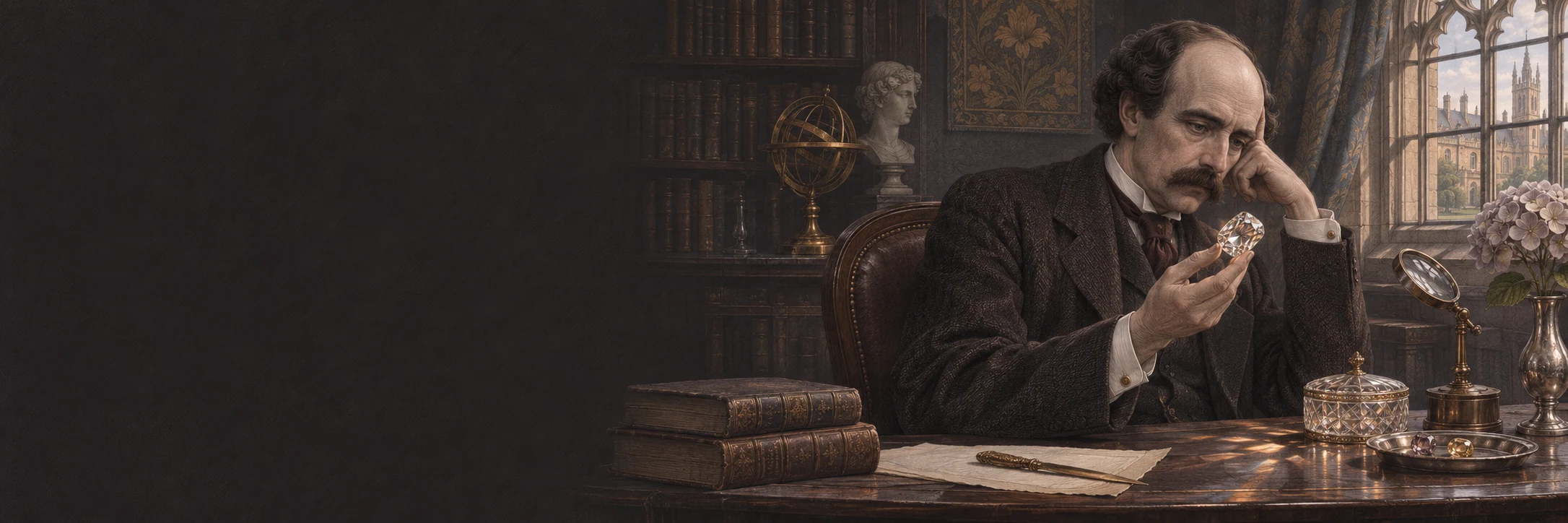
Walter Pater (1839–1894), an English writer and art critic, closes his book about the Renaissance with a question that arises even when there is no painting before us. If the number of heartbeats available to a person can be counted, how should that person use the senses? Among the things Pater asks us to imagine is the face of a friend. We know it so well that we might easily think there is nothing new to discover there today.
An edge to the light
To burn always with this hard, gemlike flame, to maintain this ecstasy, is success in life.
– Walter Pater, The Renaissance, o. J., p. 197.[1]
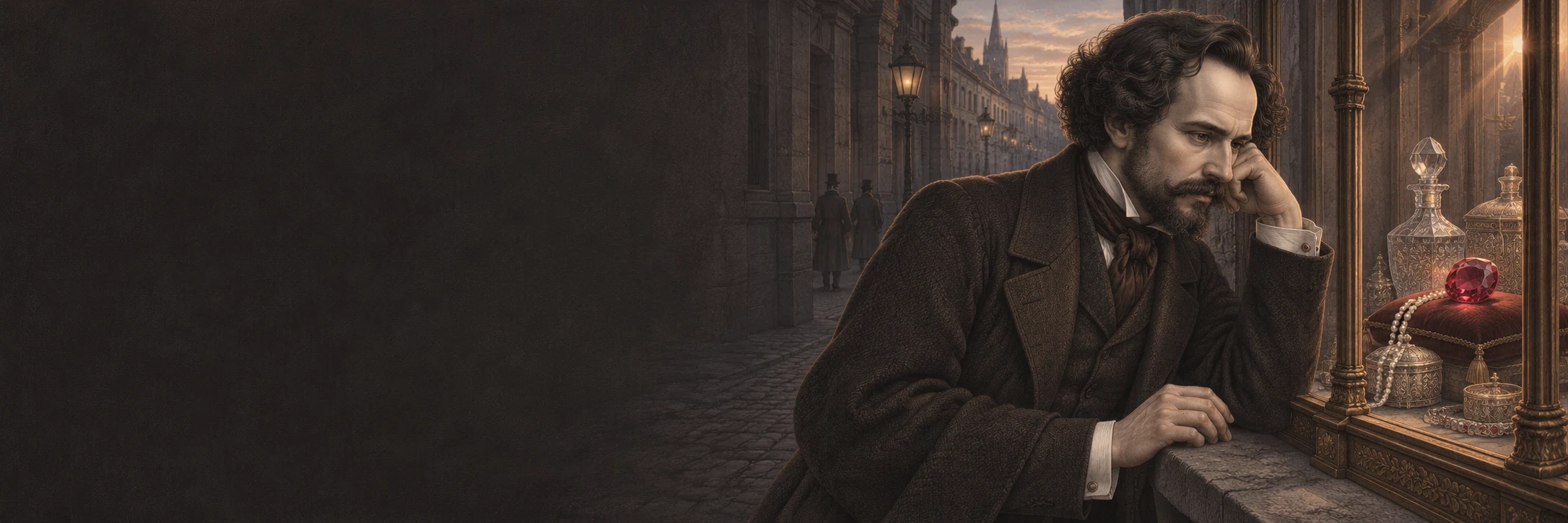
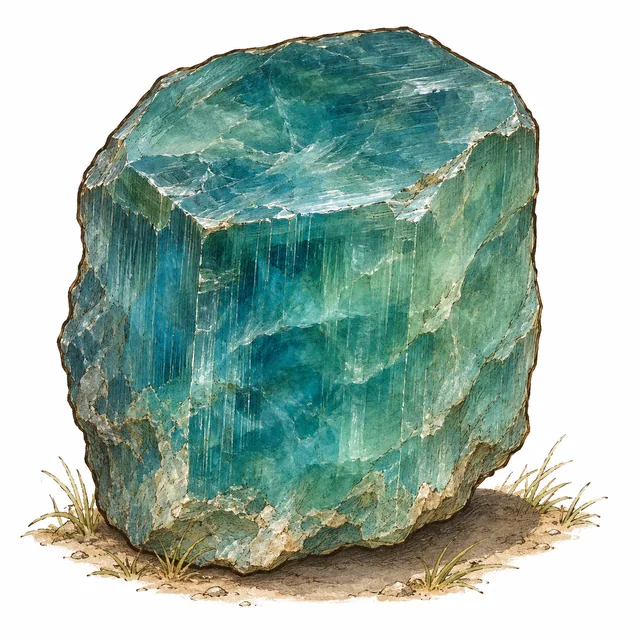
A flame flickers and consumes itself. A gemstone holds its shape. Pater brings the two together in a single image. The stone helps us understand the sharpness he wants a moment to possess. A shade of red, the scent of a particular thing or another person’s gesture deserves to be perceived precisely enough to distinguish it from all its near relations. The flame sets a limit to the time in which we can do that. Even the liveliest impression cannot be kept intact simply by setting it aside for later.
What habit overlooks
A little further on Pater remarks on the roughness of an eye that sees two people or two situations as alike. His examples come as readily from ordinary acquaintance as from art. The friend’s face stands beside a work of the artist’s hands and a discovery that lifts a previously narrow horizon. At a second meeting the friend has had another experience or has something different on their mind. Looking with yesterday’s eyes may mean missing the very expression that made the meeting worthwhile.

 Phone: +43 677 628 66 628 |


 Search

 Meister Eckharts mystische Schriften. In unsere Sprache übertragen von Gustav Landauer · p. 126















 Cart