
 Phone: +43 677 628 66 628 |



Marbod von Rennes
Great power is given to herbs, the greatest to gems.
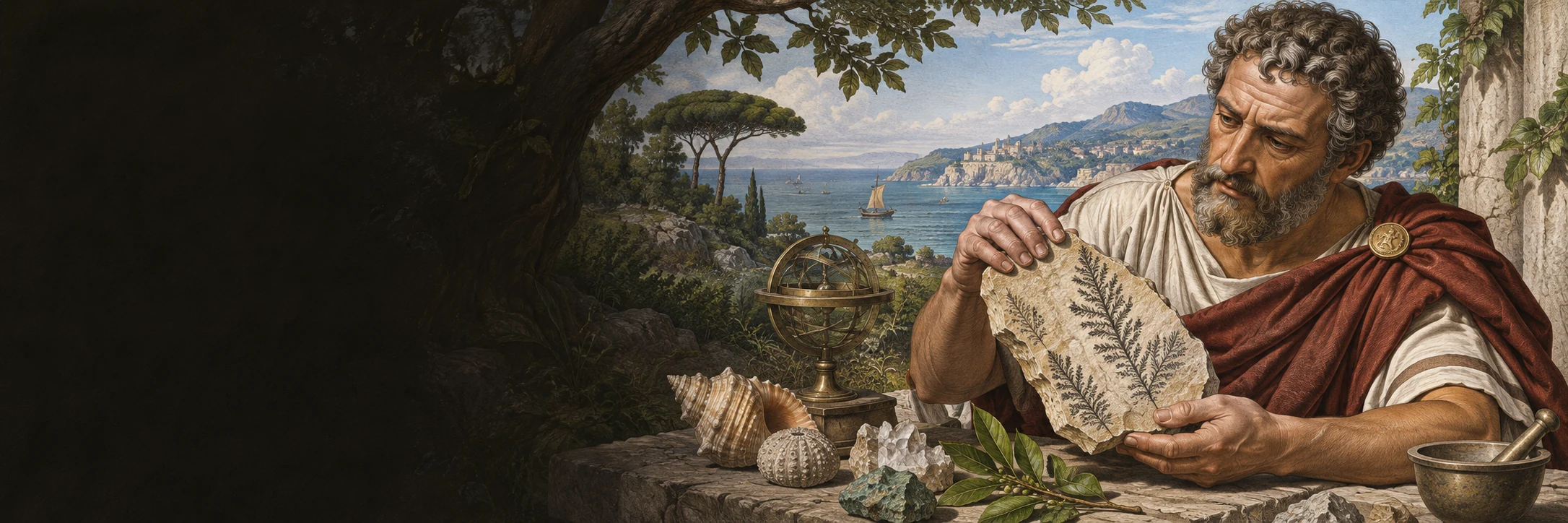
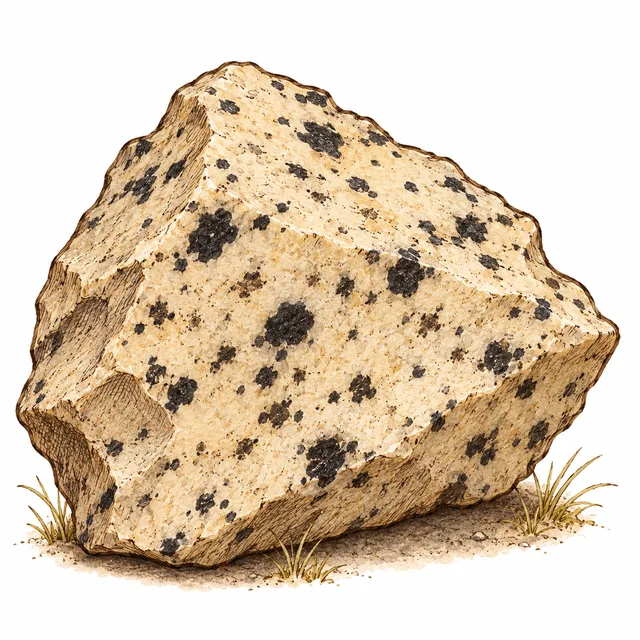
Pliny the Elder (23/24–79 CE), a Roman writer and naval commander, brings together some remarkable observations about rocks in the thirty-sixth book of his Natural History. One of them takes him to the neighbourhood of Munda in Spain. Break open a stone from that district, he reports, and a pattern may appear on the fresh surface. Its outline can be described by naming a single familiar part of a plant.
In the vicinity of Munda in Spain, the place where the Dictator Caesar defeated Pompeius, there are stones found, which, when broken asunder, bear the impression of palm leaves.
– Pliny the Elder, Natural History, 1857, p. 358.[1]
It is easy to miss the small interval between breaking and recognizing. From the outside the observer could have had little idea of what was about to come to light. Only when one piece becomes two does a previously inaccessible surface face the light. The eye then needs a comparison. The axis of a palm leaf and the narrow divisions to either side give it a pattern recognizable even from a few strokes.
Pliny gives a place and an appearance. He does not say whether an actual leaf once lay between the layers or explain how this particular rock formed. His choice of a word for an image is therefore important. It tells a reader what to look for while leaving the origin open. The same passage mentions bones and ivory reportedly found in the ground. Set side by side, the observations show how much the naming of a find depends on a trained eye. A familiar leaf becomes an instrument of description even when the author can put neither the specimen nor the leaf into a reader’s hand.
 Search
Great power is given to herbs, the greatest to gems.

By the power of the stone the phoenix burns until it turns to ashes. The ash in turn gives birth to life for him.
Wolfram von Eschenbach (c. 1170–c. 1220)
 Wolfram’s von Eschenbach Parzival und Titurel. Zweiter Theil · p. 146
Our translation from Middle High German

The stone is yellowish, dark in darkness and clear in the light, for it feels the air, as people say.
Konrad von Megenberg (1309–1374)
Buch der Natur · 1861 · p. 449
Our translation from Middle High German
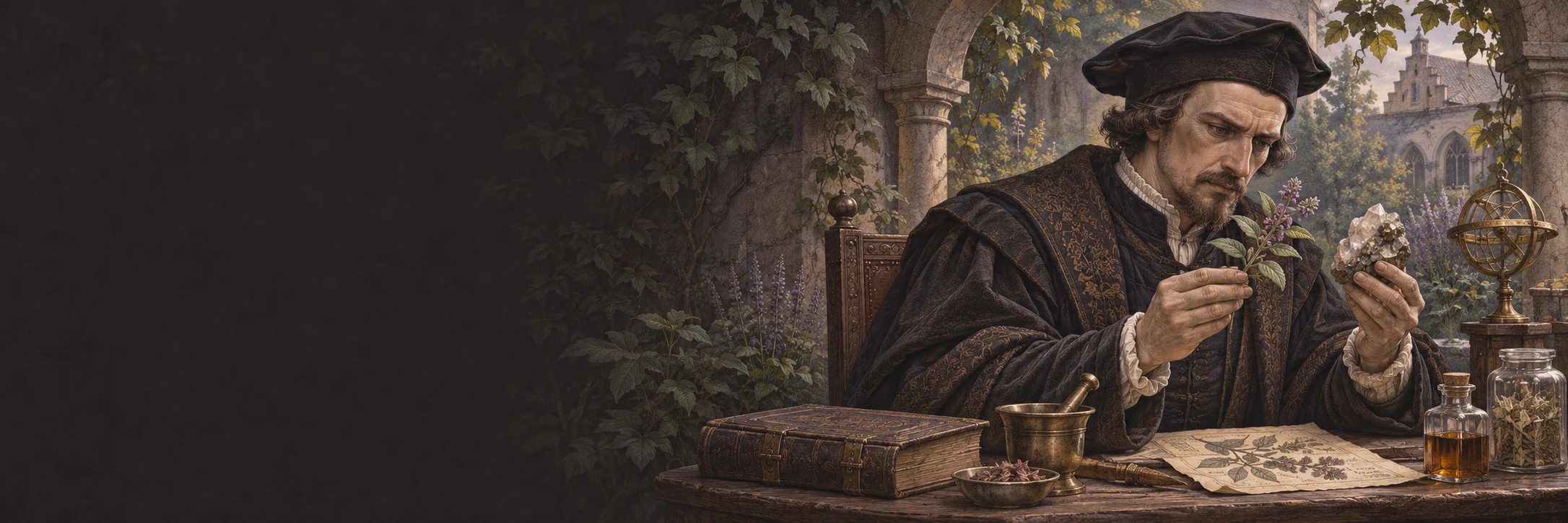
There is therefore a wonderfull vertue, and operation in every Hearb, and Stone, but greater in a Star
Heinrich Cornelius Agrippa von Nettesheim (1486–1535)
De occulta philosophia · 1651 · p. 31
Excerpt. English translation by J. F., 1651

Love too should be crystalline, transparent and clear all the way through.
Gottfried von Straßburg (active c. 1200)
Auszwal ausz Gottfrids von Straszburg Tristan · p. 216
Our translation from Middle High German

As a ray shines in glass, in amber or in crystal, with no interval between its coming and its being wholly there, so the threefold work of its Lord shone all at once into existence, with no difference in its beginning.

Should not a stone and an animal correspond to every plant?
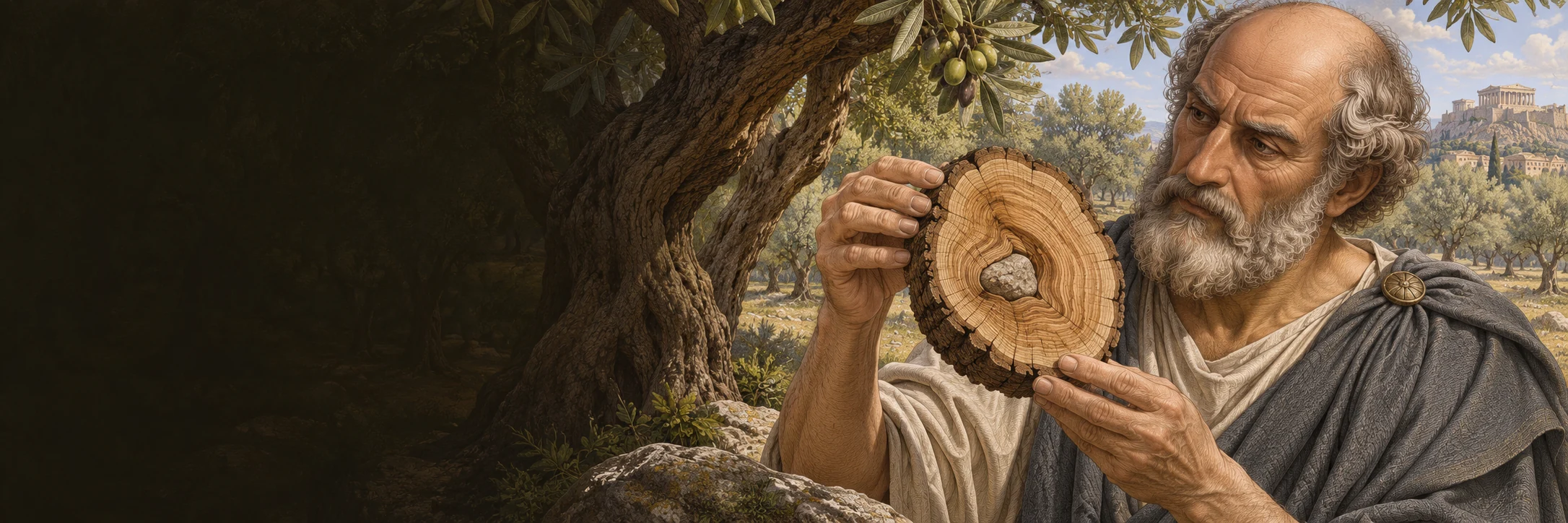
[…] if one makes a hole in a tree and puts a stone into it or some other such thing, it becomes buried, being completely enveloped by the wood which grows all round it […]
Theophrastus of Eresus (c. 371–c. 287 BCE)
Enquiry into Plants · 1916 · p. 431
Wording of the English edition.

It is established, however, that it is the sap of the pine rather than the poplar, for when lit it gives off the scent of resinous pinewood. It forms like gum on the islands of the northern ocean and, like crystal, grows dense through cold or time.
Isidore of Seville (c. 560–636)
Etymologiae · 1911 · XVI, 8, 6–7
Our translation from the Latin edition.
In the vicinity of Munda in Spain, the place where the Dictator Caesar defeated Pompeius, there are stones found, which, when broken asunder, bear the impression of palm leaves.

Lean them the cliffs thereon, Grapple the roots thereon,
Johann Wolfgang von Goethe (1749–1832)
Faust, Part Two · 1908 · p. 333
Wording of the English edition.

[…] creatures full of pity, covering with strange and tender honor the scarred disgrace of ruin, — laying quiet finger on the trembling stones, to teach them rest.
 Cart