
 Phone: +43 677 628 66 628 |


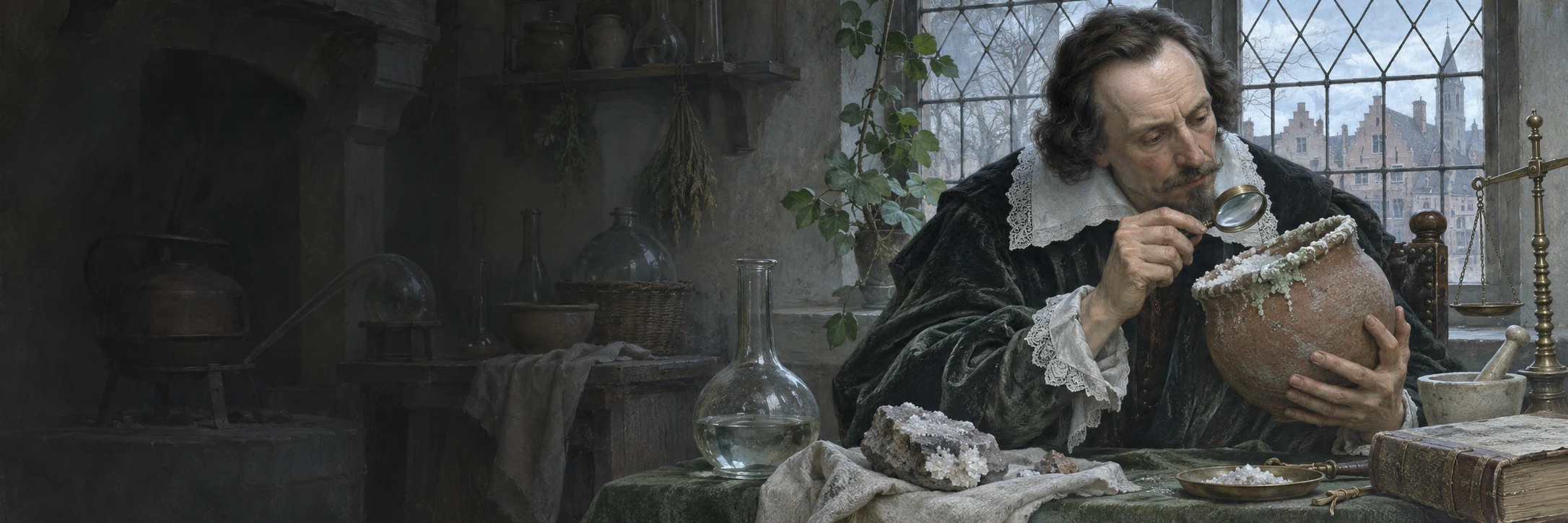
Jan Baptista van Helmont
[…] then the becoming of stone is a birth, and every birth springs from some seed. […]
Jan Baptista van Helmont (1579–1644)
Our translation from the Dutch edition.
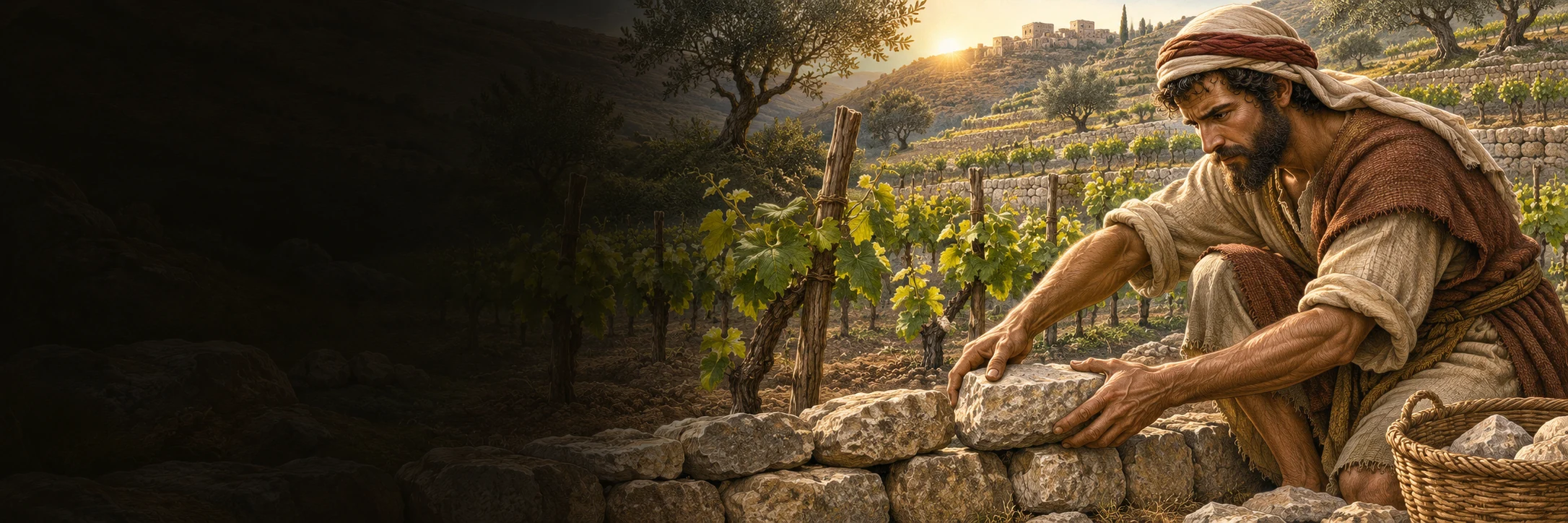
The Book of Isaiah belongs to the Hebrew Bible. Its fifth chapter preserves a song about a vineyard. The owner begins by choosing a good plot and putting work into it. Before a single grape appears, the listener has already watched someone dig, plant and build. In Martin Luther’s German rendering, heaps of stones help protect the vines. Other translations describe the grower removing stones. Here the English follows the German reading so the image under discussion is the same.
He fenced it in, protected it with heaps of stones and planted choice vines in it. He also built a tower in it and dug a winepress there, and waited for it to bear grapes, but it bore wild grapes.
– Book of Isaiah, The Bible, 1922, p. 666.[1]
Two choices come together. The owner attends to the boundary of the vineyard and selects what will grow inside it. A tower and a winepress follow. Someone who digs a press already has fruit in mind. Yet time lies between laying out the vineyard and its first harvest. Some of the labour remains visible in the landscape while nobody can yet say what the vines will bear.
At first the song invites its audience to judge like neighbours who know the land. What more could the grower have done? In verse seven the vineyard finally receives a name. It stands for the house of Israel. The expected harvest acquires a more precise meaning as well. The owner had looked for justice and righteousness. The verse about the stones shows a concrete act of care. The rest of the song explains why so much attention was given to the preparations. What the owner gave the vineyard sets the measure of his disappointment in its fruit.
 Search
[…] then the becoming of stone is a birth, and every birth springs from some seed. […]
Jan Baptista van Helmont (1579–1644)
Our translation from the Dutch edition.
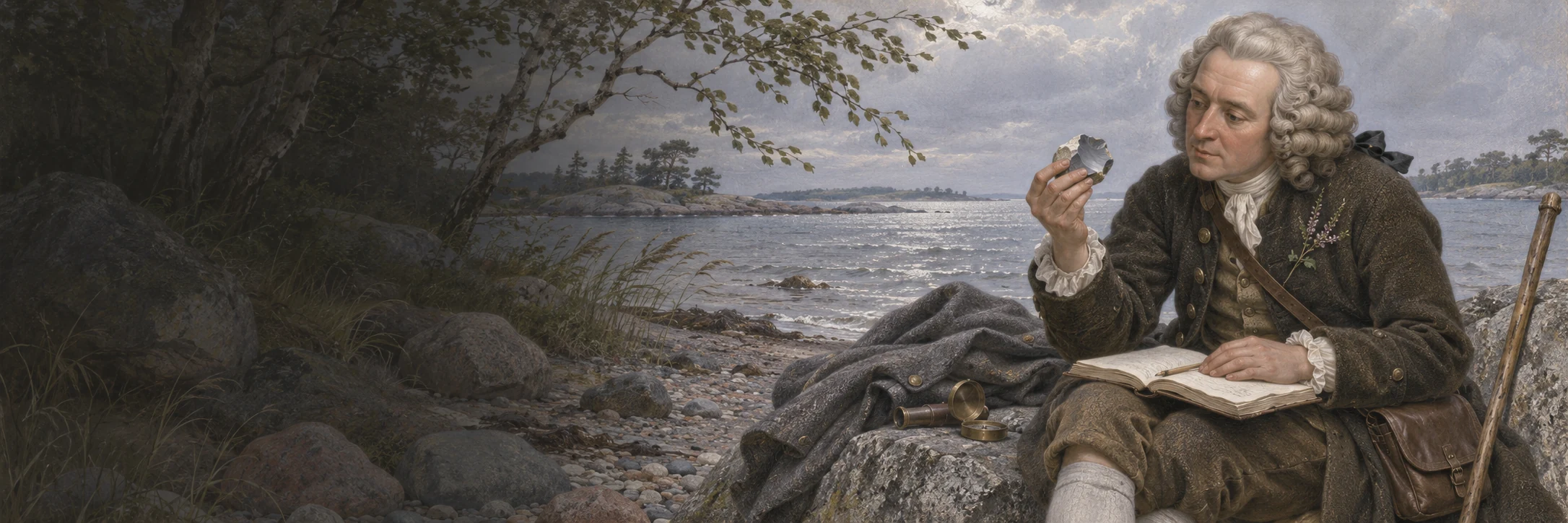
O flint! Flint! Who begot you?
Johann Friedrich Henckel (1678–1744), in Linnaeus
 Systema naturae · 1735 · Regnum lapideum, Obs. 6
Our translation from the Latin edition. Saying of Johann Friedrich Henckel, recorded by Linnaeus.
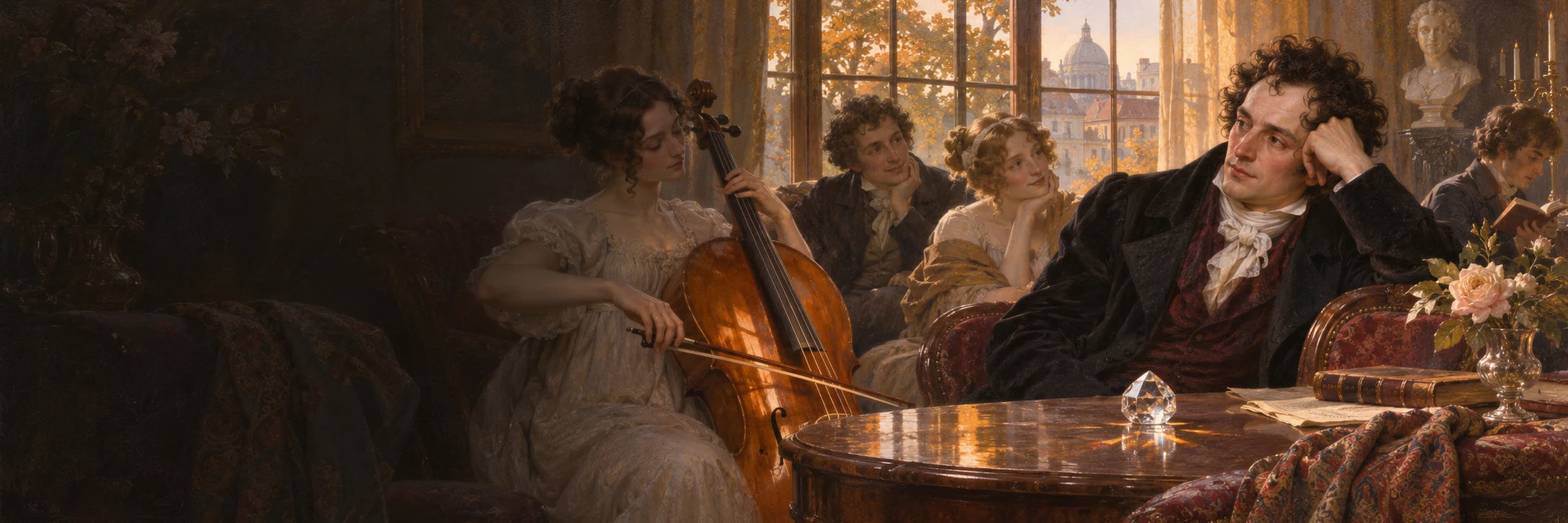
As sound made a shape for itself in crystal, so the sound of strings strikes into your soul.
Clemens Brentano (1778–1842)
To Schinkel · 1817 · An Schinkel
Our translation from the German edition.
He spoke to them of the true, the beautiful, and the good, and told them that these three held together in the world, and that under the pressure they had to endure, they became hardened into a precious stone, clearer than the […]
Hans Christian Andersen (1805–1875)
The Stone of the Wise Men · 1878 · p. 381
Wording of the English edition.
When rarefied it becomes fire, when condensed it becomes wind, then cloud, and when condensed still further, water, then earth, then stones. Everything else comes from these.
Anaximenes (6th c. BCE)
Testimony in Simplicius · 1906 · p. 18
Our translation from the Greek edition.
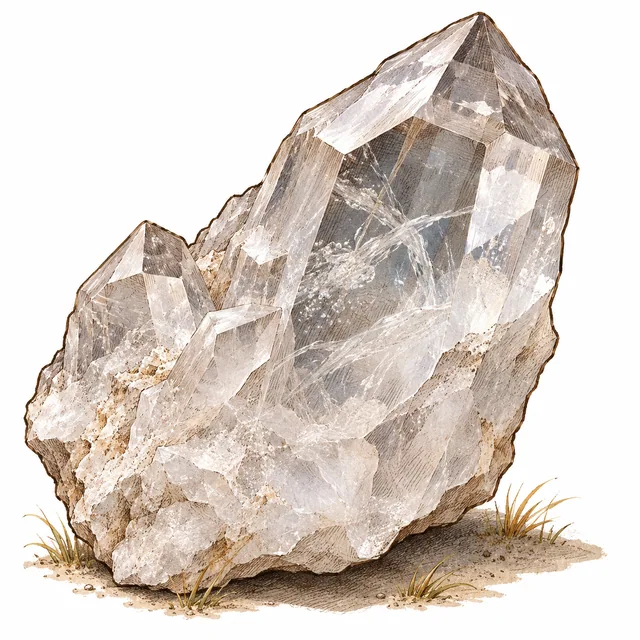
For crystal appears to have as its matter not water alone, but a wateriness tending towards the nature of air. For this reason it is exceedingly transparent and tends towards brightness.
The crystal is a figure of the air. Whatever appears in the air, movable or immovable, the same appears also in the speculum or crystal as a wave.
Pseudo-Paracelsus (early modern period)
The Coelum Philosophorum · 1894 · p. 14
Wording of the English edition.
In our Stone, as composed by me and by those who have long preceded me, are contained all elements, all mineral and metallic forms, and all the qualities and properties of the whole world.
[…] a spirituall Being, which is environed with the four Elements, which also changeth the four Elements into one […]
Jacob Boehme (1575–1624)
The Epistles of Jacob Behmen · 1649 · Letter XXIII, 17
Wording of the English edition.
Fire placed in the Stone is Nature’s Prince, Sol’s Son and Vicar, moving and digesting matter and perfecting all things therein, if it shall attain its liberty […]
Jean d’Espagnet (c. 1564–17th c.)
The Hermetic Arcanum · 1893 · p. 33
Wording of the English edition.
This chaos hath in it the four elements, which of themselves are contrary natures; but the wisdom of God hath so placed them that their very order reconciles them.
So also the Stone is resolved into water, and water into a vaporous clowd, and the clowd into aire from whence it came […]

 Cart