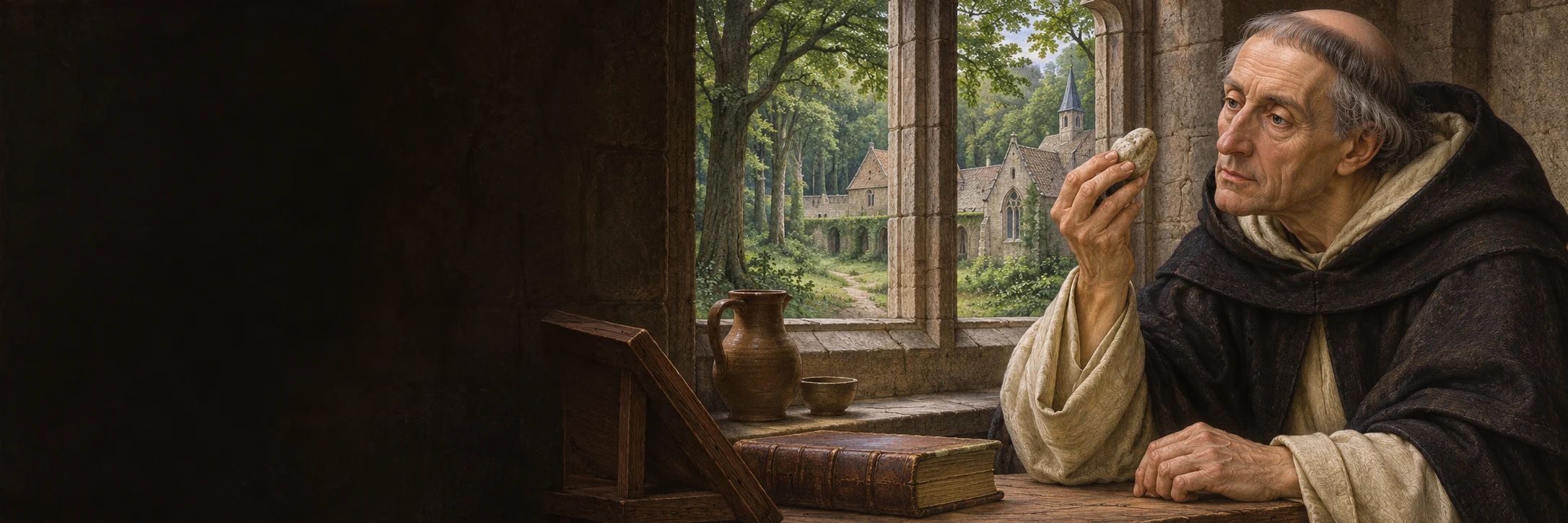
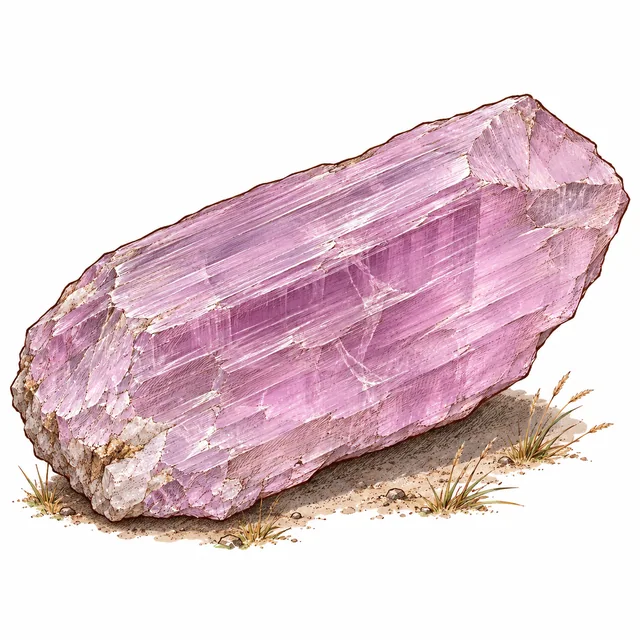
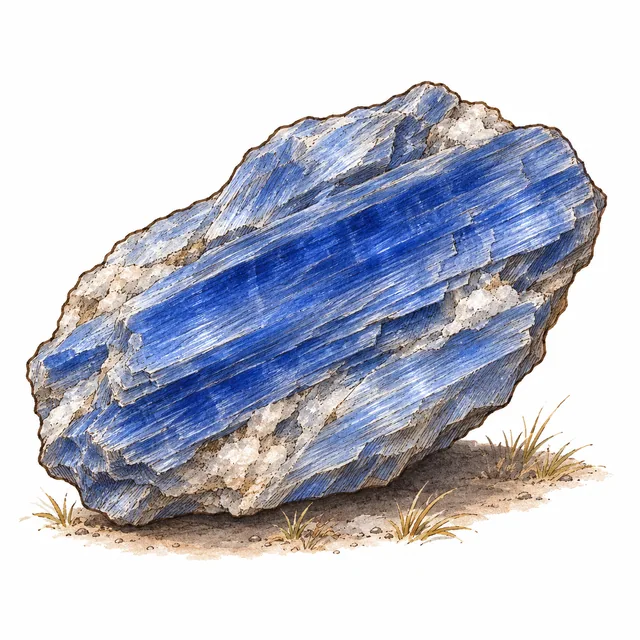
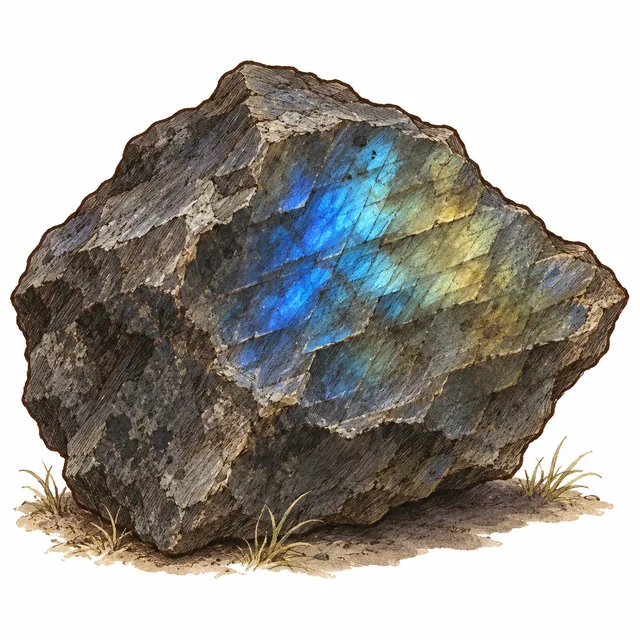
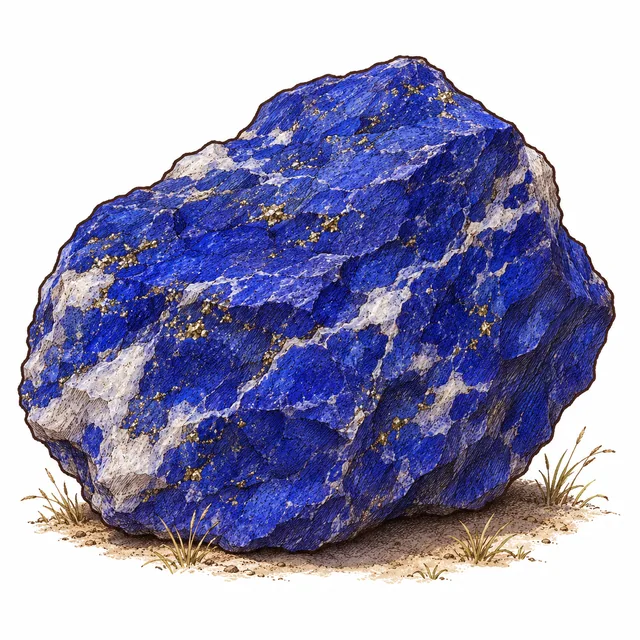
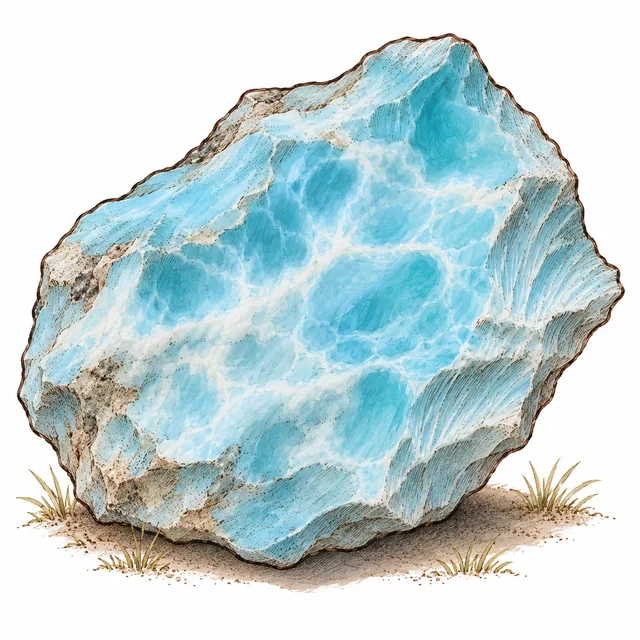
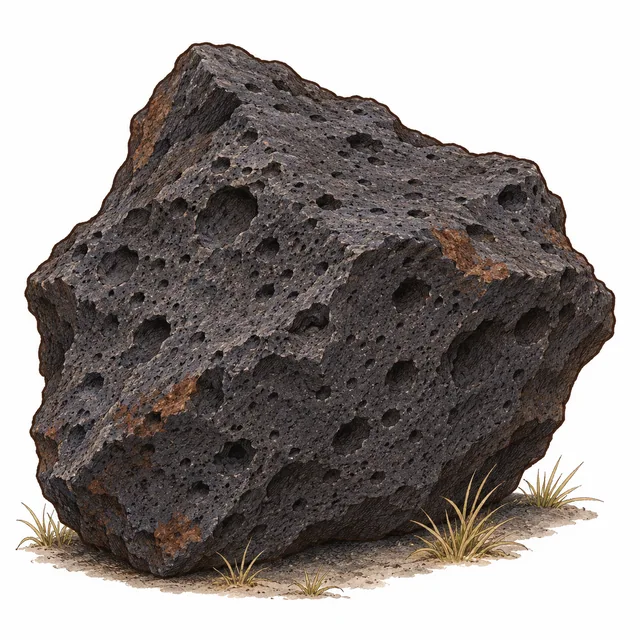
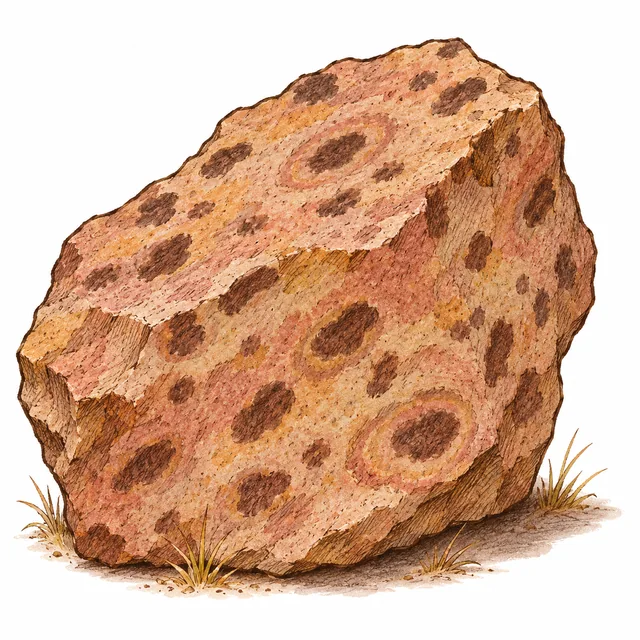
Jan van Ruusbroec (1293–1381), a mystic from the Duchy of Brabant, interprets an object from the Book of Revelation in The Sparkling Stone. A stone inscribed with a new name is promised there to its recipient. Ruusbroec lingers over the properties that such a small piece of matter can acquire in the imagination. It has a colour, a shape and a weight. Each property gives his reader a different question to consider.
How far does the flame reach?
This stone is also like to a fiery flame, for the fiery love of the Eternal Word has filled the whole world with love and wills that all loving spirits be burned up to nothingness in love.
– Jan van Ruusbroec, The Sparkling Stone, 1916, p. 188.[1]
The fiery colour brings a surprising change of scale into the selected sentence. The stone is small enough to fit in the palm of a hand. The love of the Eternal Word recalled by its fire fills the entire world. Ruusbroec brings the two together in a single sentence. Someone concentrating on the tiny object is asked to imagine the same love at work in many places. Its fire even extends to those who themselves are capable of love.
What a foot might miss
A little later Ruusbroec describes the stone as so small that someone could tread on it without noticing. The thought gives its brilliance a counterweight. An object can be precious and still lie unregarded on the ground. In his reading that is also true of the nearness of the divine Word. Its significance scarcely depends on whether a passer-by recognizes it at once. The movement between a bright flame and a stone barely felt underfoot gives the passage much of its force. At one moment the eye ranges over a world. At the next it must look directly down.

 Phone: +43 677 628 66 628 |


 Search
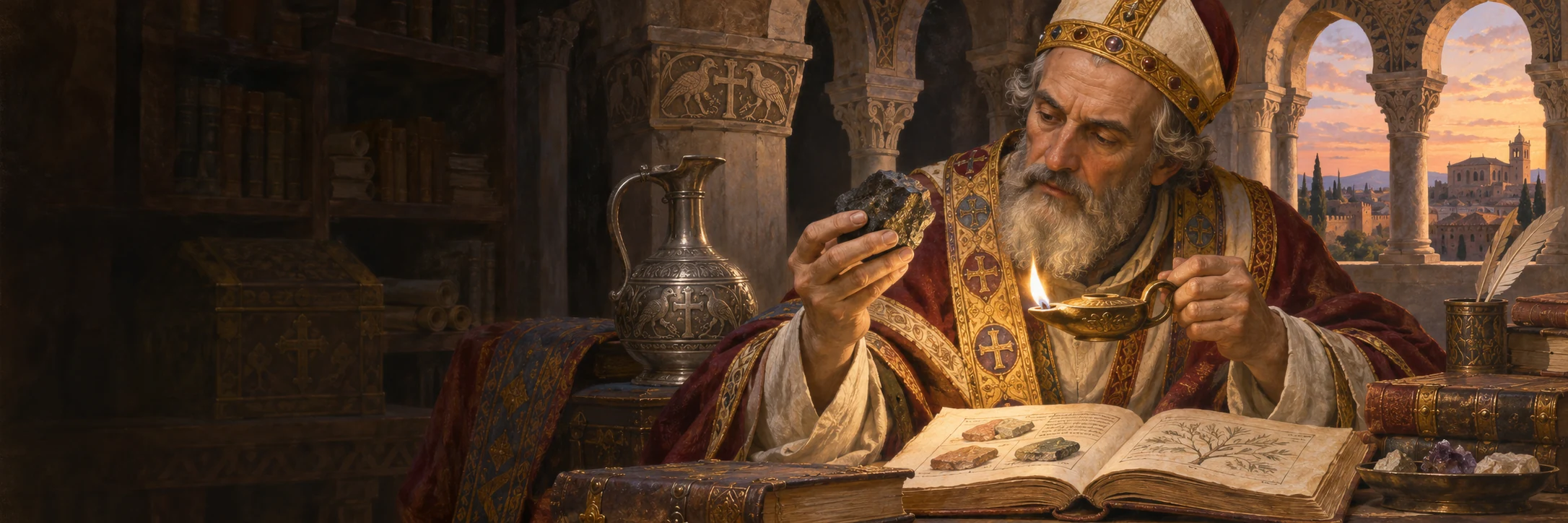
 Etymologiae · 1911 · XVI, 14, 2


 Cart