
 Phone: +43 677 628 66 628 |


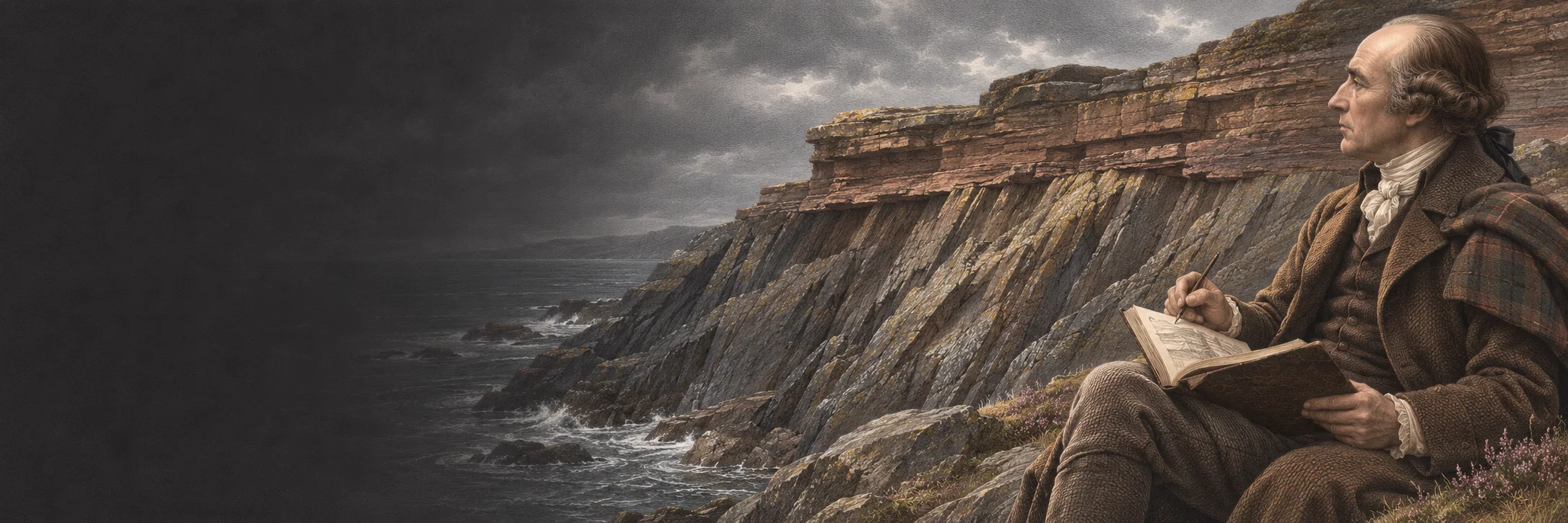
James Hutton
The result, therefore, of our present enquiry is, that we find no vestige of a beginning,—no prospect of an end.
James Hutton (1726–1797)
 Transactions of the Royal Society of Edinburgh, I · p. 304
Original wording
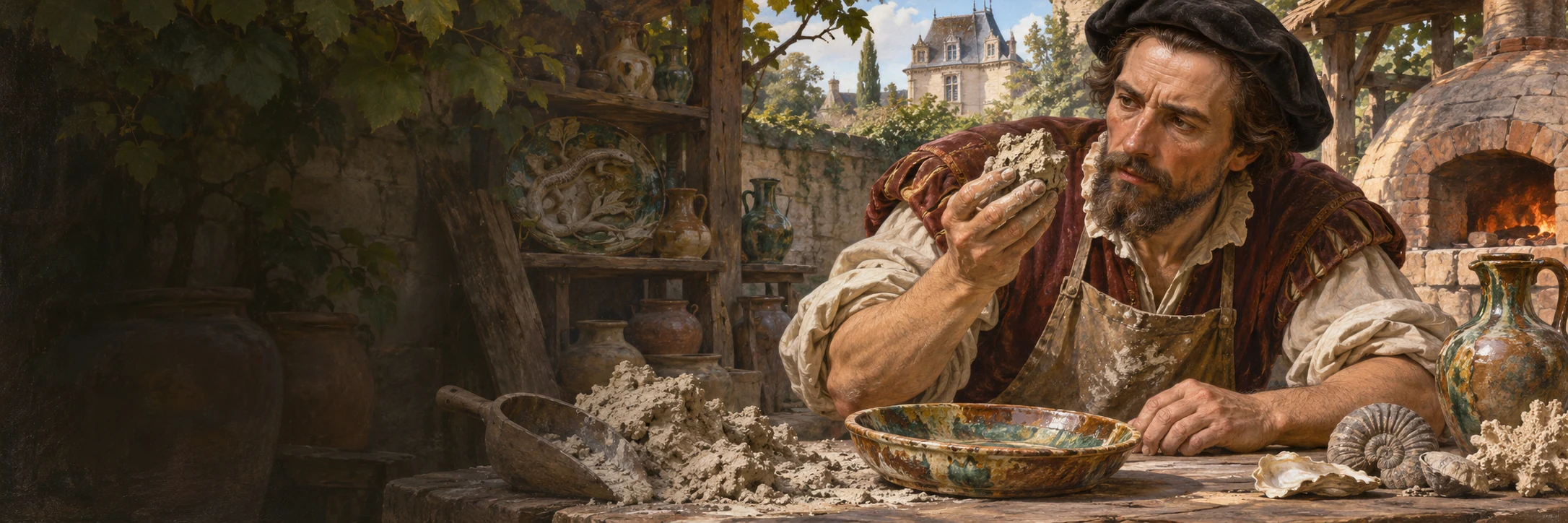
Bernard Palissy (c. 1510–1590), a French potter and naturalist, knew earth in quite different conditions. When wet it could be kneaded, when dry it could crack, and in a kiln it could become a firm vessel. His Discours admirables investigate another sort of change. How can bodies arise within the earth whose shape and solidity were previously nowhere to be seen? For him this question concerns minerals as well as things that grow.
[…] that this seed or generative water does not serve only for the generation of stones, but is also the substance and source of all things that are animate and grow […].
– Bernard Palissy, Discours admirables, 1844, p. 336.[1]
Palissy speaks of a water that carries something generative. The words seed and water convey different parts of his proposal. Water can move through soil and bring something to a place the eye cannot follow. A seed, on the other hand, offers a way of explaining why a particular shape should eventually appear there. Palissy brings the two ideas together. Something we later examine in its finished form has an earlier history in a material that is mobile and easy to overlook.
The discussion takes place in an enquiry into earths and marl. Someone who picks up only the finished specimen misses the question of what its surroundings might have contributed while it formed. Here the potter’s experience makes itself felt. A small change in moisture makes a considerable difference to what a lump of earth will allow a hand to do. Palissy takes that familiar encounter with material as the starting point for a much wider question about the origin of solid and growing bodies.
 Search
The result, therefore, of our present enquiry is, that we find no vestige of a beginning,—no prospect of an end.
James Hutton (1726–1797)
Transactions of the Royal Society of Edinburgh, I · p. 304
Original wording

The stone is a triangle in essence and a quadrangle in quality.

Anaxagoras: Through fiery vapour this rock came to hand. Thales: In moisture living things arose.

[…] the heart of the water congeals into firmness. […]
Hildegard of Bingen (1098–1179)
Physica, Patrologia Latina 197 · col. 1263
Our translation; unclear opening construed from context · excerpt


Look! I died as stone and sprang up as a plant
Dschalāl ad-Dīn Rūmī (1207–1273)
Excerpt. Our translation of Friedrich Rückert’s German rendering



Beryl is a bright, white, transparent stone. It is given a shape both concave and convex, and the person looking through it reaches what was previously invisible.
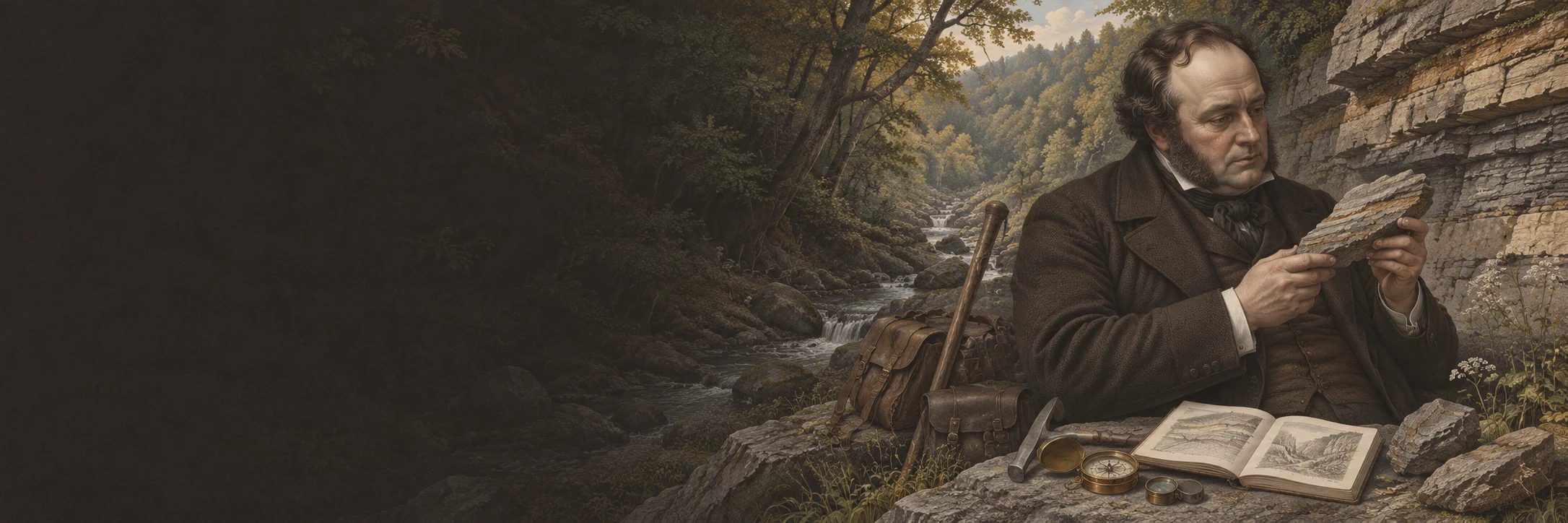
The earth itself keeps the sources for its history within it, as in a vault of records, sources perhaps set down in millions of documents. What matters is that we learn to read them and do not falsify them through zeal and the urge to be right.

People are crystals for our inner life. They are nature made transparent.

As for precious stones such as carbuncle, ruby, emerald, delphin, onyx and the like, the finest of stones, they have their origin where the flash of light arose in love.
 Cart