
 Phone: +43 677 628 66 628 |



John Muir
The whole wilderness seems to be alive and familiar, full of humanity. The very stones seem talkative, sympathetic, brotherly.
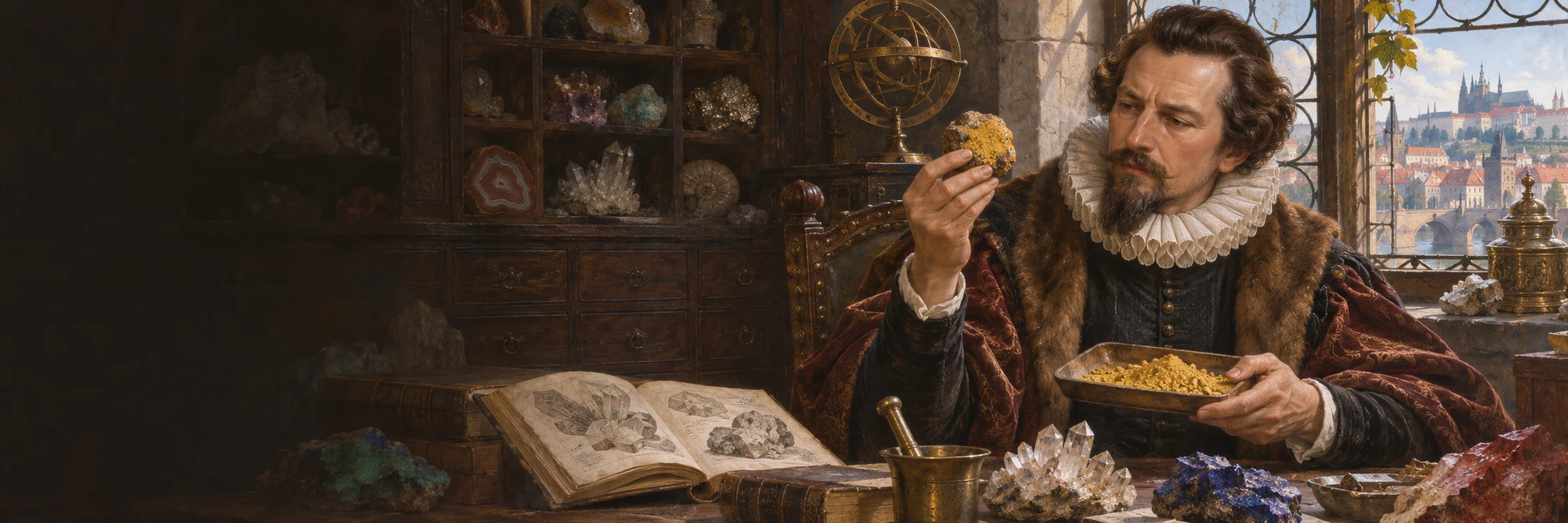
Anselmus Boetius de Boodt (1550–1632), a Flemish physician and scholar of gems born in Bruges, studied precious stones at the court of Rudolf II in Prague. Anyone identifying a gem for a collection looks for features that distinguish it from its neighbours. In his history of gems and stones, de Boodt asks a question that comes earlier in time. What must already be at work in a particular piece of earth for a stone to form there?
Any earth, then, that turns to stone or becomes a gem contains within it a stone-forming spirit as the immediate efficient cause of stones and gems. It is the nearer efficient cause of movement and of change towards form.
– Anselmus Boetius de Boodt, Gemmarum et lapidum historia, 1636, p. 24–25.[1]
The expression for a stone-forming spirit names a cause. This cause belongs to the earth undergoing the change and operates close to the event itself. The distinction allows de Boodt to separate quite different kinds of answer. One could ask about the order of the whole universe, or point to the surroundings of a mineral deposit. His appeal to a spirit is meant to account for matter acquiring a definite shape at this spot. An unseen activity takes its name from its visible result.
For someone examining a finished specimen, the order of enquiry runs the other way. The result is already in hand, and the question is how it came about. Hardness under the fingers offers a starting point but leaves the process to be explained. De Boodt takes that interval seriously. Giving a mineral its name in a cabinet and tracing the history of its formation are, in his account, two different kinds of knowledge.
 Search
The whole wilderness seems to be alive and familiar, full of humanity. The very stones seem talkative, sympathetic, brotherly.
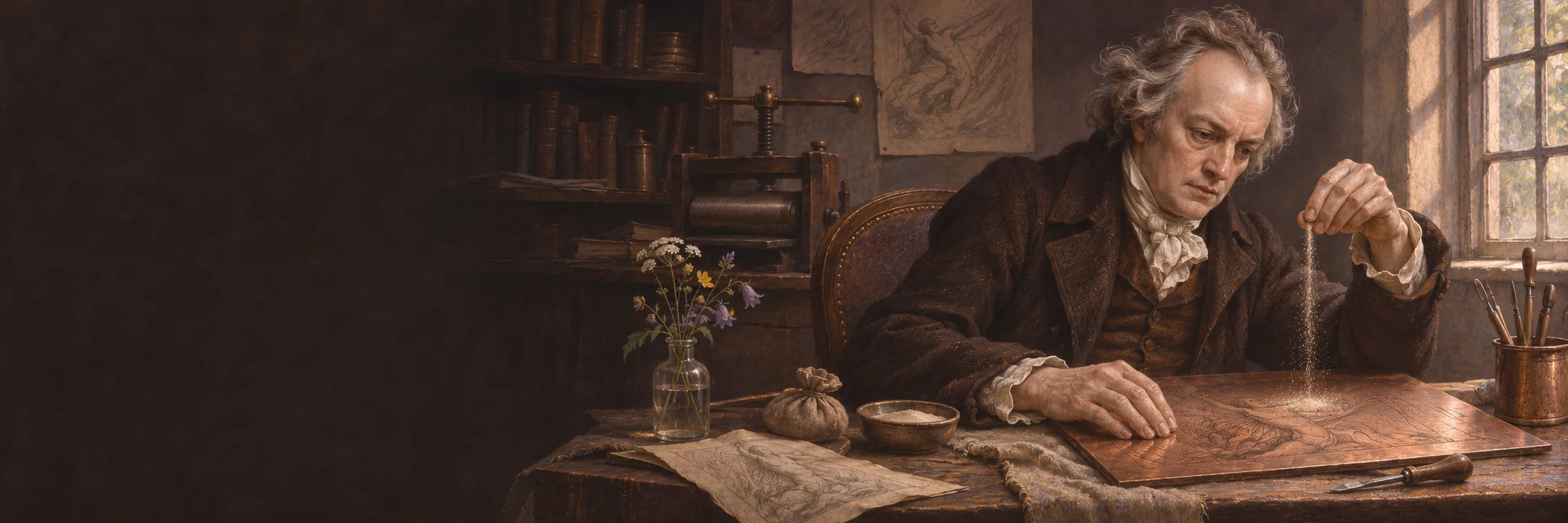
To see a World in a Grain of Sand, And a Heaven in a Wild Flower, Hold Infinity in the palm of your hand, And Eternity in an hour.
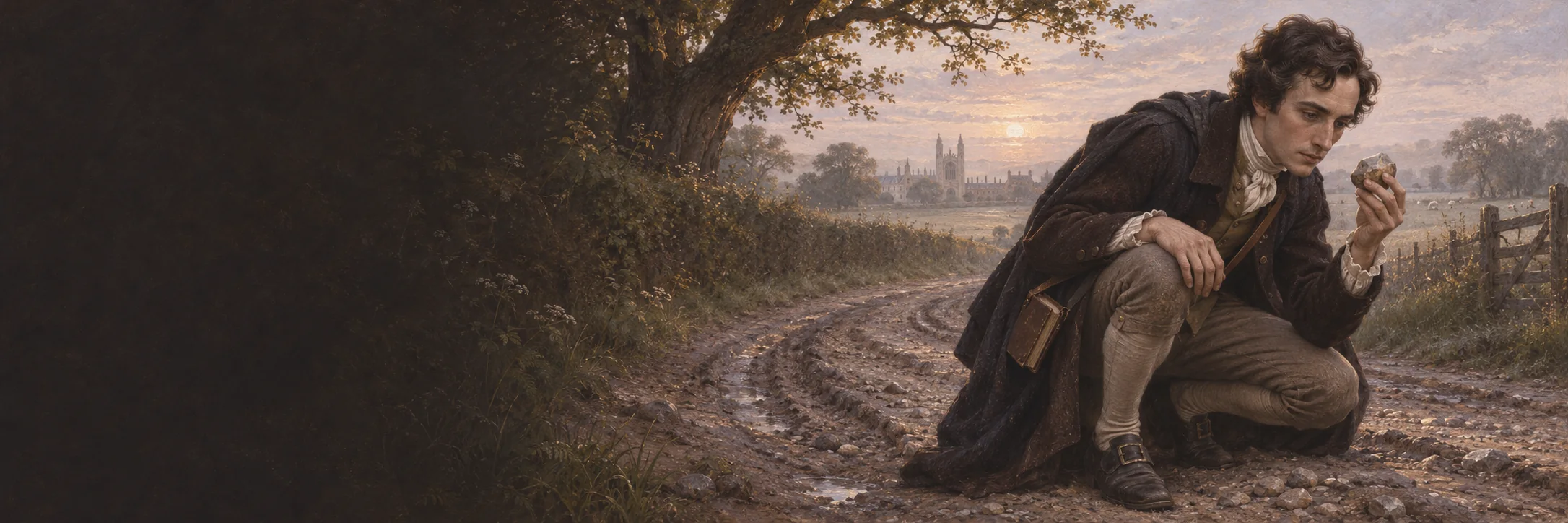
To every natural form, rock, fruit or flower, Even the loose stones that cover the high-way, I gave a moral life: I saw them feel […]
William Wordsworth (1770–1850)
 The Prelude, or Growth of a Poet’s Mind · p. 60–61
Original wording · Excerpt
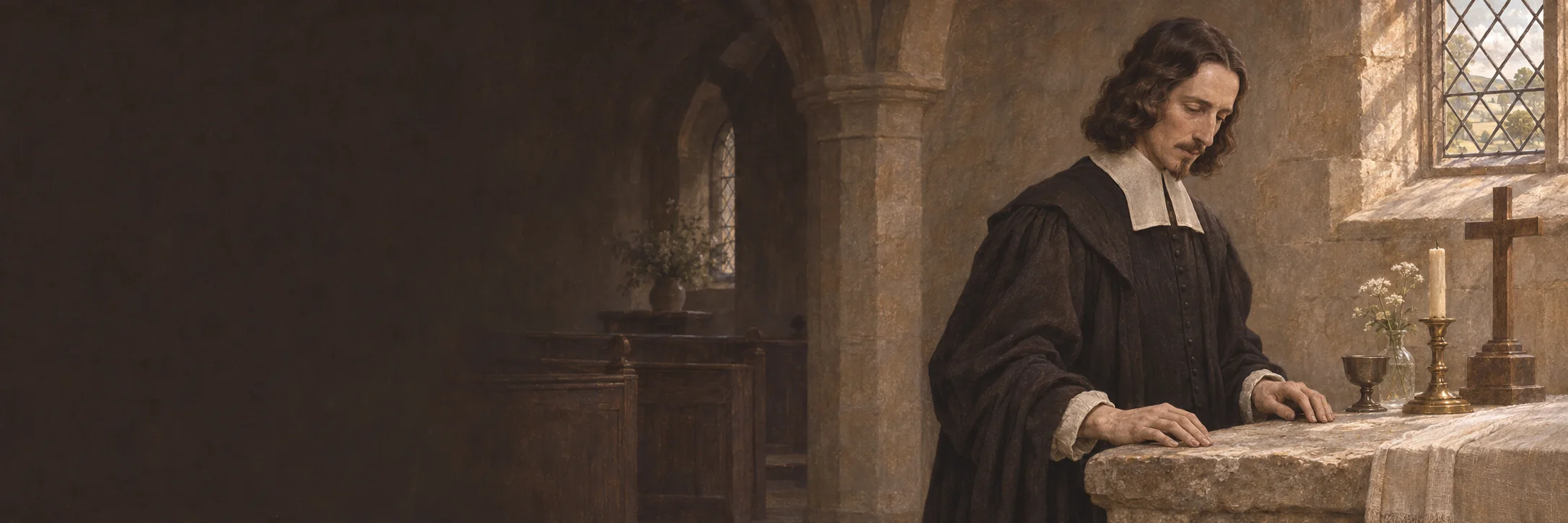
A Heart alone Is such a stone, As nothing but Thy pow’r doth cut.
George Herbert (1593–1633)
The Temple. Sacred Poems and Private Ejaculations · p. 18
Original wording
For I so truly thee bemoane, That I shall weep though I be Stone: Until my Tears, still dropping, wear My breast, themselves engraving there.
The arch-chemic sun, so far from us remote, Produces, with terrestrial humour mixed, Here in the dark so many precious things Of colour glorious and effect so rare?
The dust and stones of the street were as precious as gold: the gates were at first the end of the world.
A loadstone is a wonderful thing in very many experiments, and like a living creature.

Thus raw matter strives, blindly as it were, for regular shape and unknowingly assumes purely geometrical forms, which surely belong to the realm of concepts and are something of the spirit within the material.
Friedrich Wilhelm Joseph Schelling (1775–1854)
Philosophische Schriften I: Ueber das Verhältniss der bildenden Künste zu der Natur · p. 352
Our translation
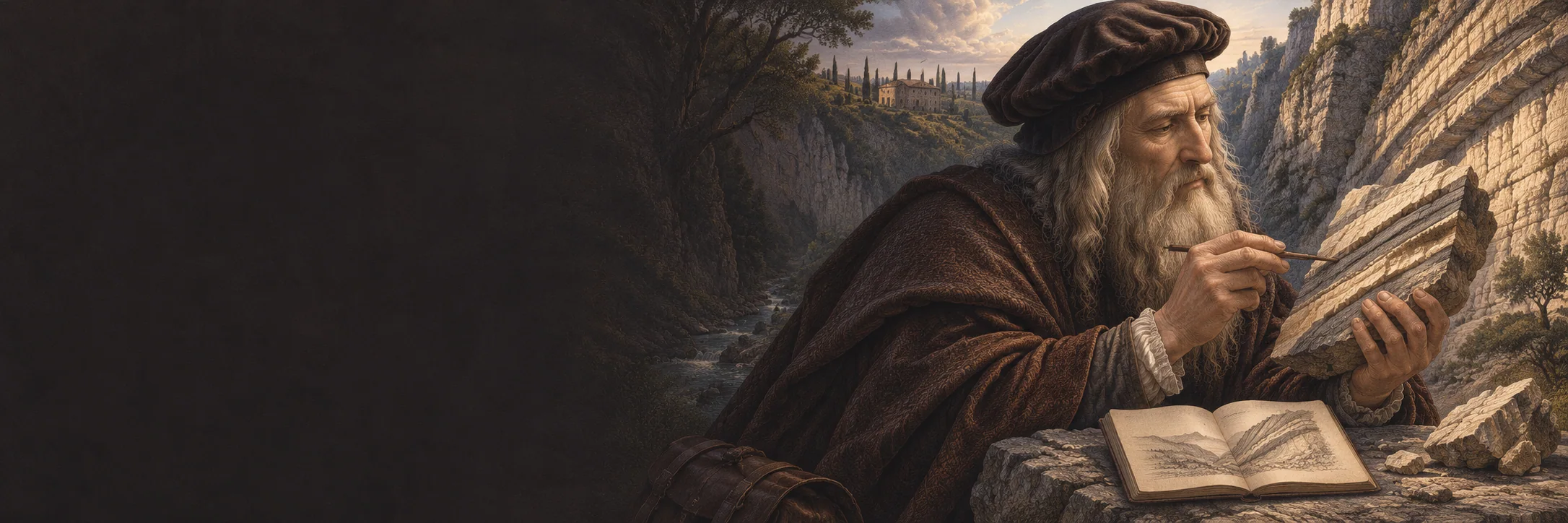
So that we might say that the earth has a spirit of growth; that its flesh is the soil, its bones the arrangement and connection of the rocks of which the mountains are composed, its cartilage the tufa, and its blood the springs of water.
Leonardo da Vinci (1452–1519)
The Literary Works of Leonardo da Vinci, II · p. 220–221
Historical translation by Jean Paul Richter · clause

Therefore, rigidity at once seizes that momentary movement, of which only the trace remains as the crystal.
Arthur Schopenhauer (1788–1860)
The World as Will and Idea, III · p. 37
Translated by R. B. Haldane; J. Kemp
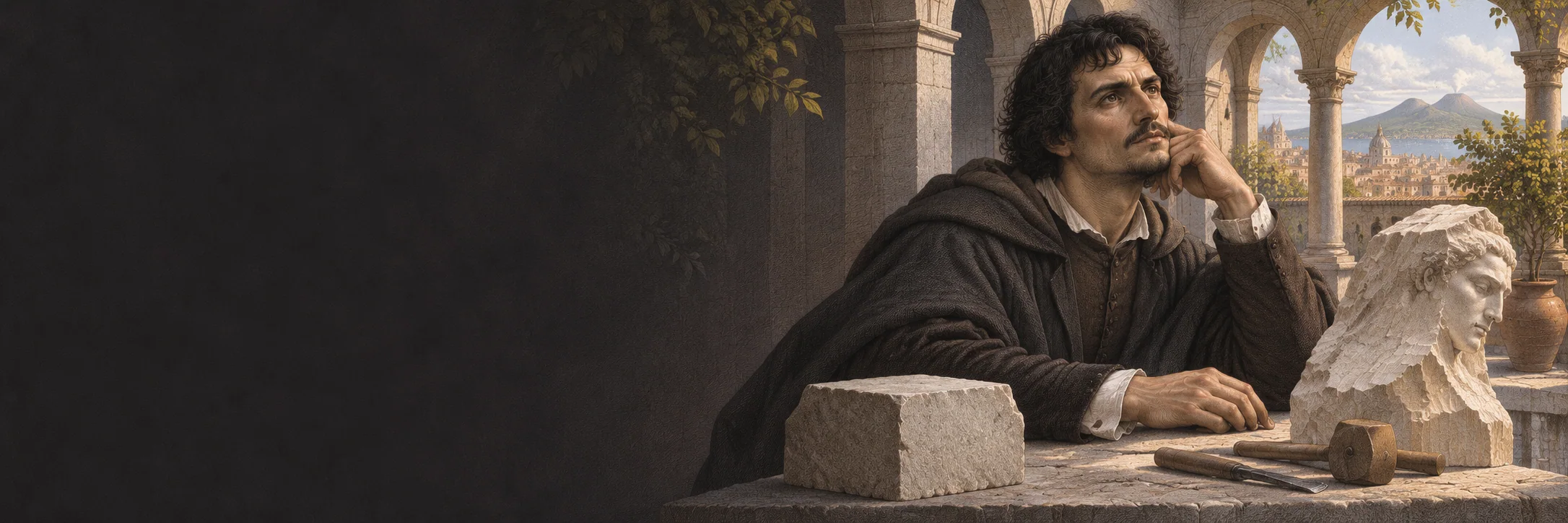
The stone is not everything that it can be; for it is not lime, a vessel, dust or a herb.
Giordano Bruno (1548–1600)
Von der Ursache, dem Princip und dem Einen · p. 67
Our translation from Adolf Lasson’s German edition
 Cart