
 Phone: +43 677 628 66 628 |


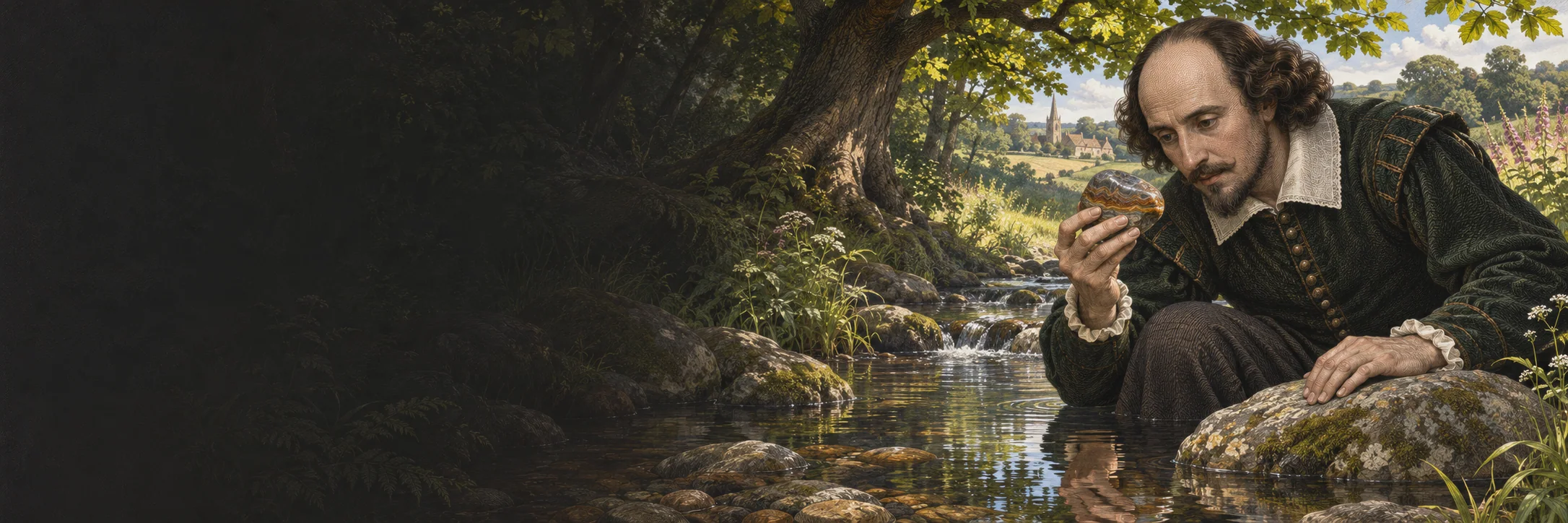
William Shakespeare
And this our life exempt from public haunt Finds tongues in trees, books in the running brooks, Sermons in stones and good in every thing.
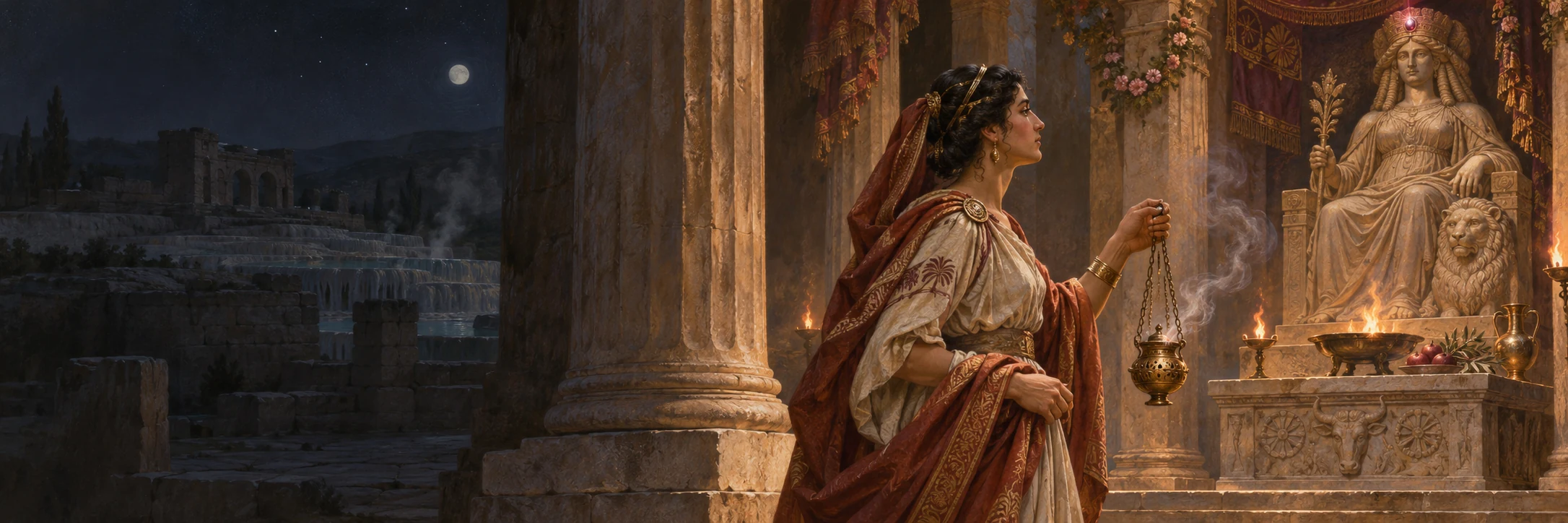
The Greek account On the Syrian Goddess belongs to the Roman imperial period and has come down under Lucian’s name. Its narrator takes readers into the temple at Hierapolis in Syria. He describes where the divine images stand, what they wear and how a visitor can distinguish one figure from another. On the goddess’s head sits a stone whose importance becomes fully apparent only when the account moves between daylight and night.
From this stone flashes a great light in the night-time, so that the whole temple gleams brightly as by the light of myriads of candles, but in the day-time the brightness grows faint; the gem has the likeness of a bright fire.
– Attributed to Lucian, On the Syrian Goddess, 1913, p. 72.[1]
To convey its brightness, the narrator chooses a comparison drawn from the experience of entering a sanctuary. A multitude of burning lamps would illuminate the room. In this description a single point on the figure’s head produces an equivalent effect. A reader imagining the scene first looks towards the stone and then outwards towards the surfaces its light reaches. The ornament belongs to the divine image, yet it also determines how one experiences the surrounding space.
In daylight the same object invites a different description. Its colour and fiery appearance can now take their place in the account. These are two conditions a visitor could never experience at the same instant. The narrator allows a reader to hold them together. Whether any natural gem could illuminate a hall is a separate enquiry. What this passage preserves is a way of imagining a sanctuary in which light extends the goddess’s presence beyond the physical limits of her image.
 Search
And this our life exempt from public haunt Finds tongues in trees, books in the running brooks, Sermons in stones and good in every thing.
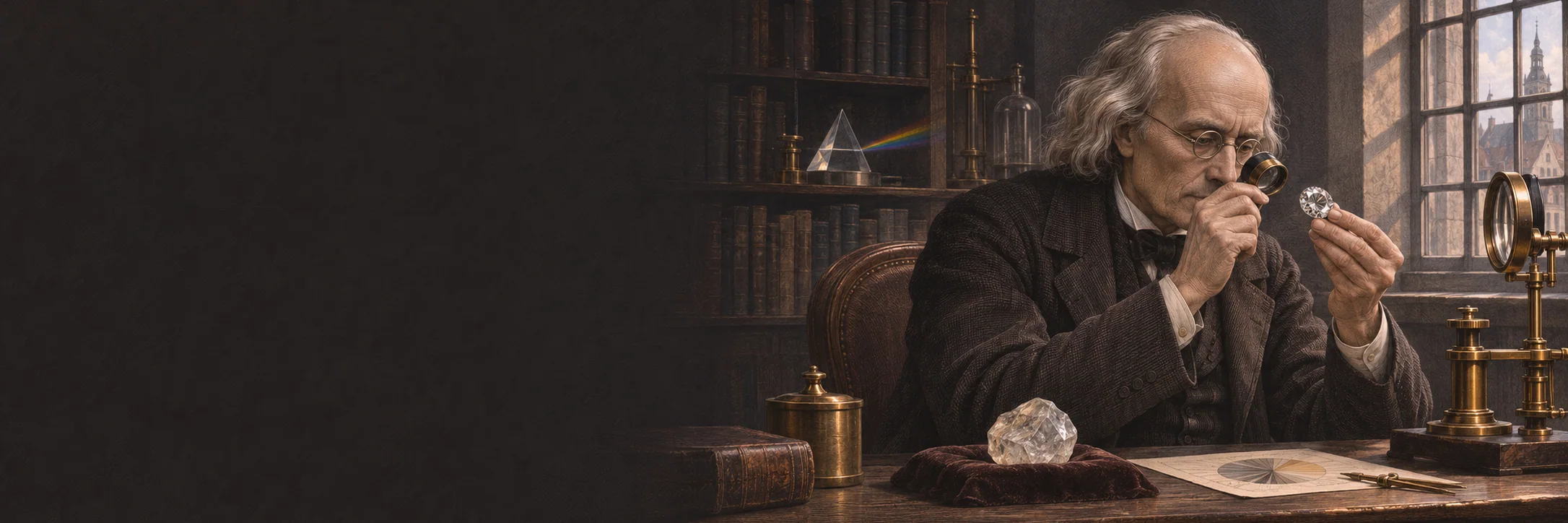
And so the diamond would have the loveliest of all these little souls, the cut diamond even one shaped and ennobled by education; loveliest of all if it is the diamond on the finger of a woman who has a still higher and lovelier soul in the head above it.
Gustav Theodor Fechner (1801–1887)
 Die Tagesansicht gegenüber der Nachtansicht · p. 87
Our translation
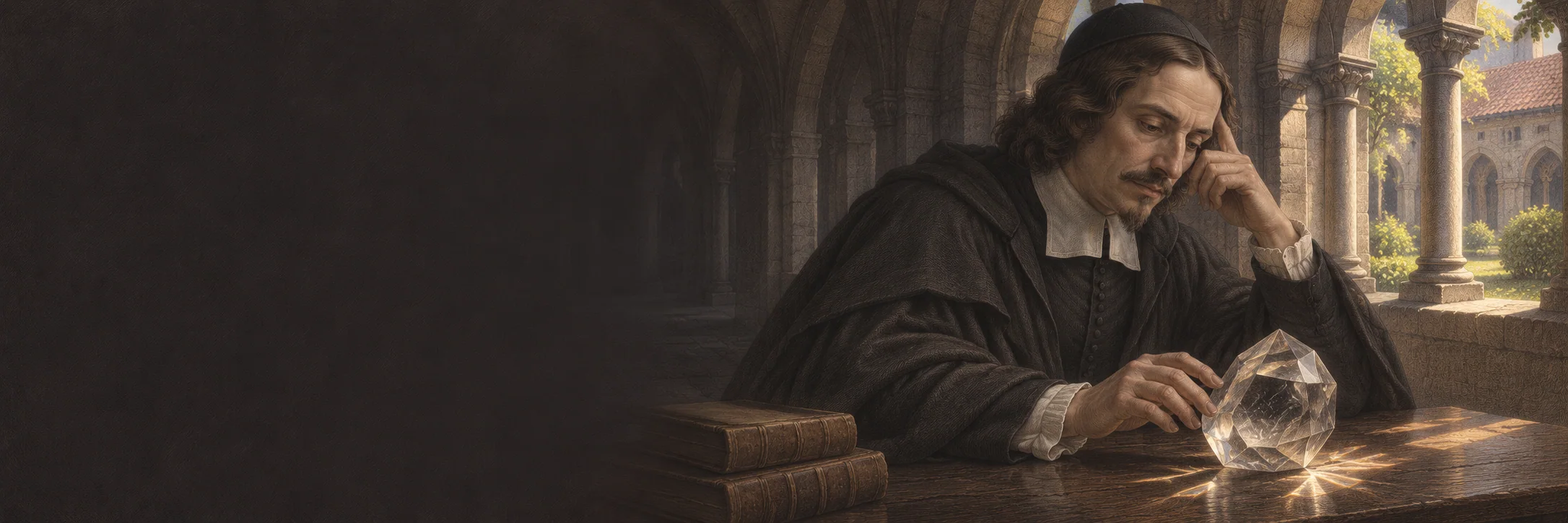
The soul is a crystal, the Godhead is its light: The body in which you live is the shrine of both.
Angelus Silesius (1624–1677)
Des Angelus Silesius Cherubinischer Wandersmann · p. 75
Our translation
My soul now resembles a crystal That no false ray of light has yet struck; […]
[…] I am earth and air in one; part of that blue heaven which you love, and long for, is already in me […]
[…] the curse of all the heart-aches and blasted hopes had made its every stone thirsty and hungry […]
Rabindranath Tagore (1861–1941)
The Hungry Stones and Other Stories · p. 23–24
Historical English translation, 1916 · excerpt
The primordial crystal is the diamond of the earth, in which every eye delights, recognising it as the first-born son of light and gravity.
Georg Wilhelm Friedrich Hegel (1770–1831)
Vorlesungen über die Naturphilosophie · p. 280
Our translation
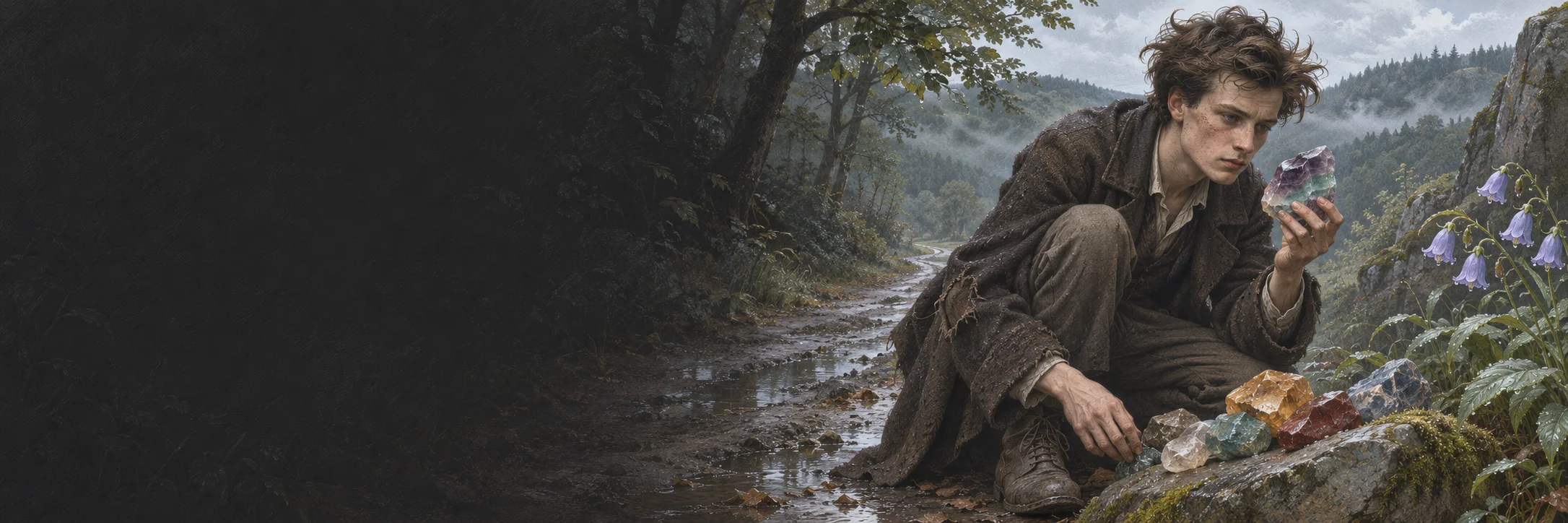
I walked on, waking the living, warm breaths; and the jewels looked, and wings rose without a sound.
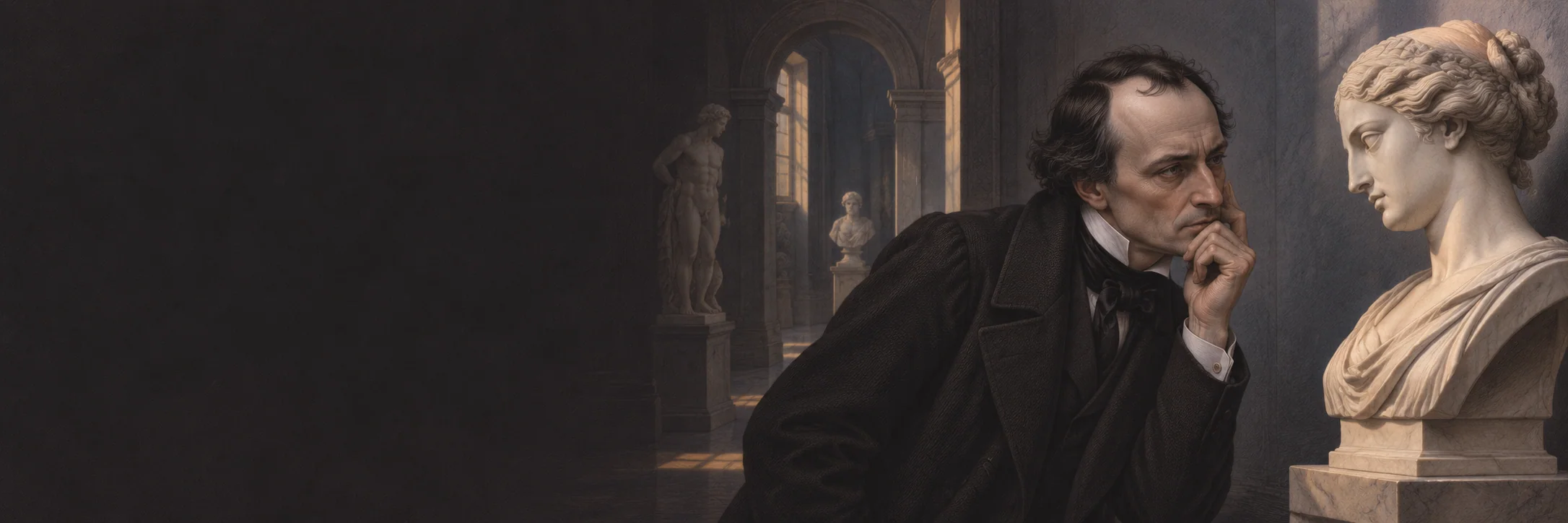
I am beautiful, mortals, like a dream of stone, And my breast, on which each in turn has bruised himself, Is made to inspire in the poet a love As eternal and mute as matter.

The secret strength of things Which governs thought, and to the infinite dome Of heaven is as a law, inhabits thee!
Percy Bysshe Shelley (1792–1822)
The Poetical Works of Percy Bysshe Shelley, III · p. 33
Original wording
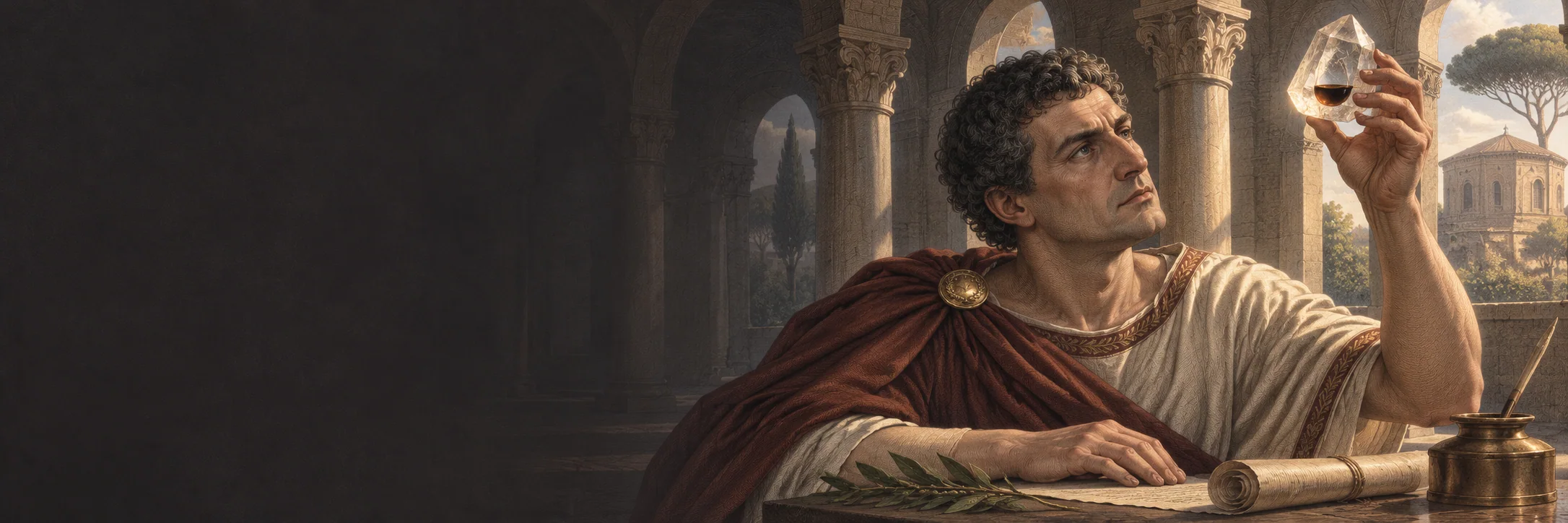
Marvellous stone and marvellous water! With good reason it surpasses rivers and stones, for it flows and is a stone.
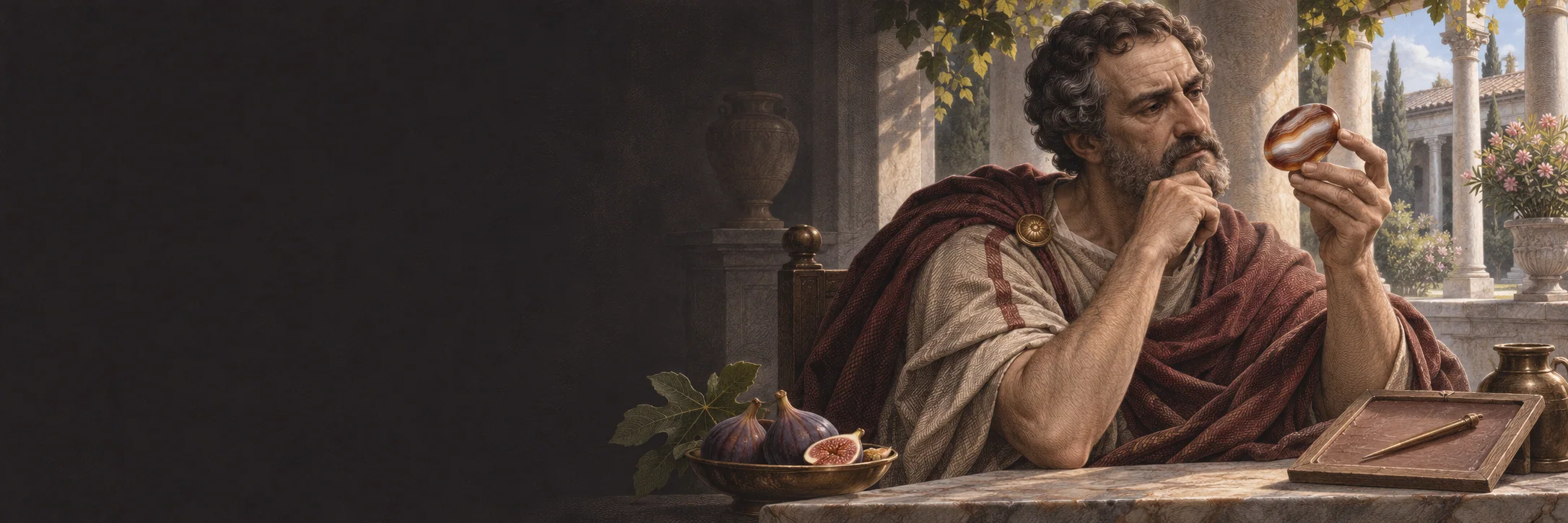
For he is said to have owned an agate in which the nine Muses and Apollo playing the lyre could be seen, not by art but because the markings naturally distinguished themselves so well that even the individual Muses had their own attributes.
Pliny the Elder (23/24–79)
C. Plini Secundi Naturalis historiae libri XXXVII, V · p. 382
Our translation
 Cart