
 Phone: +43 677 628 66 628 |


Book of Isaiah
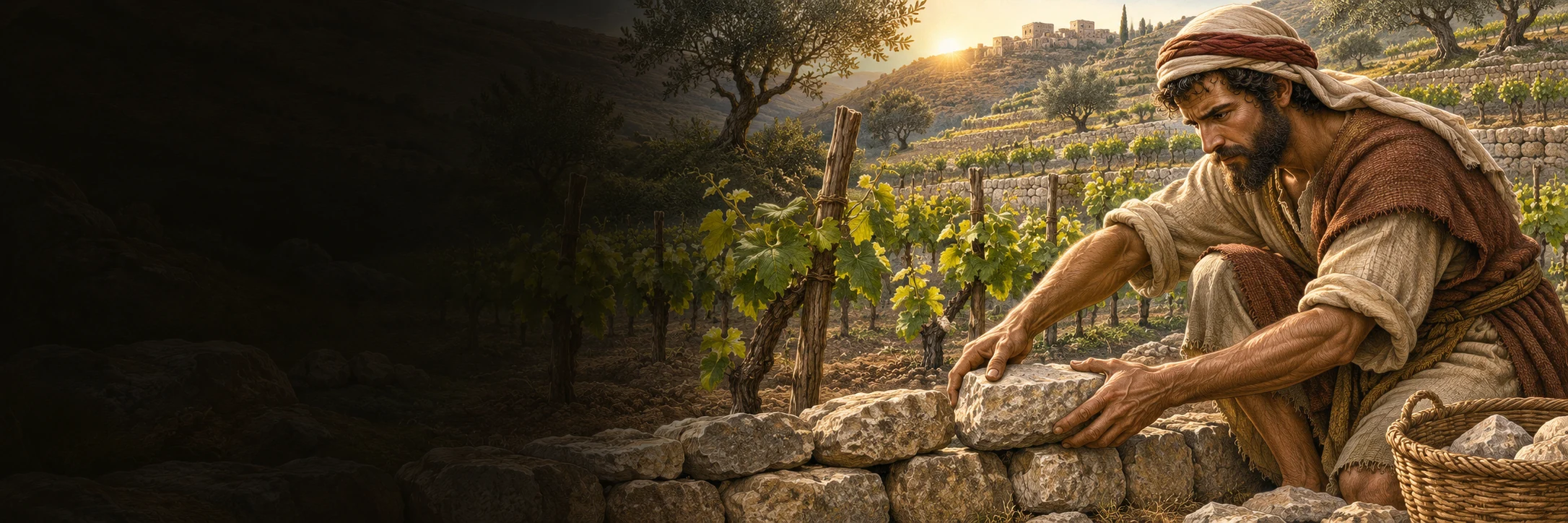
He fenced it in, protected it with heaps of stones and planted choice vines in it. He also built a tower in it and dug a winepress there, and waited for it to bear grapes, but it bore wild grapes.
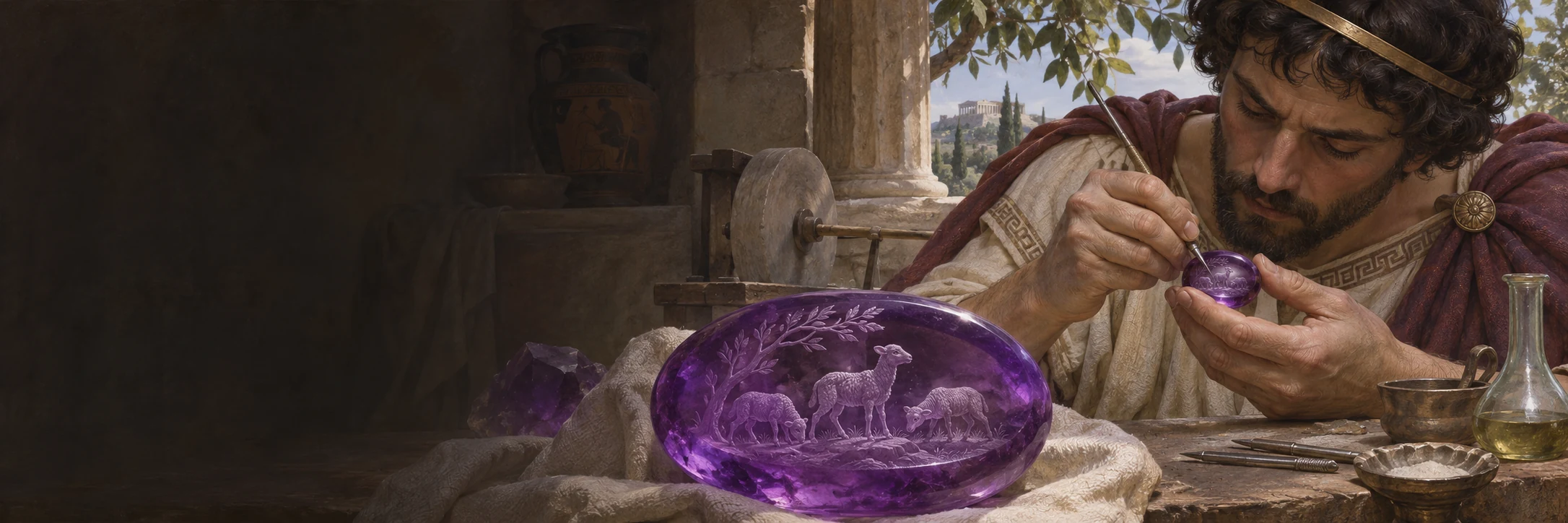
Heliodorus of Emesa, a Greek novelist of the Roman imperial period or late antiquity, pauses in the fifth book of his Ethiopian Story over an extraordinary piece of jewellery. A pastoral scene has been cut into an amethyst. Animals of different sizes occupy its tiny surface. Even as he describes them, the narrator distinguishes their movements and their ages. An object that can be held between a few fingers becomes a landscape in which the eye can linger for some time.
Many of the young sort, being of greater courage, seemed as though they wished to go out of the circle, but were prevented by the workmanship which set a band of gold in the manner of a wall about the rock and them.
– Heliodorus of Emesa, An Ethiopian Story, 1923, p. 149.[1]
He looks especially closely at some of the younger lambs. The description suggests that their greater boldness has carried them right to the edge of the design. A band of gold set around the rock and animals now serves two purposes. For somebody holding the jewel, the worked surface ends precisely there. For somebody following the flock with their eyes, the same edge becomes a boundary an animal might cross in another instant. The miniature picture manages to make room for a sense of expectation.
Heliodorus brings out the engraver's skill through something the tool itself cannot directly cut into the surface. A pose can be represented, but the next leap never actually takes place. It comes into being when a viewer reads that pose as the beginning of a movement. A single animal leaning forwards would scarcely create the same effect. The differences within the flock make the bolder animals’ daring apparent. The engraving finds space for age, temperament and a future that reaches beyond the stone.
 Search
He fenced it in, protected it with heaps of stones and planted choice vines in it. He also built a tower in it and dug a winepress there, and waited for it to bear grapes, but it bore wild grapes.
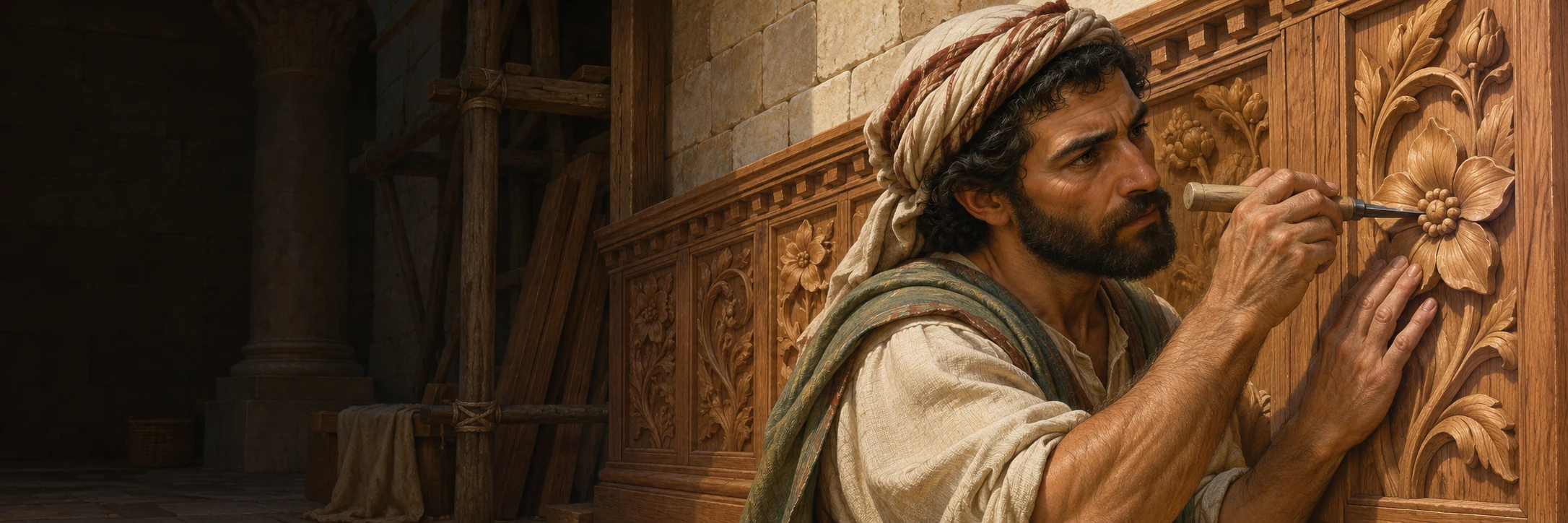
Inside, the whole house was cedar, with carved knobs and flower-work, so that no stone could be seen.

For amongst the Stones they especially are called earthy that are dark, and more heavy; and those waterish, which are transparent, and are compacted of water, as Crystall, Beryll, and Pearls in the Shels of Fishes […]
Heinrich Cornelius Agrippa von Nettesheim (1486–1535)
 De occulta philosophia · 1651 · p. 18–19
Wording of the English edition.

[…] that this stone, placed in the sun, takes fire and with it will kindle tinder fungus brought up close.
Marbod of Rennes (c. 1035–1123)
Liber lapidum · 1799 · p. 70–71
Our translation from the Latin edition.

This, as an Amber drop enwraps a Bee, Covering discovers your quicke Soule […]

A soul sheath’d in a crystal shrine, Through which all her bright features shine, […]
Richard Crashaw (c. 1613–1649)
In Praise of Lessius His Rule of Health · 1857 · p. 100
Wording of the English edition.

[…] in natural history one must search the archives of the world, draw ancient monuments from the bowels of the earth, collect their fragments and assemble into a body of evidence all the indications of the physical changes […]
Georges-Louis Leclerc de Buffon (1707–1788)
Les Époques de la nature · 1778 · p. 1–2
Our translation from the French edition.

[…] as from a Stone into Earth, and from Earth into Grass, and from Grass to a Sheep, and from a Sheep into Humane Flesh, and from Humane Flesh into the most servile Spirits of Man, and from these into his noblest Spirits […]
Anne Conway (1631–1679)
The Principles of the Most Ancient and Modern Philosophy · 1692 · p. 153
Wording of the English edition.
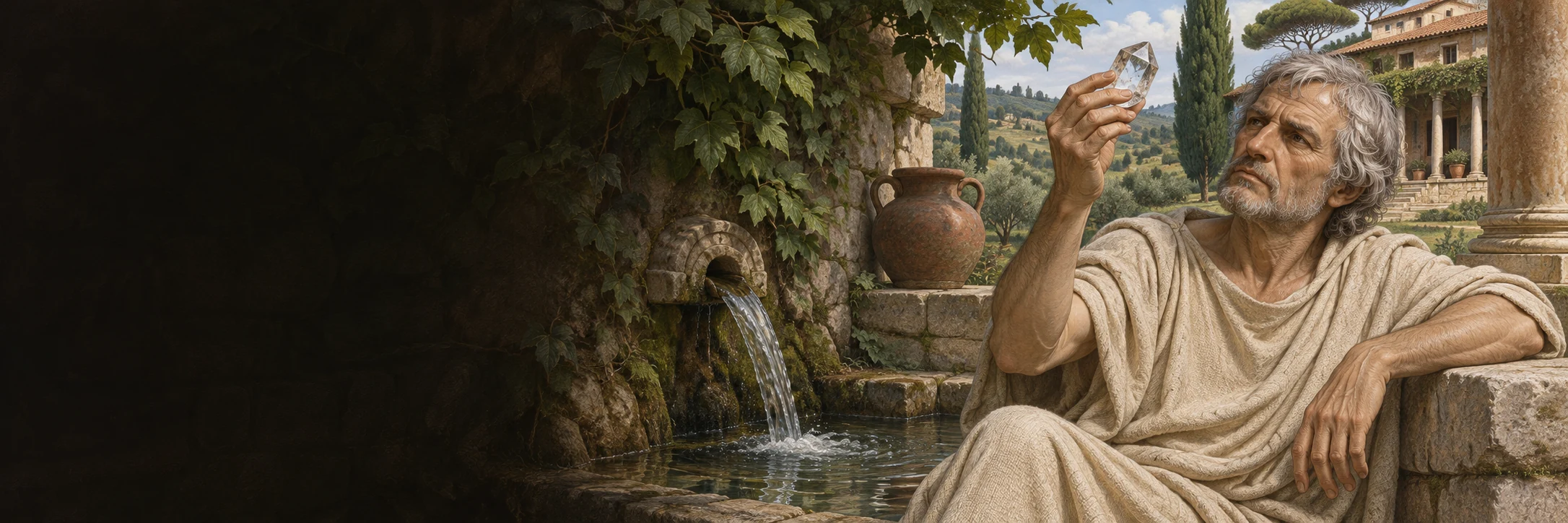
Rain water, which contains very little solid matter, once it is frozen becomes more and more condensed through the persistence of the longer cold until all the air is expelled, and it is compressed to the last degree; then what […]
Lucius Annaeus Seneca (c. 4 BCE–65 CE)
Natural Questions · 1910 · p. 140
Wording of the English edition.

Thus are we moreover informed by Manetho, that the Load-stone is by the Egyptians called the bone of Orus, as Iron is, the bone of Typho.
Plutarch of Chaeronea (c. 45–after 119 CE)
On Isis and Osiris · 1744 · p. 85
Wording of the English edition.

How, then, did the diamond come to be: a unity pervaded throughout, enduring, a purity unclouded, rich in rays, made firm by bonds invisible to us?
Gottfried Keller (1819–1890)
Das Eidgenossen-Volk · 1846 · p. 88
Our translation from the German edition.

This stone is also like to a fiery flame, for the fiery love of the Eternal Word has filled the whole world with love and wills that all loving spirits be burned up to nothingness in love.
 Cart