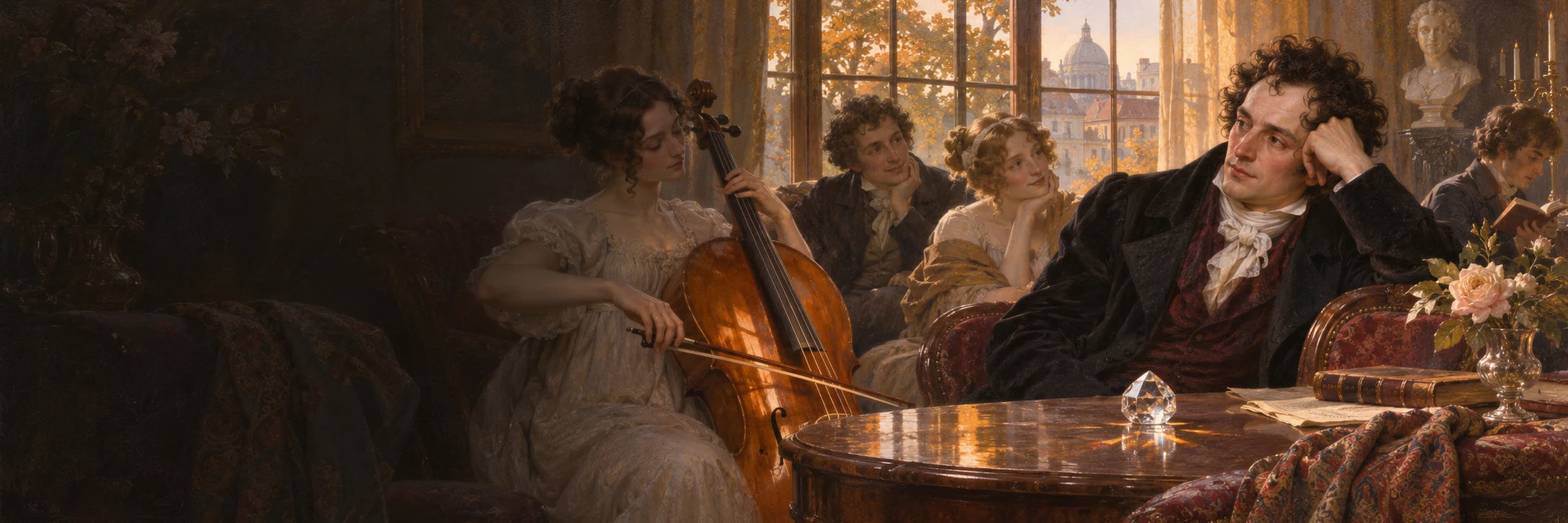
Clemens Brentano (1778–1842), a German Romantic poet, addresses these lines to the architect and artist Karl Friedrich Schinkel. To someone accustomed to working with spaces, lines and visible shapes he offers the image of a tone. At first the conjunction may come as a surprise. A tone passes away, whereas a building or a crystal can be inspected for as long as one stands before it. Brentano takes precisely these different experiences of time as the starting point for his comparison.
An image offered to another artist
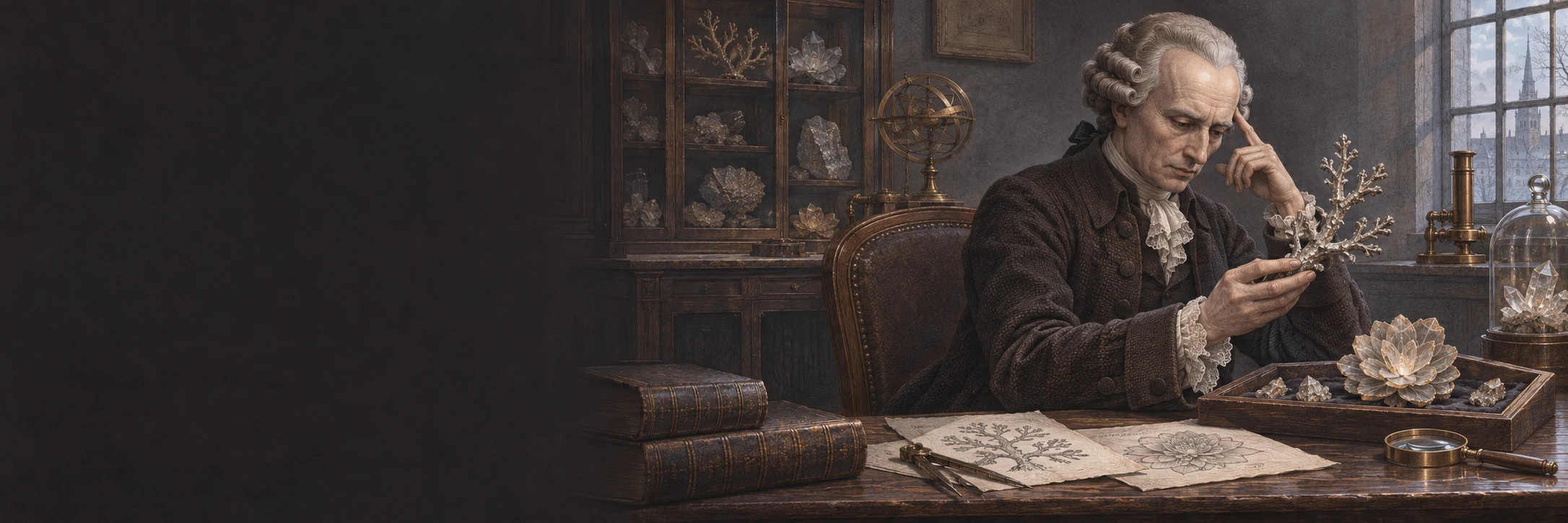
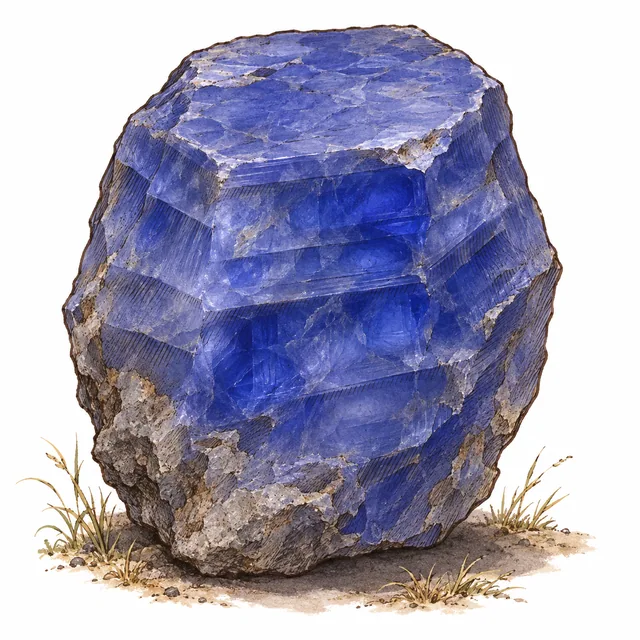
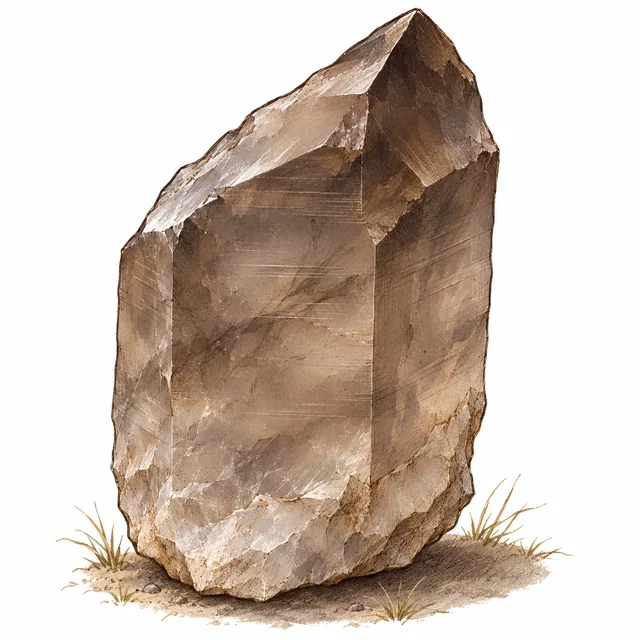
As sound made a shape for itself in crystal,
so the sound of strings strikes into your soul.
– Clemens Brentano, To Schinkel, 1817, An Schinkel.[1]
In the first line something happens inside the crystal. A tone acquires a shape there. The next line carries the reader's attention from the object to the person being addressed. Strings are sounding now, and their music touches an inward life whose response cannot be followed directly from outside. The crystal has already given the reader a place in which to imagine that transition. Something heard can assume a form by which it remains recognisable.
What remains of a vibration
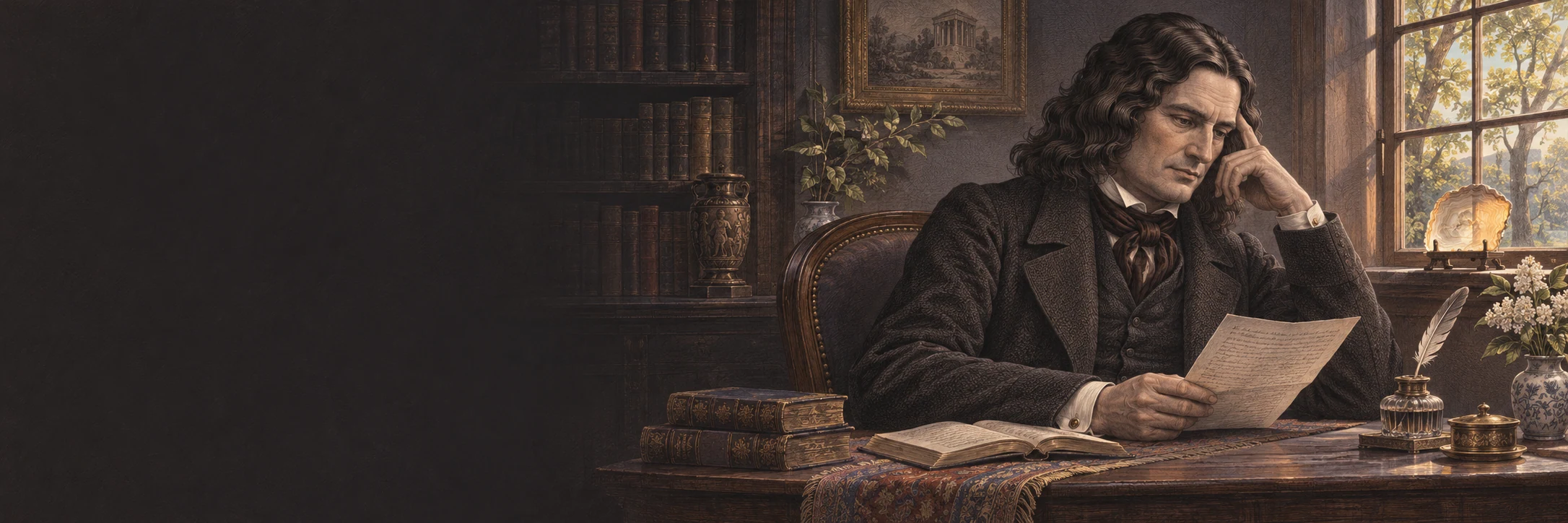
The fact that Brentano addresses a particular artist makes a difference. The comparison can be read as a tribute to Schinkel's receptiveness to an art other than his own. Between the striking of a string and the conception of a form there is a moment of reception. The brief movement of the lines dwells on that interval. They invite the reader to recreate an experience familiar from a melody whose contours one can still picture after the room has long fallen silent.

 Phone: +43 677 628 66 628 |


 Search
 Epistolae · o. J. · p. 353








 Cart