
 Phone: +43 677 628 66 628 |


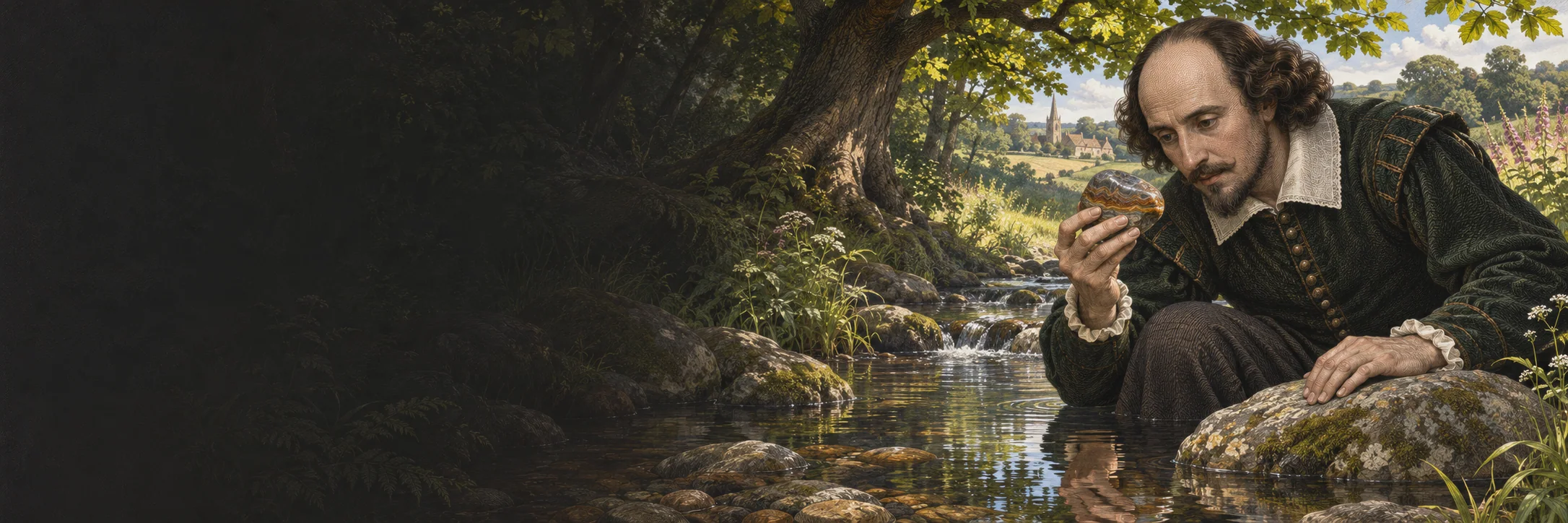
William Shakespeare
And this our life exempt from public haunt Finds tongues in trees, books in the running brooks, Sermons in stones and good in every thing.
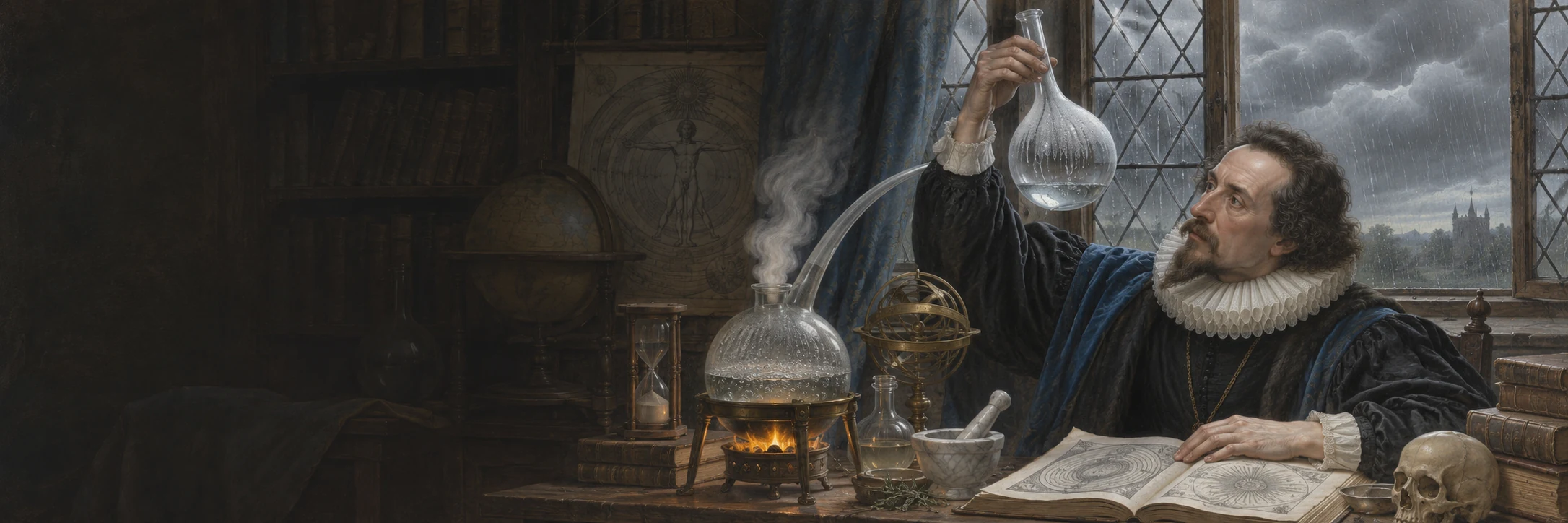
Robert Fludd (1574–1637), an English physician and natural philosopher, brings questions about the construction of the world into conversation with Scripture in his Mosaicall Philosophy. A heavy stone supplies a particularly striking example of condensation. Anyone lifting it feels its weight at once. The air around it can hardly be perceived in the same way. Fludd assigns them different places in a sequence and accompanies his reader on the return journey.
So also the Stone is resolved into water, and water into a vaporous clowd, and the clowd into aire from whence it came […]
– Robert Fludd, Mosaicall Philosophy, 1659, p. 78.[1]
Stone is resolved into water, water into a vaporous cloud and the cloud into air. Notice the change of experience within that single sentence. A hard object can lie quietly on a table. Water requires a vessel if it is to stay there. A cloud possesses an identifiable outline whose edges can alter from one moment to the next. At last there remains air, whose presence an observer still feels in breathing even when the eye can no longer draw a boundary around it.
For Fludd formation and dissolution belong together. The sequence can be understood only by following it in both directions. What previously emerged in an increasingly definite shape is to pass back into a simpler condition. Stone represents a moment of particular firmness in a much longer history. An everyday glance might stop at the contrast between a heavy specimen and fugitive vapour. Fludd's sentence asks us to pay as much attention to the passages between them as to the two conspicuous ends of the series.
 Search
And this our life exempt from public haunt Finds tongues in trees, books in the running brooks, Sermons in stones and good in every thing.
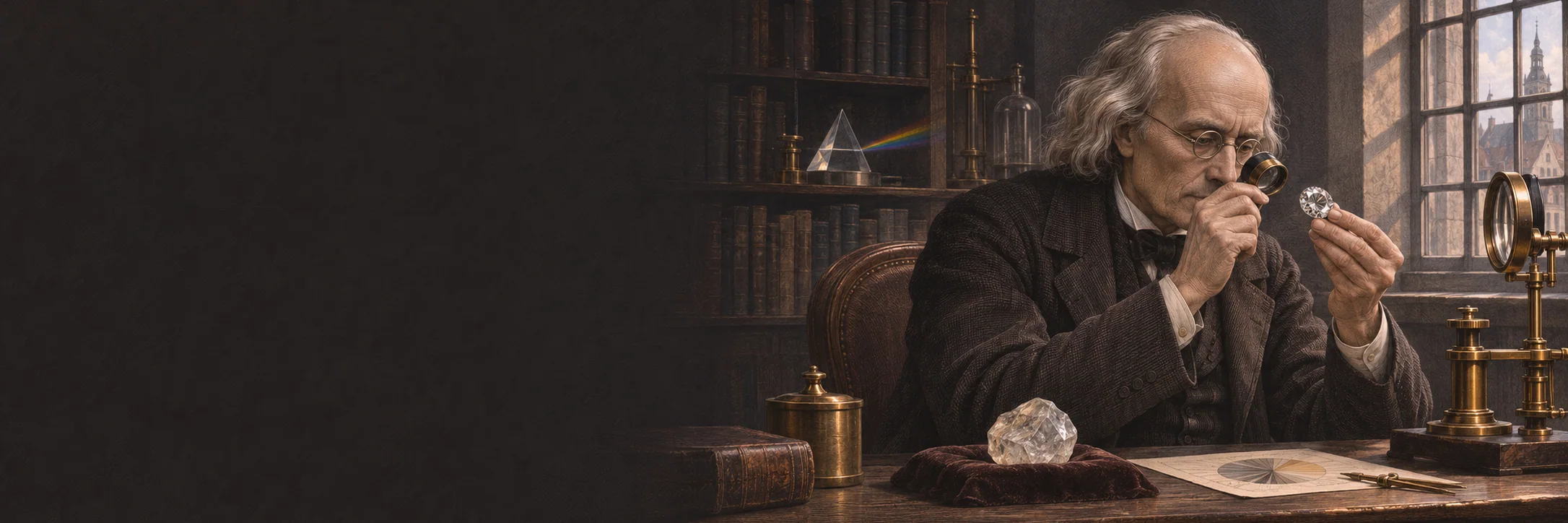
And so the diamond would have the loveliest of all these little souls, the cut diamond even one shaped and ennobled by education; loveliest of all if it is the diamond on the finger of a woman who has a still higher and lovelier soul in the head above it.
Gustav Theodor Fechner (1801–1887)
 Die Tagesansicht gegenüber der Nachtansicht · p. 87
Our translation
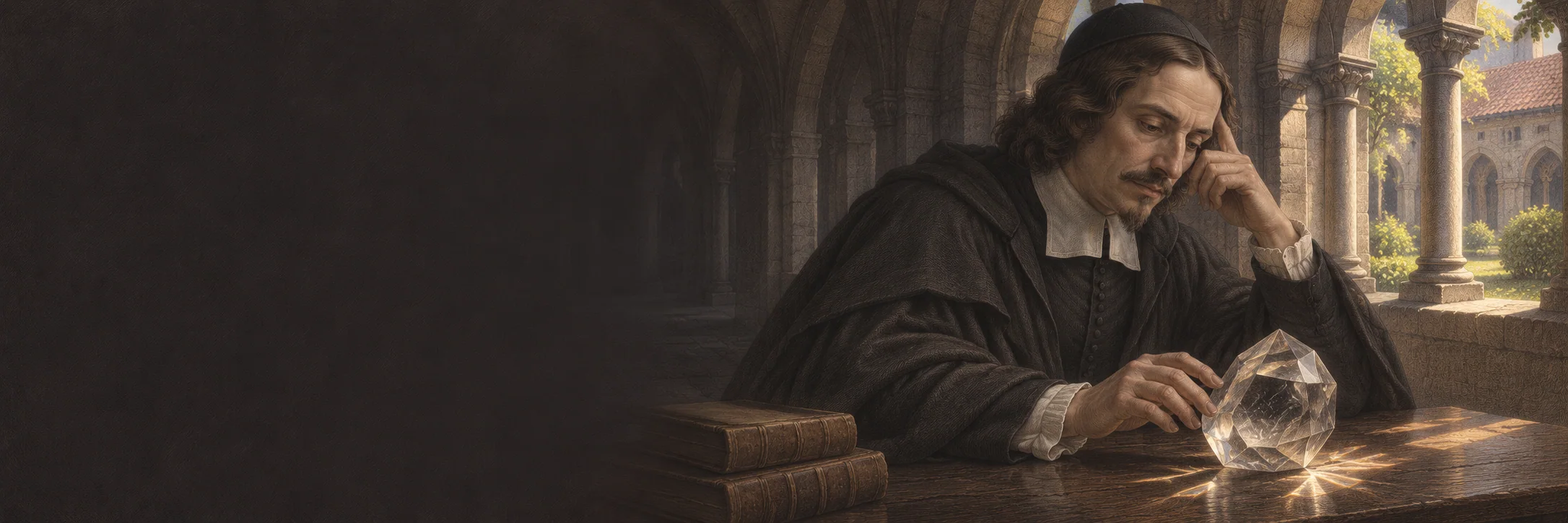
The soul is a crystal, the Godhead is its light: The body in which you live is the shrine of both.
Angelus Silesius (1624–1677)
Des Angelus Silesius Cherubinischer Wandersmann · p. 75
Our translation
My soul now resembles a crystal That no false ray of light has yet struck; […]
[…] I am earth and air in one; part of that blue heaven which you love, and long for, is already in me […]
[…] the curse of all the heart-aches and blasted hopes had made its every stone thirsty and hungry […]
Rabindranath Tagore (1861–1941)
The Hungry Stones and Other Stories · p. 23–24
Historical English translation, 1916 · excerpt
The primordial crystal is the diamond of the earth, in which every eye delights, recognising it as the first-born son of light and gravity.
Georg Wilhelm Friedrich Hegel (1770–1831)
Vorlesungen über die Naturphilosophie · p. 280
Our translation
I walked on, waking the living, warm breaths; and the jewels looked, and wings rose without a sound.
I am beautiful, mortals, like a dream of stone, And my breast, on which each in turn has bruised himself, Is made to inspire in the poet a love As eternal and mute as matter.
The secret strength of things Which governs thought, and to the infinite dome Of heaven is as a law, inhabits thee!
Percy Bysshe Shelley (1792–1822)
The Poetical Works of Percy Bysshe Shelley, III · p. 33
Original wording
Marvellous stone and marvellous water! With good reason it surpasses rivers and stones, for it flows and is a stone.
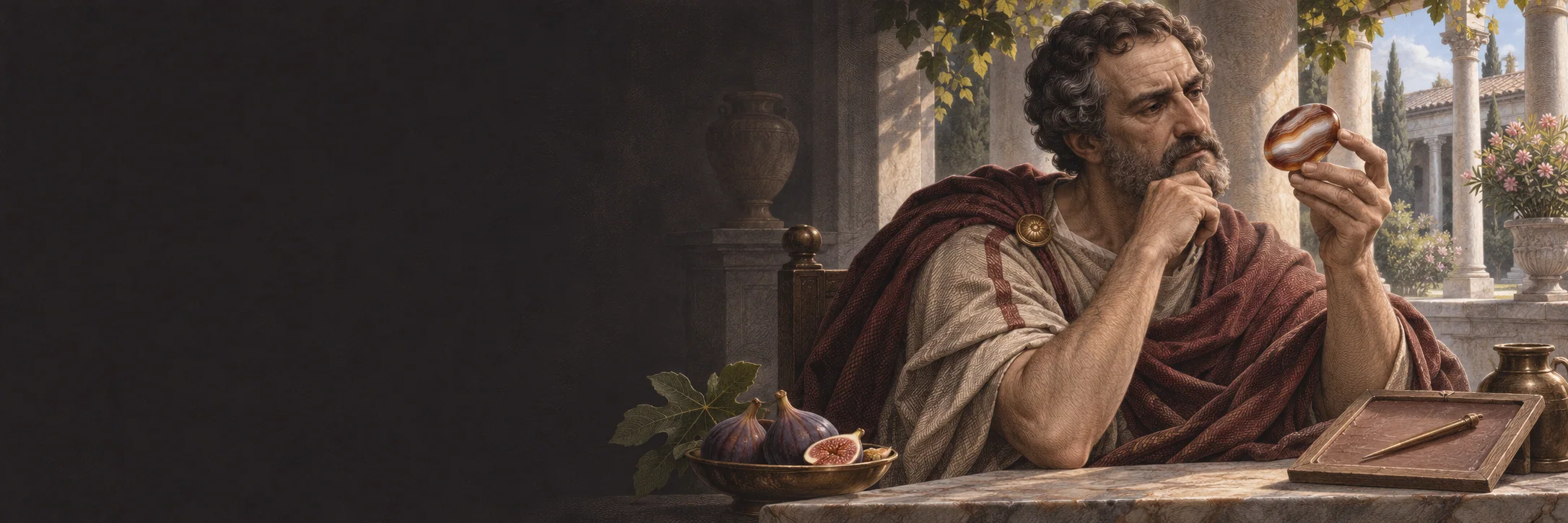
For he is said to have owned an agate in which the nine Muses and Apollo playing the lyre could be seen, not by art but because the markings naturally distinguished themselves so well that even the individual Muses had their own attributes.
Pliny the Elder (23/24–79)
C. Plini Secundi Naturalis historiae libri XXXVII, V · p. 382
Our translation
 Cart