
 Phone: +43 677 628 66 628 |


Book of Isaiah
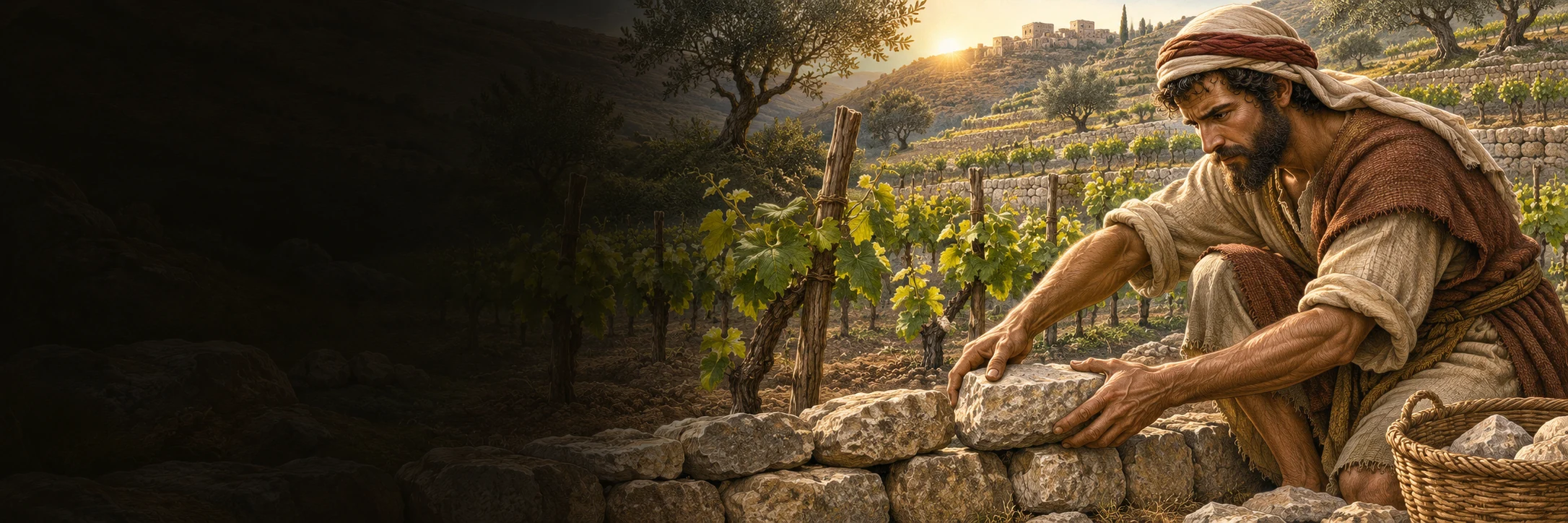
He fenced it in, protected it with heaps of stones and planted choice vines in it. He also built a tower in it and dug a winepress there, and waited for it to bear grapes, but it bore wild grapes.

Damascius (c. 458 to after 538) was a philosopher from Damascus who wrote in Greek. In his life of the philosopher Isidore he tells of a stone carried by a man called Eusebius. The name for a sacred stone of this kind was baetyl. The reader meets this particular stone on a journey. The men set off towards Heliopolis. Along the way the stone comes into view and slips away again so unexpectedly that it almost becomes a traveller in its own right.
I saw, he says, how the baetyl now moved through the air, now lay hidden under the cloths, and now was actually carried in the hand of its keeper.
– Damascius, Life of Isidore, 1911, p. 121.[1]
The description makes three fresh starts. First the stone is in the air. Then it disappears beneath some cloth. Finally its keeper carries it openly in his hand. This last detail is the most ordinary of the three and gives the others their force. An object to which the travellers attribute independent movement has weight and can be held. The cloth interrupts their view. Anyone following the three moments has to take that interval out of sight as seriously as the movements they can see.
The account opens with a claim to have seen something oneself. In the surviving extract another voice adds the words “he says”. That small interruption preserves a trace of the route by which the story reached its readers. Damascius’ work survives in excerpts. Further on, the keeper himself recounts his encounter with the stone. Part of the pleasure in this short scene lies in the distance between a passing glimpse on the road and the longer acquaintance of the man who carries the stone with him.
 Search
He fenced it in, protected it with heaps of stones and planted choice vines in it. He also built a tower in it and dug a winepress there, and waited for it to bear grapes, but it bore wild grapes.
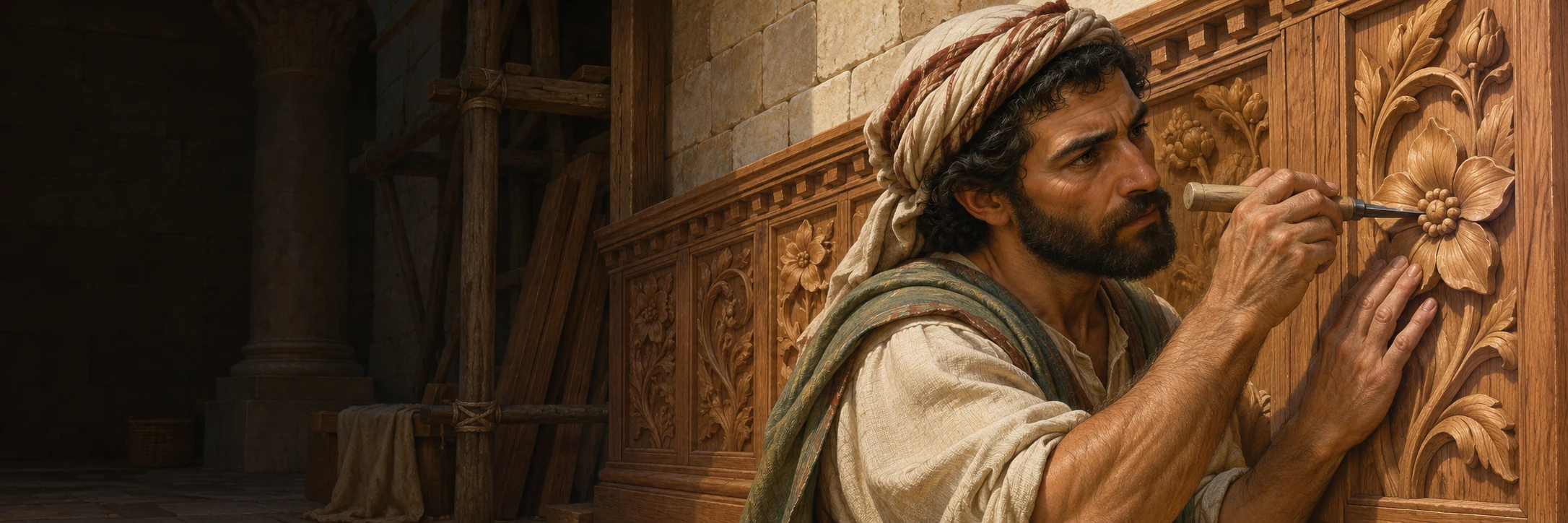
Inside, the whole house was cedar, with carved knobs and flower-work, so that no stone could be seen.

For amongst the Stones they especially are called earthy that are dark, and more heavy; and those waterish, which are transparent, and are compacted of water, as Crystall, Beryll, and Pearls in the Shels of Fishes […]
Heinrich Cornelius Agrippa von Nettesheim (1486–1535)
 De occulta philosophia · 1651 · p. 18–19
Wording of the English edition.

[…] that this stone, placed in the sun, takes fire and with it will kindle tinder fungus brought up close.
Marbod of Rennes (c. 1035–1123)
Liber lapidum · 1799 · p. 70–71
Our translation from the Latin edition.

This, as an Amber drop enwraps a Bee, Covering discovers your quicke Soule […]

A soul sheath’d in a crystal shrine, Through which all her bright features shine, […]
Richard Crashaw (c. 1613–1649)
In Praise of Lessius His Rule of Health · 1857 · p. 100
Wording of the English edition.

[…] in natural history one must search the archives of the world, draw ancient monuments from the bowels of the earth, collect their fragments and assemble into a body of evidence all the indications of the physical changes […]
Georges-Louis Leclerc de Buffon (1707–1788)
Les Époques de la nature · 1778 · p. 1–2
Our translation from the French edition.

[…] as from a Stone into Earth, and from Earth into Grass, and from Grass to a Sheep, and from a Sheep into Humane Flesh, and from Humane Flesh into the most servile Spirits of Man, and from these into his noblest Spirits […]
Anne Conway (1631–1679)
The Principles of the Most Ancient and Modern Philosophy · 1692 · p. 153
Wording of the English edition.
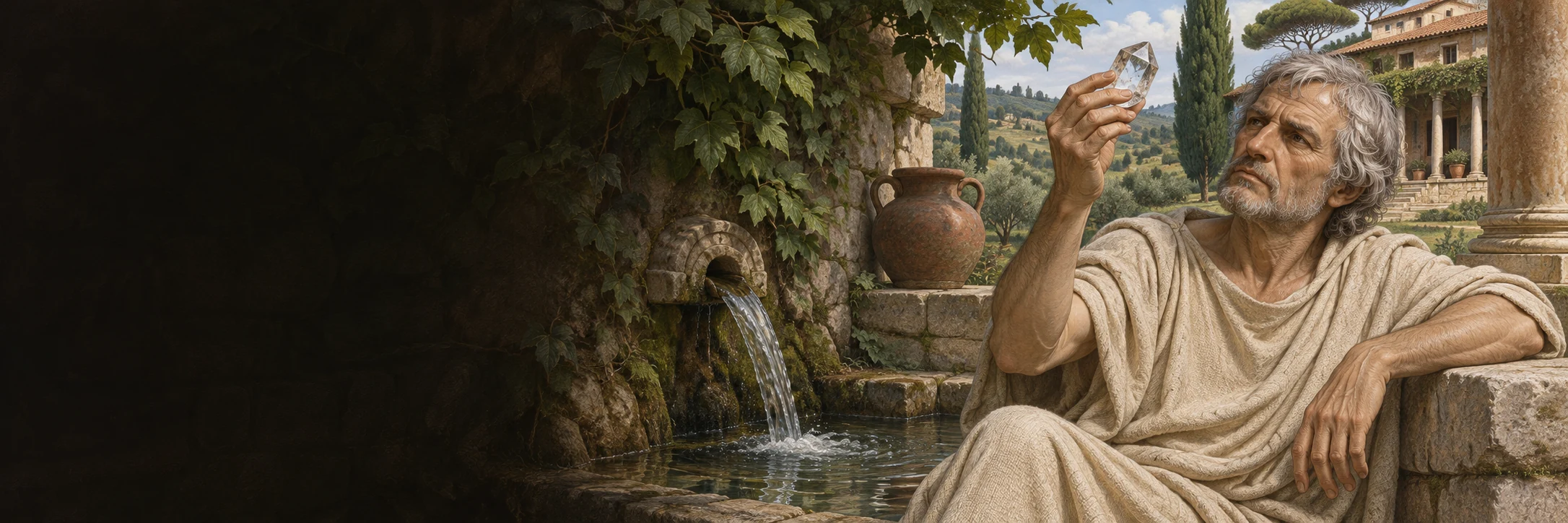
Rain water, which contains very little solid matter, once it is frozen becomes more and more condensed through the persistence of the longer cold until all the air is expelled, and it is compressed to the last degree; then what […]
Lucius Annaeus Seneca (c. 4 BCE–65 CE)
Natural Questions · 1910 · p. 140
Wording of the English edition.

Thus are we moreover informed by Manetho, that the Load-stone is by the Egyptians called the bone of Orus, as Iron is, the bone of Typho.
Plutarch of Chaeronea (c. 45–after 119 CE)
On Isis and Osiris · 1744 · p. 85
Wording of the English edition.

How, then, did the diamond come to be: a unity pervaded throughout, enduring, a purity unclouded, rich in rays, made firm by bonds invisible to us?
Gottfried Keller (1819–1890)
Das Eidgenossen-Volk · 1846 · p. 88
Our translation from the German edition.

This stone is also like to a fiery flame, for the fiery love of the Eternal Word has filled the whole world with love and wills that all loving spirits be burned up to nothingness in love.
 Cart