Kong Chuan was a Chinese scholar of the Song period. In 1133 he wrote a preface to Du Wan’s catalogue of stones, the Yunlin shipu. His dates of birth and death are uncertain. His opening words suggest a way of reading the whole book. In the shape of a rock he sees the outcome of something in which heaven and earth both participate. The heavy piece that can be set down on a table begins, in his account, with something capable of movement.
A breath takes shape
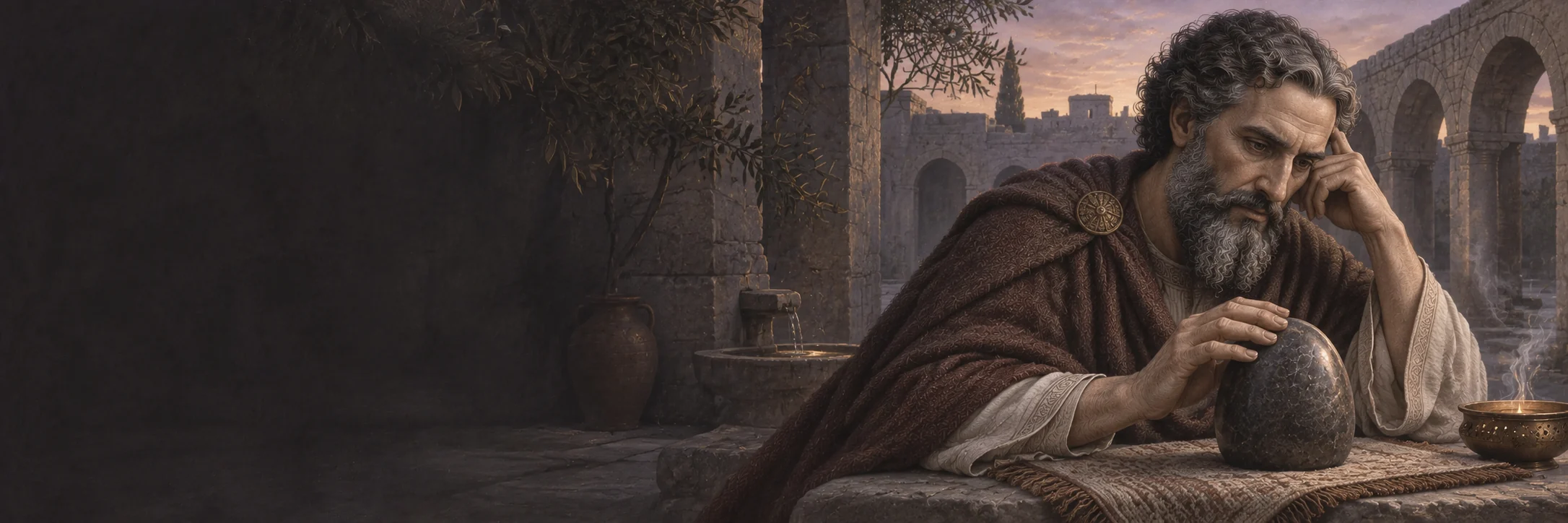
The finest breath of heaven and earth gathers into stone. As the stones emerge from the earth, their shapes are wondrous.
– Kong Chuan, Preface to Du Wan’s Yunlin shipu, 1936, p. 1.[1]
The Chinese word qi can be rendered here as breath. The next movement of the sentence is a gathering together. What is initially hard to grasp acquires a boundary, weight and a surface. Then the perspective shifts once more. The stone emerges from the earth and reveals an unexpected shape. That distinctive form was already there when nobody could see it. The person who discovers such a stone has a different part to play from someone who cuts a figure out of an ordinary block.
What a stone can bring indoors
Further into the preface Kong Chuan evokes pierced cliffs and mountain ridges that wind back on themselves. A fairly small object can preserve some of the spatial experience of a much larger landscape. The movement of his description can be followed in front of a single stone. Its outline is usually the first thing to catch the eye. Only gradually do the openings, projections and recesses emerge that give the gaze somewhere to go.

 Phone: +43 677 628 66 628 |



 Search

 The Composition of the World · 1858 · p. 109









 Cart