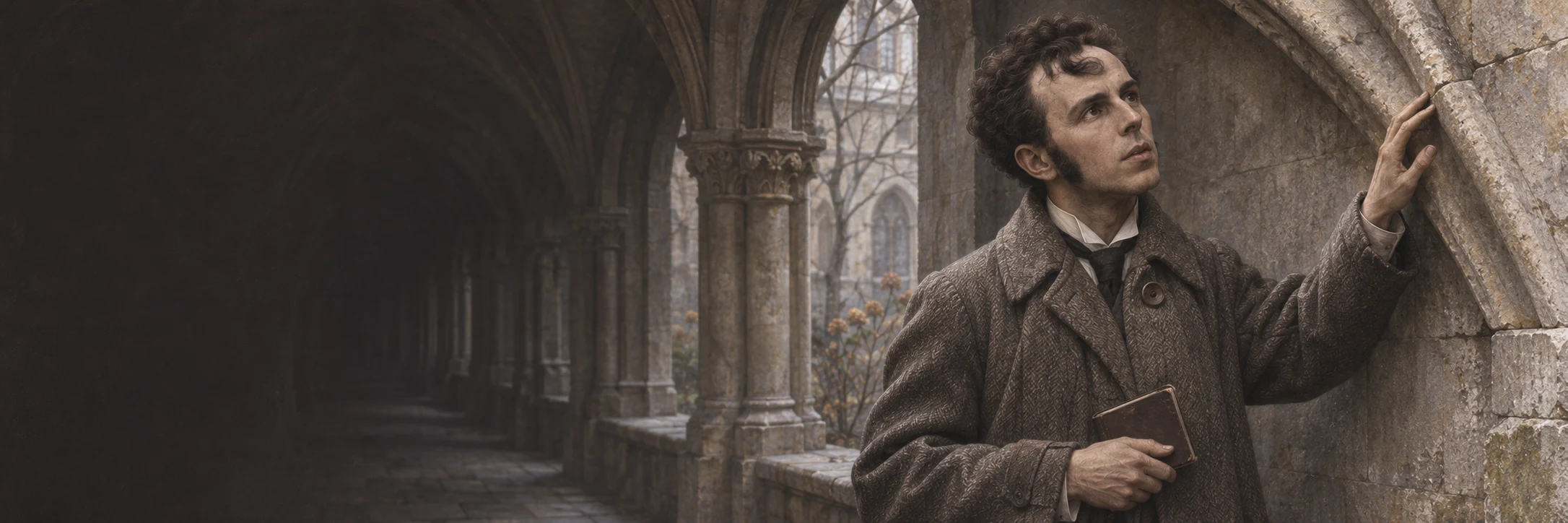
Fulcanelli is the pseudonym of a French-language alchemical author whose dates and identity remain uncertain. In Les Demeures philosophales he takes his readers into a gallery at the château of Dampierre-sur-Boutonne. Over the visitors' heads a series of images occupies the compartments of a stone ceiling. It is possible to walk beneath them and examine one after another. Fulcanelli reads these reliefs like the pages of a book about the work of alchemists.
An image overhead
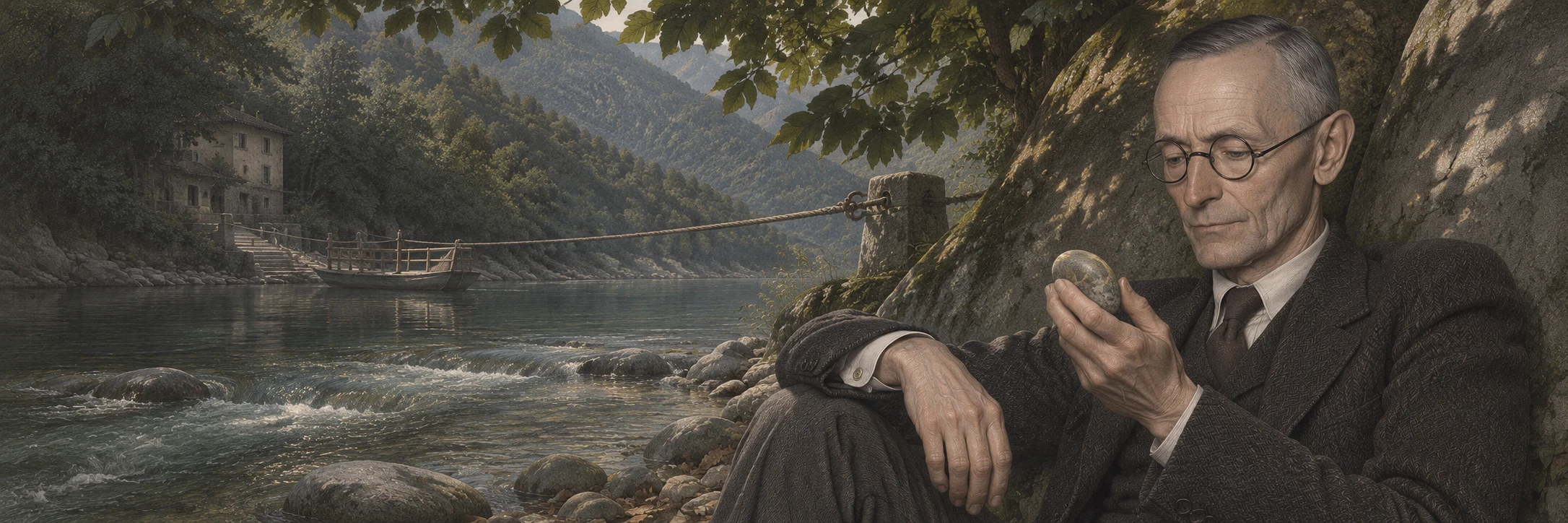
[…] the stone is composed of the four elements, united by powerful cohesion in a state of natural and perfect equilibrium.
– Fulcanelli, Les Demeures philosophales, 1930 · edition 1965, Le Merveilleux Grimoire du Château de Dampierre, VII, fourth series, coffer 1.[1]
One compartment brings him to the question of what holds the alchemists' stone together. His answer assumes four elements with very different properties. What fire can do and how water behaves are things we can observe separately in ordinary life. In the stone the alchemist seeks, these contrasting properties are to coexist. Fulcanelli uses two different ideas to describe this. Cohesion accounts for the fact that the object appears as one. Equilibrium describes the relation its parts bear to one another.
The weight of equilibrium
A stone ceiling is a good place to consider the difference. Seen from below, it presents a firm, continuous surface. Ask what forces are at work and you begin to notice relationships between individual parts of the very same structure. Fulcanelli likewise invites us to read the solidity of his stone as an achievement of several forces. This is an important step in his reading of the château. An image that generations of visitors saw as decoration above their heads can pose a question about the inner constitution of matter to a reader versed in alchemy.

 Phone: +43 677 628 66 628 |



 Search

 Tiangong kaiwu · o. J. · Ch. 18, 珠玉, section 寶









 Cart