
 Phone: +43 677 628 66 628 |


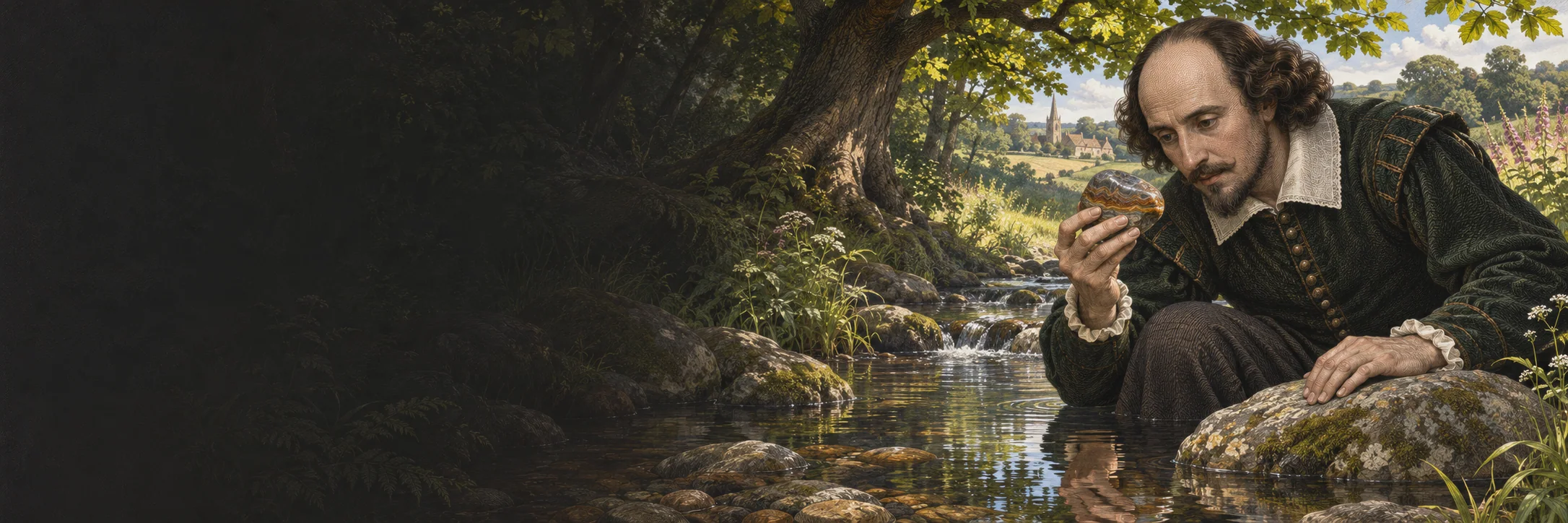
William Shakespeare
And this our life exempt from public haunt Finds tongues in trees, books in the running brooks, Sermons in stones and good in every thing.
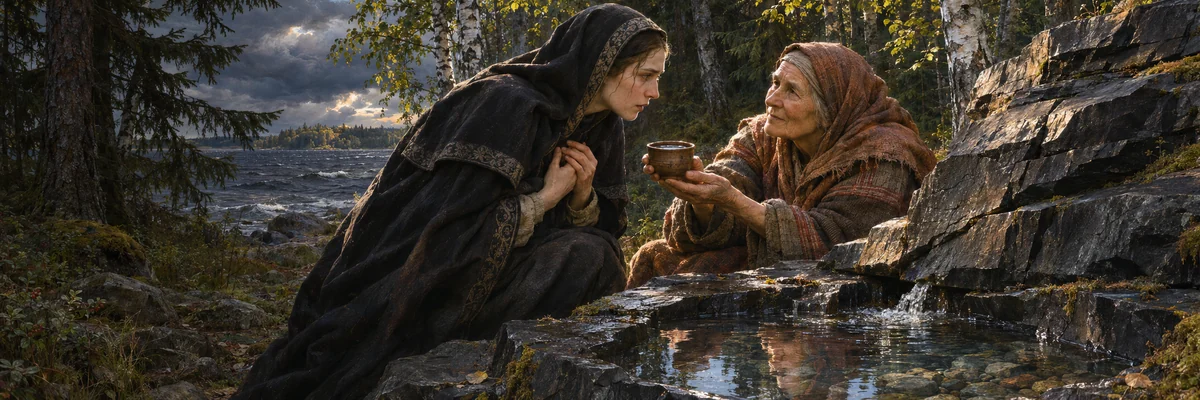
A free retelling of the traditional legend, with a look at the development of water filters.
Russia, 1601. Ksenia Romanova (d. 1631) is separated from her husband and children and exiled to Tolvuya on Lake Onega. The noblewoman becomes the nun Marfa. Her new life begins far from the Moscow court, under guard and with little food. A story told about this remote place links her name to a black stone: shungite.[1][3][5]
Behind her exile lies a struggle for power. Tsar Boris Godunov sees Ksenia’s husband, Fyodor Romanov, as a dangerous rival. He has the family torn apart and forces husband and wife to take monastic vows. For Ksenia, this means losing the life she has known and being separated from her children. One of them is named Mikhail. He will one day ascend the Russian throne.[1]
In Tolvuya, Marfa is said to have fallen gravely ill. Local tradition tells of a weakened woman whom the villagers eventually help. Peasants point her towards a nearby spring. The local people believe its water has healing powers. For the exile, the legend tells us, this opens a way back to life.[1][2]
The spring is said to flow from a black rock.[3] Later investigations link it to shungite, the dark stone to which, according to tradition, the spring owes its healing powers.[3][4] The stone is said to purify the water. The local people call it “living water”. For a long time, so the story goes, they have drawn from it when illness and exhaustion weigh on them. In this understanding, the stone and the water are inseparable.[3]
Marfa begins to drink the spring water regularly.[1][2] According to the legend, she regains her strength and recovers. Some retellings speak of her being cured of a severe disorder that caused seizures. In this way, the exiled noblewoman’s fate becomes entwined with shungite’s reputation as a stone that purifies and heals.[3]
Twelve years after Marfa’s exile, her family’s fortunes change: in 1613, Mikhail is elected tsar. His accession marks the beginning of Romanov rule. His mother, once exiled and separated from her family, becomes an influential woman at court. Remembered as the “tsarina”, Marfa is, first and foremost, the tsar’s mother.[1]
The spring is given the name “Tsaritsyn Klyuch”, which means “the Tsarina’s Spring”.[1][2] The memory of Marfa thus lives on at the place where the peasants are said to have helped her. The water they themselves have long used becomes the water of the tsar’s mother. Ever since, the story of Marfa’s recovery has also been bound up with shungite’s reputation as a stone that purifies, heals and saves lives [3] – as if, through the water of the spring, it had saved the succession to the throne itself.
A little over a century after Marfa’s exile, her great-grandson, Tsar Peter the Great (1672–1725), also takes an interest in the springs of Karelia. His grandfather is Mikhail Romanov, the son of the tsar’s mother.[2][5] Under Peter, the iron-rich Marcial springs near Konchezero are investigated in 1717 and 1718. These springs are at a different site from the Tsarina’s Spring near Tolvuya. In 1719, the tsar has a spa opened there.[6]
In the late twentieth century, the Tsarina’s Spring itself attracts the attention of a research team. The researchers examine the ground beneath it and trace the water’s path through the layers of rock to understand how shungite and the other rocks interact.[4]
These investigations lead to a multistage filtration system. The researchers recreate the natural conditions in a laboratory model: the composition of the rock layers, the length of time the water is in contact with them and the speed at which it flows through them. In this way, they reproduce the water’s underground journey in an engineered system.[4]
Shungite provides the first stage of purification. According to the researchers’ report, it removes certain heavy metals and binds or breaks down organic compounds. The carbonate rock that follows neutralises the water acidified in the first stage and releases calcium and magnesium. Finally, sand and a ceramic filter retain fine suspended particles.[4]
A research report from 1994 documents this development and the trials with the filtration system. The Tsarina’s Spring thus becomes the model for a practical use of shungite: the study of natural spring water gives rise to a method of water treatment.[4]
 Search
And this our life exempt from public haunt Finds tongues in trees, books in the running brooks, Sermons in stones and good in every thing.

And so the diamond would have the loveliest of all these little souls, the cut diamond even one shaped and ennobled by education; loveliest of all if it is the diamond on the finger of a woman who has a still higher and lovelier soul in the head above it.
Gustav Theodor Fechner (1801–1887)
 Die Tagesansicht gegenüber der Nachtansicht · p. 87
Our translation
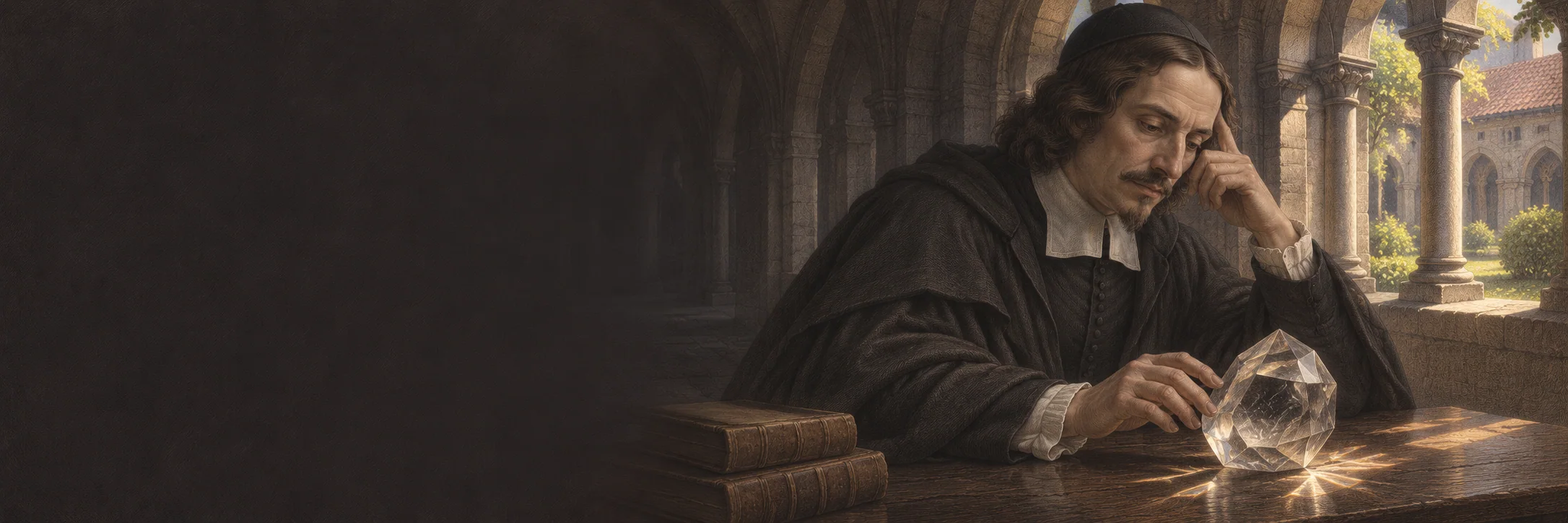
The soul is a crystal, the Godhead is its light: The body in which you live is the shrine of both.
Angelus Silesius (1624–1677)
Des Angelus Silesius Cherubinischer Wandersmann · p. 75
Our translation
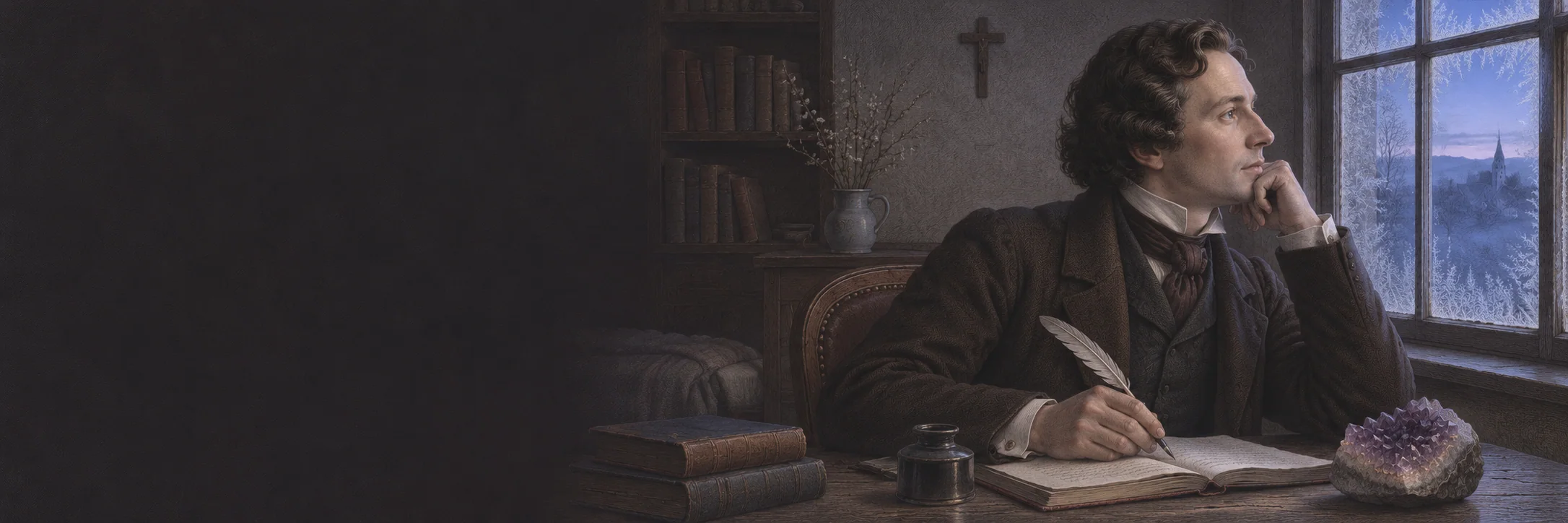
My soul now resembles a crystal That no false ray of light has yet struck; […]
[…] I am earth and air in one; part of that blue heaven which you love, and long for, is already in me […]
[…] the curse of all the heart-aches and blasted hopes had made its every stone thirsty and hungry […]
Rabindranath Tagore (1861–1941)
The Hungry Stones and Other Stories · p. 23–24
Historical English translation, 1916 · excerpt
The primordial crystal is the diamond of the earth, in which every eye delights, recognising it as the first-born son of light and gravity.
Georg Wilhelm Friedrich Hegel (1770–1831)
Vorlesungen über die Naturphilosophie · p. 280
Our translation
I walked on, waking the living, warm breaths; and the jewels looked, and wings rose without a sound.
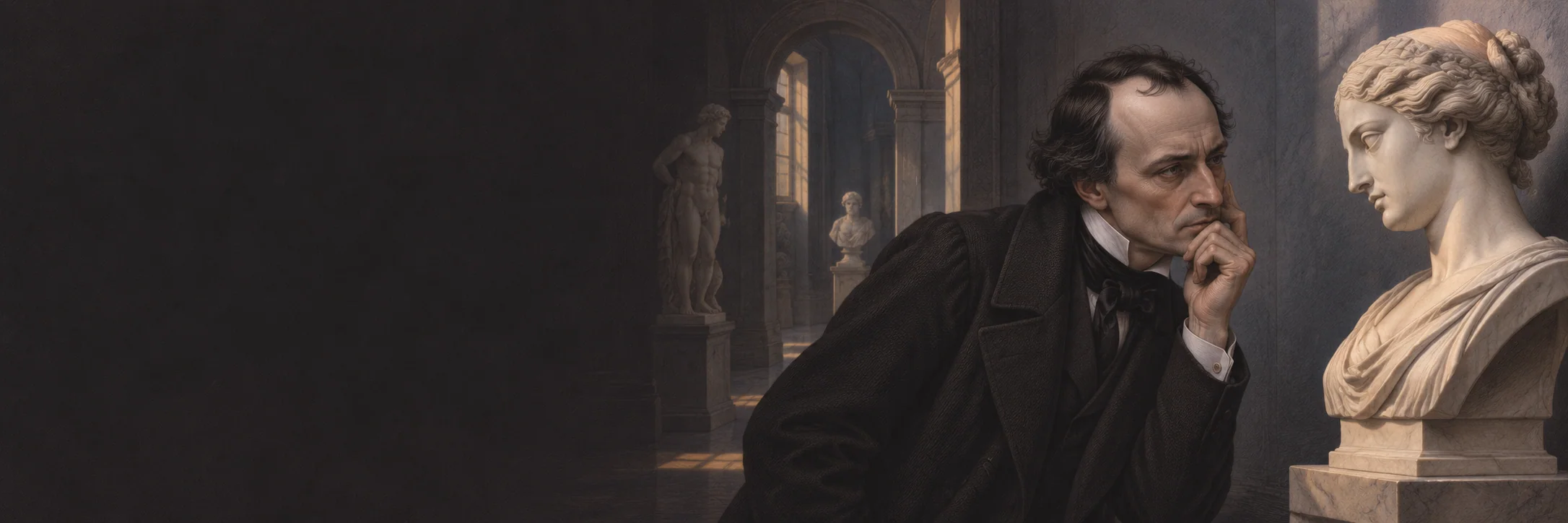
I am beautiful, mortals, like a dream of stone, And my breast, on which each in turn has bruised himself, Is made to inspire in the poet a love As eternal and mute as matter.

The secret strength of things Which governs thought, and to the infinite dome Of heaven is as a law, inhabits thee!
Percy Bysshe Shelley (1792–1822)
The Poetical Works of Percy Bysshe Shelley, III · p. 33
Original wording
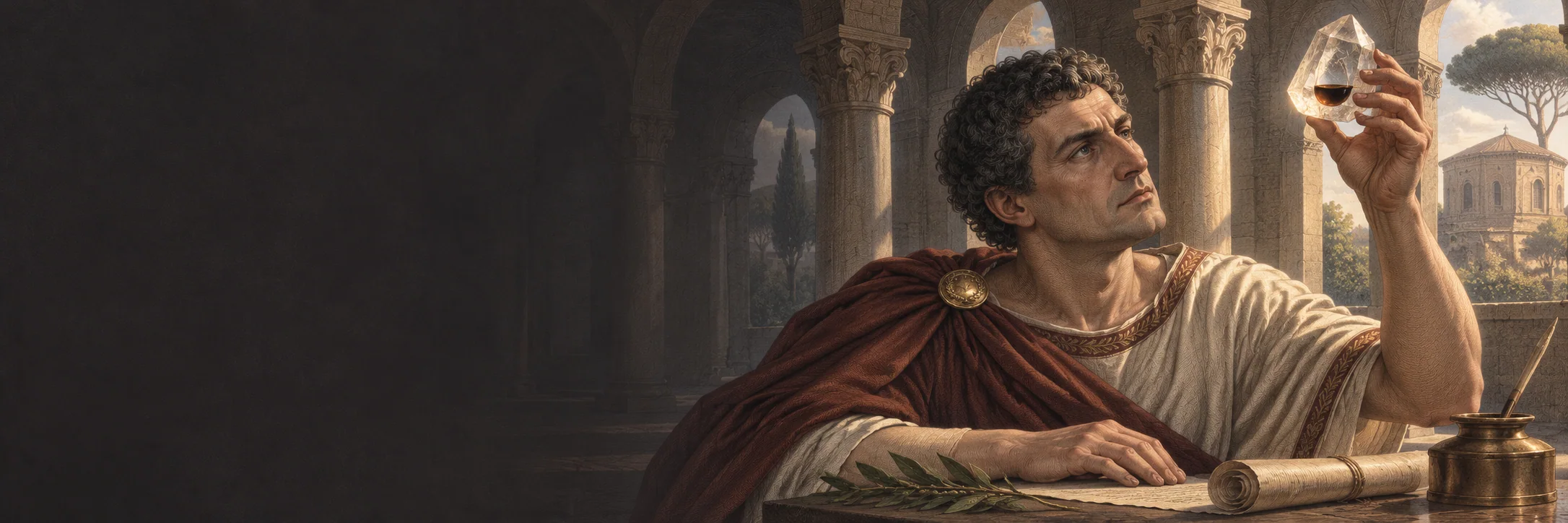
Marvellous stone and marvellous water! With good reason it surpasses rivers and stones, for it flows and is a stone.

For he is said to have owned an agate in which the nine Muses and Apollo playing the lyre could be seen, not by art but because the markings naturally distinguished themselves so well that even the individual Muses had their own attributes.
Pliny the Elder (23/24–79)
C. Plini Secundi Naturalis historiae libri XXXVII, V · p. 382
Our translation
 Cart