
 Phone: +43 677 628 66 628 |


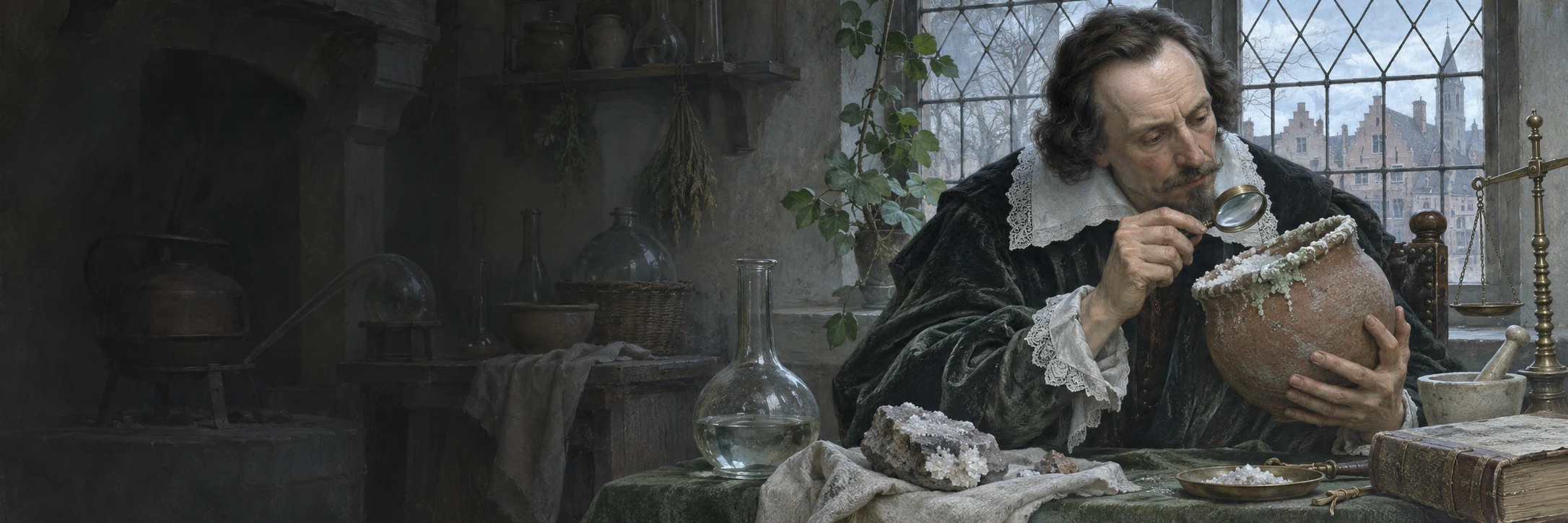
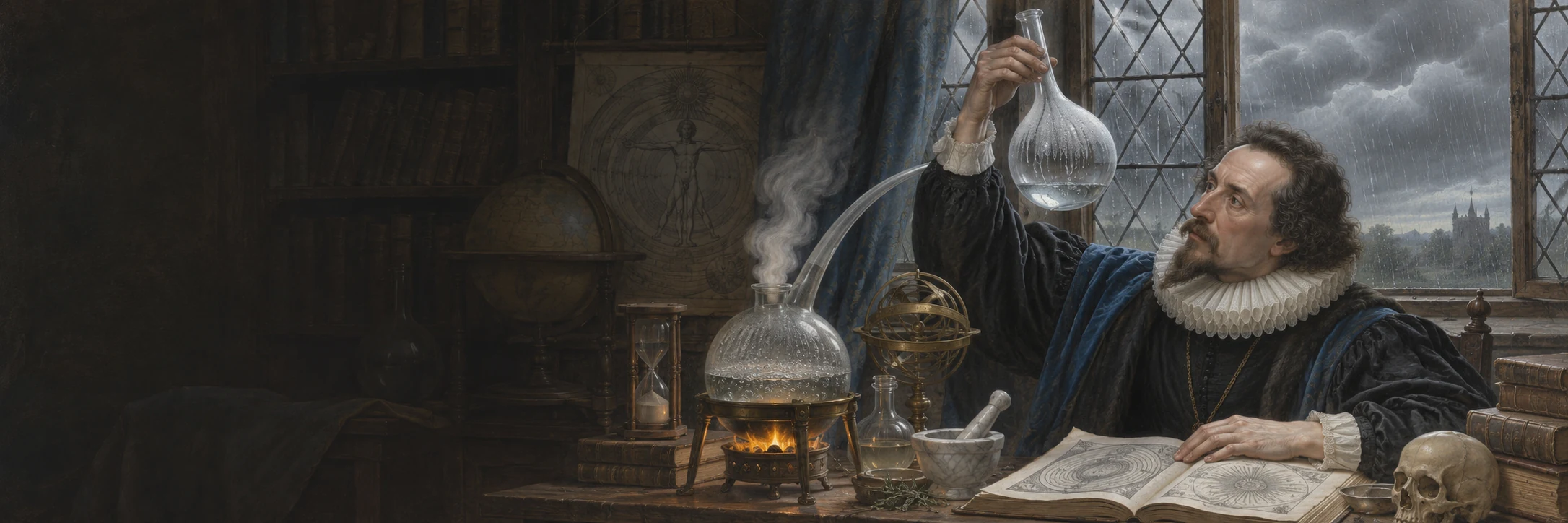
Jan Baptista van Helmont
[…] then the becoming of stone is a birth, and every birth springs from some seed. […]
Jan Baptista van Helmont (1579–1644)
Our translation from the Dutch edition.
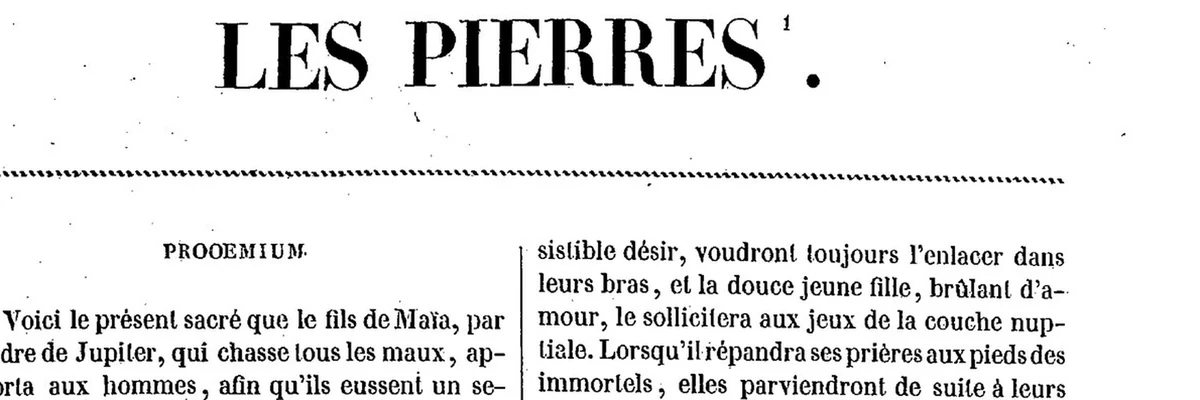
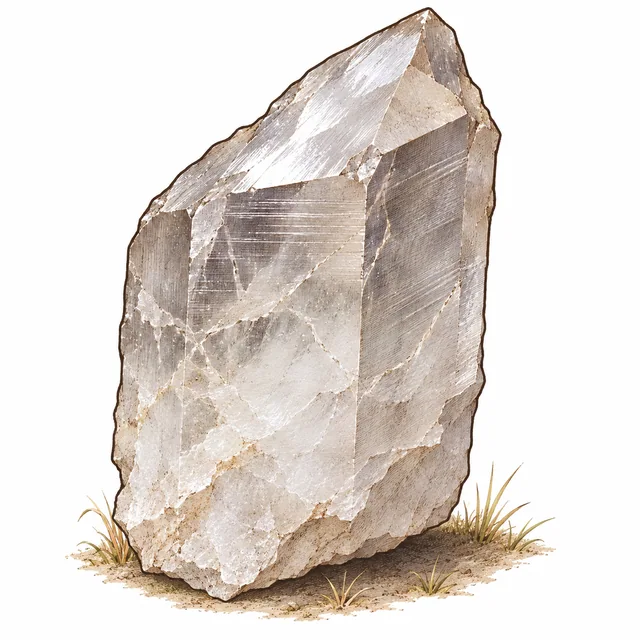
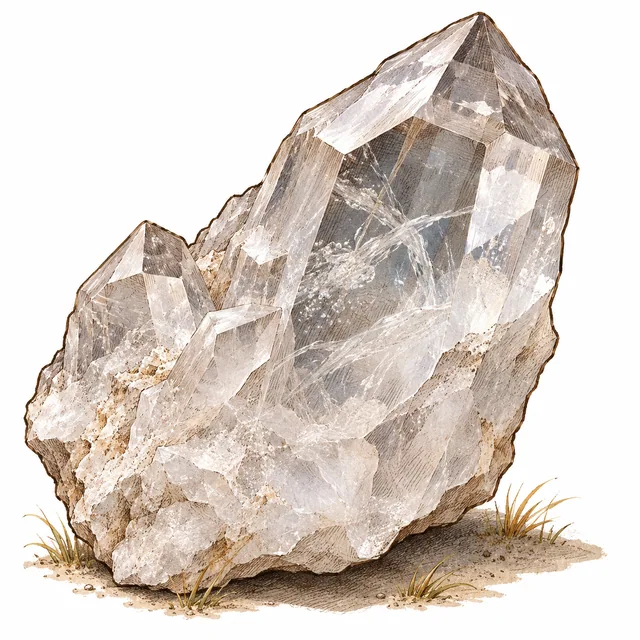
A person who came to the temple holding a rock crystal could expect the gods to hear their prayer. Such is the promise of the Lithika, a lapidary transmitted under the name of Orpheus. The transparent stone was also said to direct the sun’s rays onto dry wood and kindle a fire. This fire, the poem explains, was especially pleasing to the gods. A property of crystal becomes the starting point for an instruction about sacrifice.[1]
The Lithika is a Greek didactic poem of 774 hexameters on the powers attributed to 29 stones. A proem introduces this knowledge as a divine gift. The narrator then meets Theiodamas, and their conversation provides the setting for the descriptions. Longer stories about gods and heroes expand the lesson. The author who wrote under the name of Orpheus is unknown. The date, too, is disputed. Recent research has considered a fourth-century setting in the circle of the emperor Julian.[1][2][3]
On his way to a sacrifice to the sun god, the narrator meets the knowledgeable Theiodamas returning to the town. He invites him instead to an altar on a nearby mountain. To explain why the place means so much to him, the narrator recalls his youth. He was pursuing two birds when an enormous snake took him by surprise.[1]
The young narrator fled to the altar. A piece of wood he found there defended him only briefly. At last his father’s dogs came and overcame the snake. His father thanked the god with a sacrifice, and the young man himself returned with an offering. The memory of his rescue sets the conversation in motion. As they walk to the altar, Theiodamas begins to teach him about stones, returning to his fear of snakes.[1]
The prologue already presents this knowledge as a divine gift. Hermes is said to have brought it to humanity to give people help in their suffering. The poet addresses discerning listeners willing to learn and to make an effort to acquire this knowledge. He seeks both to teach and to persuade his readers that his subject matters.[1]
“Take the shining, transparent crystal in your hands, the stone, an outflow of undying, fiery radiance.”
– Pseudo-Orpheus, Lithika, lines 172–173, Abel edition, p. 20. Our translation from Greek.[5]
The description of rock crystal traces the effect of a sunbeam on dry material, from the first smoke to the final flame. It then turns to the supposed effect of the stone on the body. The poem treats its ability to kindle a sacrificial fire and to relieve ailments as expressions of the same peculiar nature. The gods appear throughout these individual uses, as well as at the outset.[1]
An agate with tree-like markings receives equally close attention. A whole garden or forest, the poet says, can be seen inside. The stone should accompany the ploughman or his draught animals so that the goddess of farming will make the soil fertile. The image of plants within the stone is linked to the fertility hoped for in the field.[1]
The account of the magnet begins with its behaviour. It holds iron fast as a woman holds the man she loves. The poem extends this attraction to human affairs. The stone is said to keep brothers from quarrelling and to help an orator speak persuasively. The poet connects something that can be observed with effects in social and religious life.[1]
Some descriptions grow into extended mythical narratives. Coral appears first as a marine plant that hardens outside the water while retaining its branching shape. The poem then tells of Perseus. When he laid the Gorgon’s severed head on the shore, the plants beneath it were soaked in blood and turned to red stone.[1]
Athena is said to have endowed coral with special powers. It would protect people at sea, and the ensuing list of uses also mentions threats to the crops. Shape, colour and effect thus share a history. The intervention of a goddess explains the wonder of a plant-like thing turning into stone.[1]
The story of a stone belonging to the seer Helenus goes further still. He is said to have washed it, wrapped it in soft cloths and cared for it like a child. Through ritual and song the stone would come alive and answer questions about the future. Once it had answered, it seemed lifeless again. The gift of prophecy depends on the care of the stone and the presence of a deity.[1]
The Lithika combines instruction, prayer, conversation and heroic narrative. Theiodamas speaks to the narrator, and within his account other human and divine figures speak with authority. Niek Janssen reads this interplay as a way of lending the teaching credibility through an accumulation of authorities. The individual stories strengthen the poem’s claim to offer access to special knowledge.[4]
The work survives in about fifteen manuscripts now dispersed among European libraries. They are being re-examined in the project Orphic Lithika: A New Edition. Its researchers also study the deliberately archaic, Homeric language and linguistic features that suggest a date in late antiquity.[3]
 Search
[…] then the becoming of stone is a birth, and every birth springs from some seed. […]
Jan Baptista van Helmont (1579–1644)
Our translation from the Dutch edition.
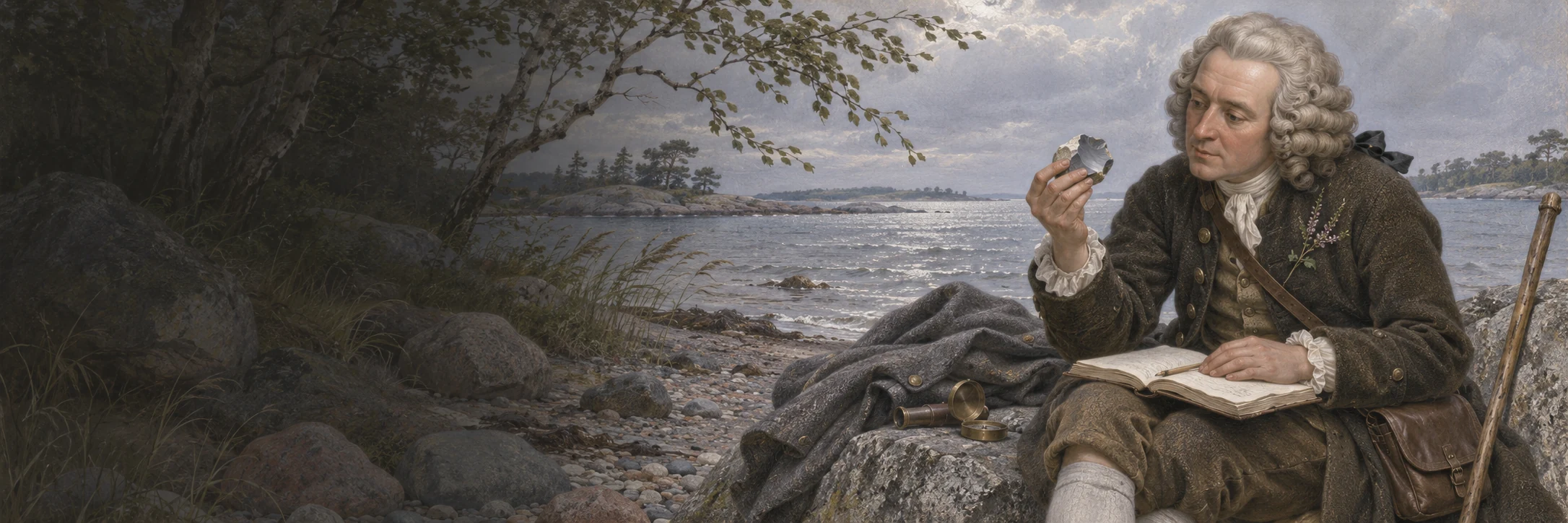
O flint! Flint! Who begot you?
Johann Friedrich Henckel (1678–1744), in Linnaeus
 Systema naturae · 1735 · Regnum lapideum, Obs. 6
Our translation from the Latin edition. Saying of Johann Friedrich Henckel, recorded by Linnaeus.
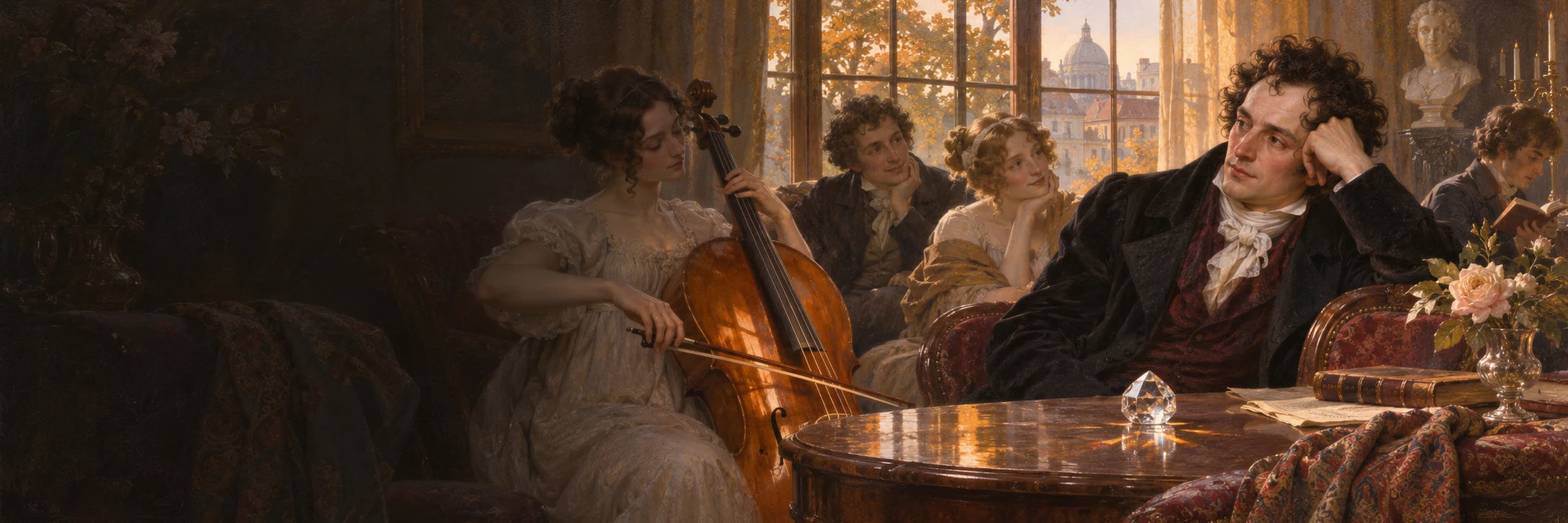
As sound made a shape for itself in crystal, so the sound of strings strikes into your soul.
Clemens Brentano (1778–1842)
To Schinkel · 1817 · An Schinkel
Our translation from the German edition.
He spoke to them of the true, the beautiful, and the good, and told them that these three held together in the world, and that under the pressure they had to endure, they became hardened into a precious stone, clearer than the […]
Hans Christian Andersen (1805–1875)
The Stone of the Wise Men · 1878 · p. 381
Wording of the English edition.
When rarefied it becomes fire, when condensed it becomes wind, then cloud, and when condensed still further, water, then earth, then stones. Everything else comes from these.
Anaximenes (6th c. BCE)
Testimony in Simplicius · 1906 · p. 18
Our translation from the Greek edition.
For crystal appears to have as its matter not water alone, but a wateriness tending towards the nature of air. For this reason it is exceedingly transparent and tends towards brightness.
The crystal is a figure of the air. Whatever appears in the air, movable or immovable, the same appears also in the speculum or crystal as a wave.
Pseudo-Paracelsus (early modern period)
The Coelum Philosophorum · 1894 · p. 14
Wording of the English edition.
In our Stone, as composed by me and by those who have long preceded me, are contained all elements, all mineral and metallic forms, and all the qualities and properties of the whole world.
[…] a spirituall Being, which is environed with the four Elements, which also changeth the four Elements into one […]
Jacob Boehme (1575–1624)
The Epistles of Jacob Behmen · 1649 · Letter XXIII, 17
Wording of the English edition.
Fire placed in the Stone is Nature’s Prince, Sol’s Son and Vicar, moving and digesting matter and perfecting all things therein, if it shall attain its liberty […]
Jean d’Espagnet (c. 1564–17th c.)
The Hermetic Arcanum · 1893 · p. 33
Wording of the English edition.
This chaos hath in it the four elements, which of themselves are contrary natures; but the wisdom of God hath so placed them that their very order reconciles them.
So also the Stone is resolved into water, and water into a vaporous clowd, and the clowd into aire from whence it came […]
 Cart