
 Phone: +43 677 628 66 628 |


 Search
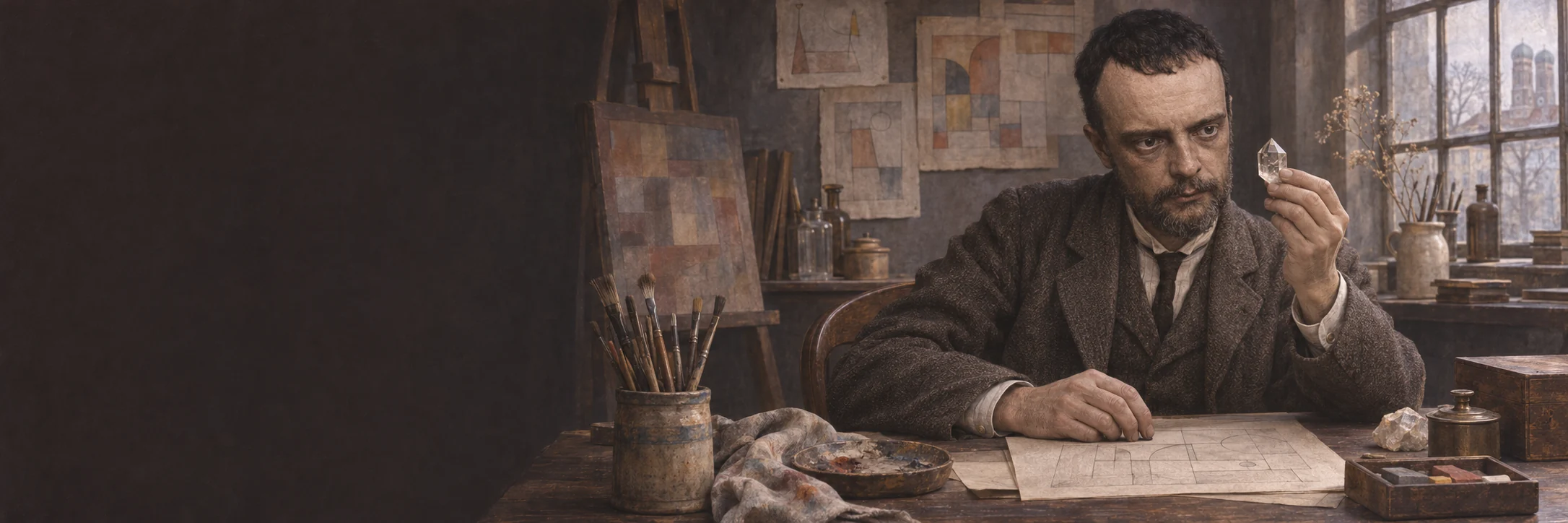
Artist’s diary
Paul Klee
Can I, a crystal, die?
Paul Klee (1879–1940)
Tagebücher 1898–1918 · 1915 · edition 1957, entry 951, p. 323
Our translation from German.
Original text
Kann ich denn sterben, ich Kristall?
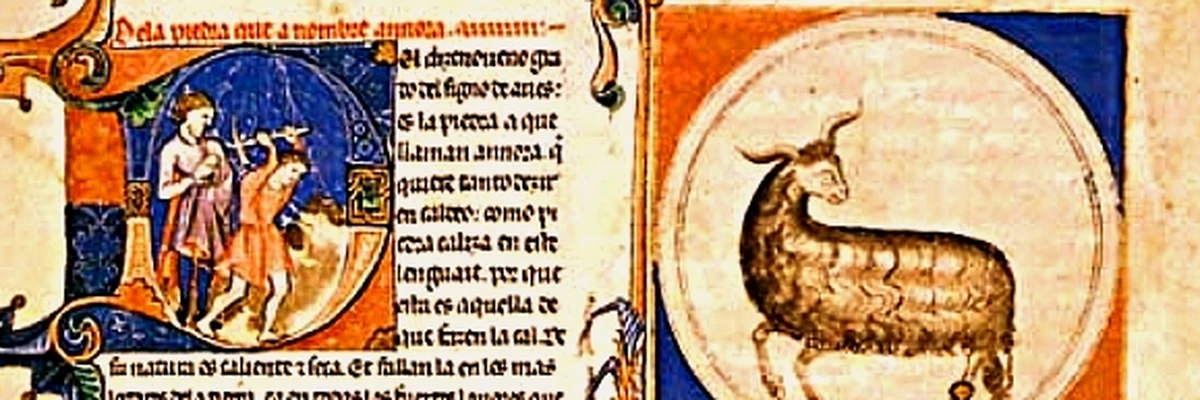
The first lapidary opens with the magnet. The Lapidario assigns it to the first degree of Aries, describes its colour and explains how it attracts iron. Even this visible force has an explanation in the heavens: certain stars are said to confer it on the stone. Its effect is particularly strong when one of them rises on the eastern horizon. The author considers place of origin, material and celestial movement together.[1]
The Lapidario is a collection in Castilian prose compiled in the thirteenth century for Alfonso X of Castile (1221–1284). The surviving Escorial manuscript h-I-15 comprises 119 parchment leaves and brings together four treatises. They arrange stones according to degrees and divisions of the zodiac, positions of the planets or the alphabetical order of their Arabic names. The first lapidary was designed for 360 entries, thirty for each sign. Of these, 301 survive. The properties and uses of the stones are linked to their relationships with the stars.[2][3]
Alfonso’s translation project began before his accession. Between 1243 and 1250, Yehudá ben Mošé and the cleric Garcí Pérez translated the first Arabic source into Castilian. Further revisions and additions produced the collection preserved in the richly decorated Escorial manuscript h-I-15. This copy is dated to about 1270–1275.[2]
The introduction relates an earlier history. A scholar named Abolays had supposedly collected ancient books from Chaldaea, among them a work on 360 stones. After studying it closely, he translated it from Chaldaean into Arabic. His knowledge of the stars and of stones had enabled him to put its claims to the test. This is how the prologue establishes the authority of the source.[1]
After Abolays died, the story continues, the book went without a proper interpreter for a long time. Only when it passed from Toledo into Alfonso’s possession was its usefulness understood again. Yehudá is introduced as a physician familiar with astronomy who knew Arabic and Latin. Alfonso ordered a Castilian translation so that people might better understand and apply the text.[1]
This story of origins links the patron’s undertaking to a claimed recovery of ancient knowledge. It also shows what skills translation was thought to require. Knowledge of languages alone was insufficient. A translator had to understand what the names of the stones, the constellations and the uses described actually meant.[1]
The prologue sets out the basis for these connections.
“[…] all things in the world are, as it were, bound together and receive power from one another […]”
– Lapidario compiled for Alfonso X, first lapidary, prologue. Our translation from Castilian.[1]
These powers show themselves more clearly in animals and plants, while in stones and metals they remain more deeply hidden. Celestial bodies act on earthly substances, and the text names God as the source of all power. Apparently inanimate matter could thus belong to an active order of nature.[1]
Assignment to a sign of the zodiac is only a first step. The entry for the magnet in the first degree of Aries names three stars in the region of Pisces from which it receives its power. The rising of a particular star at the horizon is also significant. A single entry brings together the stone’s place in the catalogue, the stars concerned and the time when their effect is supposed to be strongest.[1]
The account of the magnet starts from an effect that can be observed directly. Iron that has touched the stone can attract more iron, producing a chain of pieces that hang together. The description expressly appeals to sight and to the pull one can feel between iron and stone. Alongside this stands the tale of a magnetic mountain by the sea that tears the nails from passing ships or draws the ships towards it.[1]
The collection develops further ideas from this attraction. Under the fifteenth degree of Aries we find the “Piedra que tira el oro”, a stone said to attract gold. It was supposed to separate gold filings from earth and so help goldsmiths in their work. The magnet provides the model for a claim about another metal.[1]
Changes of colour are also described. The stone called goliztiz is said to turn silver so yellow that it looks like pure gold. The author expressly distinguishes this colouring from natural gold. Another entry, for camorica, connects the effect of acidic liquids with the working of solid materials and mentions use by practitioners of alchemy. Workshop processes occupy the collection alongside stones worn on the body and medicinal uses.[1]
According to the prologue, anyone using the book must command three subjects: astronomy, the knowledge of stones and medicine. Knowing stones means knowing their colour, shape and place of origin, as well as weight and hardness. These characteristics help distinguish similar substances and reveal imitations. The reader must also judge which use will help and which could harm.[1]
The Escorial illustrations take up these connections. In the first part especially, they show the discovery of the stones and the constellations associated with them. Coloured pigments, gold leaf and painted gold decorate the parchment codex. The constellations thus have a place in the design of the page as well as in the descriptions of earthly materials.[2]
The gaps in the first lapidary affect Leo, Aquarius and Pisces. Links between the treatises help to fill them in part. In six cases, references in the second lapidary allow lost stone names to be recovered. Their detailed descriptions remain missing. Even these cross-references, however, show how the individual lapidaries were connected within the collection.[3]
 Cart