
 Phone: +43 677 628 66 628 |


Book of Isaiah
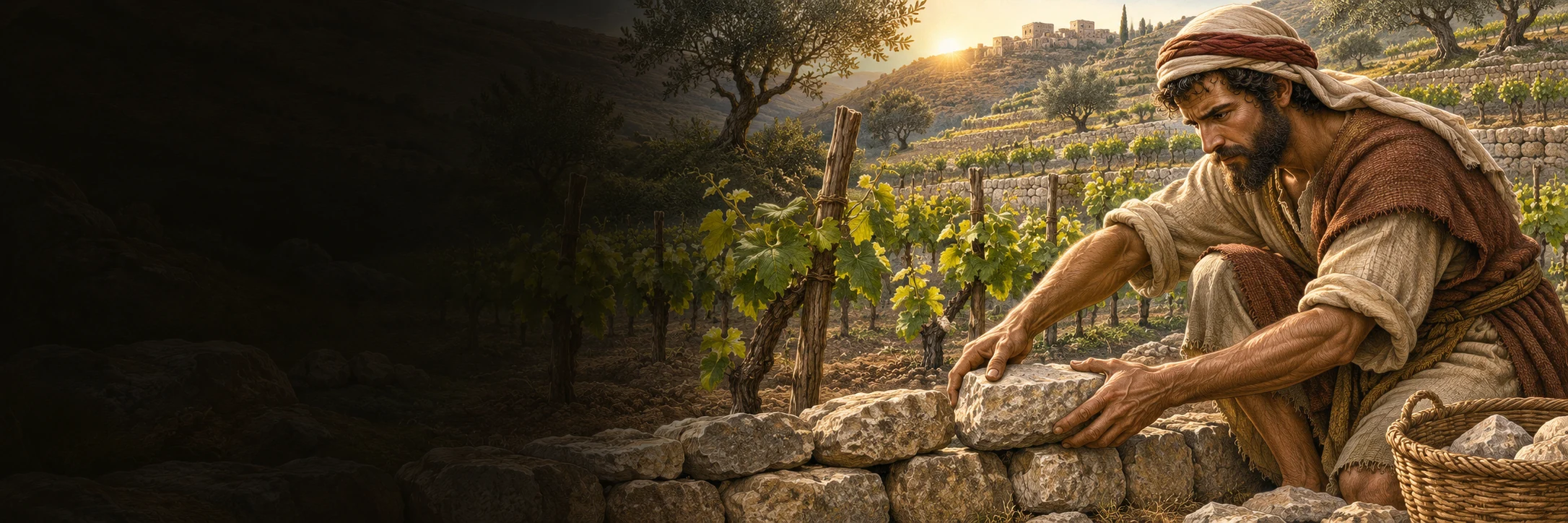
He fenced it in, protected it with heaps of stones and planted choice vines in it. He also built a tower in it and dug a winepress there, and waited for it to bear grapes, but it bore wild grapes.
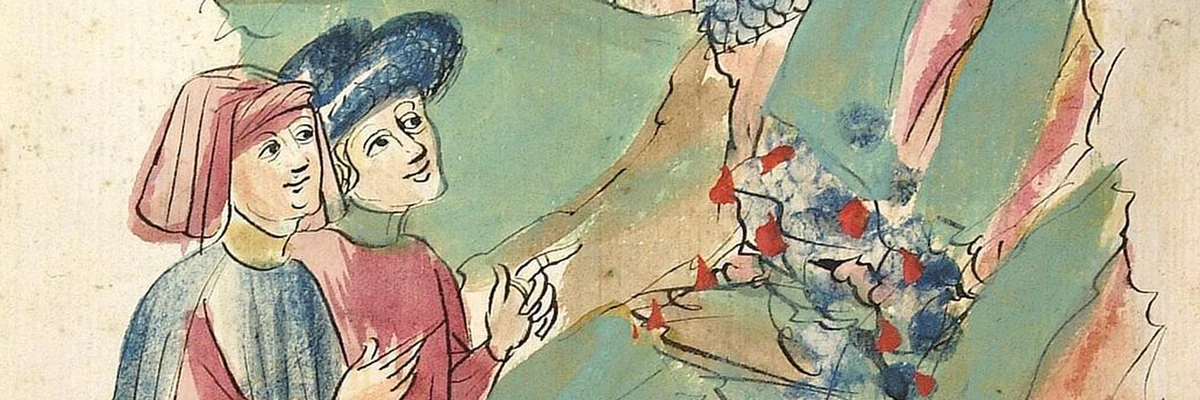
Konrad von Megenberg addresses his readers directly in his account of the topazius:
“If you try to polish the stone and make it beautiful, it grows dark. Leave it in its own natural state and it shines beautifully.”
– Konrad von Megenberg, Buch der Natur, VI, ch. 77, Pfeiffer edition, p. 464. Our translation from Middle High German.[1]
This advice in Konrad’s Buch der Natur belongs to an account that brings together a stone’s colour, its origins and the powers attributed to it. The name topazius in this medieval text cannot simply be equated with the mineral now known as topaz.[1]
Konrad von Megenberg wrote his Buch der Natur in German around 1350. His source was an abridged and rearranged version of Thomas of Cantimpré’s Latin Liber de natura rerum. Its eight main parts cover human beings, the heavens and natural phenomena, animals, trees and shrubs, herbs, gems, metals and remarkable springs. Accounts of extraordinary peoples follow at the end. The sixth part, Von den edeln Stainen, forms a continuous treatment of stones.[1][2]
Konrad begins by announcing an account of the colours and powers of gems and of the means by which those powers might be improved. He intends to arrange their names according to the Latin alphabet. Before the sequence opens with amethyst, however, he considers stones in general. The individual descriptions are thus preceded by a common explanation of how stones came into being.[1]
In his account stones grow out of moisture and vapours confined in the veins and cavities of the earth. The four elements, fire, air, water and earth, mingle there in different proportions. He uses these mixtures to explain the different colours. A large share of earth makes a stone dark, water makes it clear, air makes it yellow or pale, and fire makes it red. The stars too were thought to influence the formation of colours.[1]
On the question of shape Konrad expressly challenges his source. It traces the shape of a stone to the cavity in which it forms. He objects that small round stones occur in large angular cavities and angular stones in round ones. Nor would this explain shapes in stones that resemble humans or animals. He concludes that particular powers of the stars must produce these shapes in the matter from which the stone forms.[1]
Konrad’s own position comes out still more clearly when he considers the powers of stones. His Latin source explained the effects of plants by heat, cold, moisture and dryness. The marvellous effects attributed to stones, by contrast, seemed to escape such an explanation. In the view set out there, God had therefore bestowed these powers on stones directly, without any intervening natural force.[1]
Konrad finds this distinction unwarranted. In the medicine of his day stones too were thought to cool or moisten. He gives the example of a remedy containing crushed pearls and gold. Conversely, plants were credited with unusual powers which heat or cold did little to explain. He therefore sees no reason to exempt stones from the ordinary workings of nature. As with herbs, God grants them their powers through the course of nature and the intervening influences of the stars.[1]
The disagreement even raises a question of authorship. Konrad knew the Latin book under the name of Albertus Magnus. As other works by Albertus argued differently, he doubted the attribution, allowing at most that it might have been a youthful work. Today his source is identified as a reworking of Thomas of Cantimpré. Konrad’s doubts occur in the midst of the section on stones and show how closely he attended to differences between the explanations before him.[1][2]
For Konrad the explanation of natural processes leaves room for religious interpretation. The description of the undiminished beauty of the topazius leads to a comparison with Mary. A physical property of the stone thus becomes the point of departure for a spiritual reading. Its colour, surface and response to polishing belong to natural description. The meaning drawn from them belongs to a Christian understanding of the world.[1]
Engraved stones have a place here too. The introduction recalls the biblical stonecutters Bezalel and Oholiab and the inscribed stones of the high priest’s vestments. Konrad explicitly declines to infer that every engraving must signify a particular power. At the close of the section he records further interpretations of images and their supposed effects. He also sets a limit to the trust placed in them. No one should put all their hope in an engraved stone. That hope was due to God, from whom the powers of stones likewise came.[1]
The Buch der Natur circulated in more than a hundred manuscripts. Several versions survive, among them a later reworking dedicated to Duke Rudolf IV of Austria. Its German text brought the collected knowledge to readers beyond the circle of Latin scholars. Opinions differ as to whether Konrad initially had interested lay readers in mind or hoped to supply the clergy with material for sermons.[2][3]
A manuscript now in the SLUB Dresden shows that the section on stones could be read independently. In this collection, compiled in Augsburg around 1460–70, “Von den Steinen” appears as a separate text on leaves 106 to 128. A full-page drawing introduces it. A stonecutter works at a table while a box of stones stands on a bench behind him.[4]
The printed book also gave the section its own visual opening. In Johann Bämler’s Augsburg edition of 1475 a woodcut of Saint Ulrich in gem-set vestments precedes it. The working stonecutter and the richly vested bishop introduce the same subject from different angles, presenting stones as precious objects shaped by human hands and as bearers of special meaning.[4][5]
 Search
He fenced it in, protected it with heaps of stones and planted choice vines in it. He also built a tower in it and dug a winepress there, and waited for it to bear grapes, but it bore wild grapes.
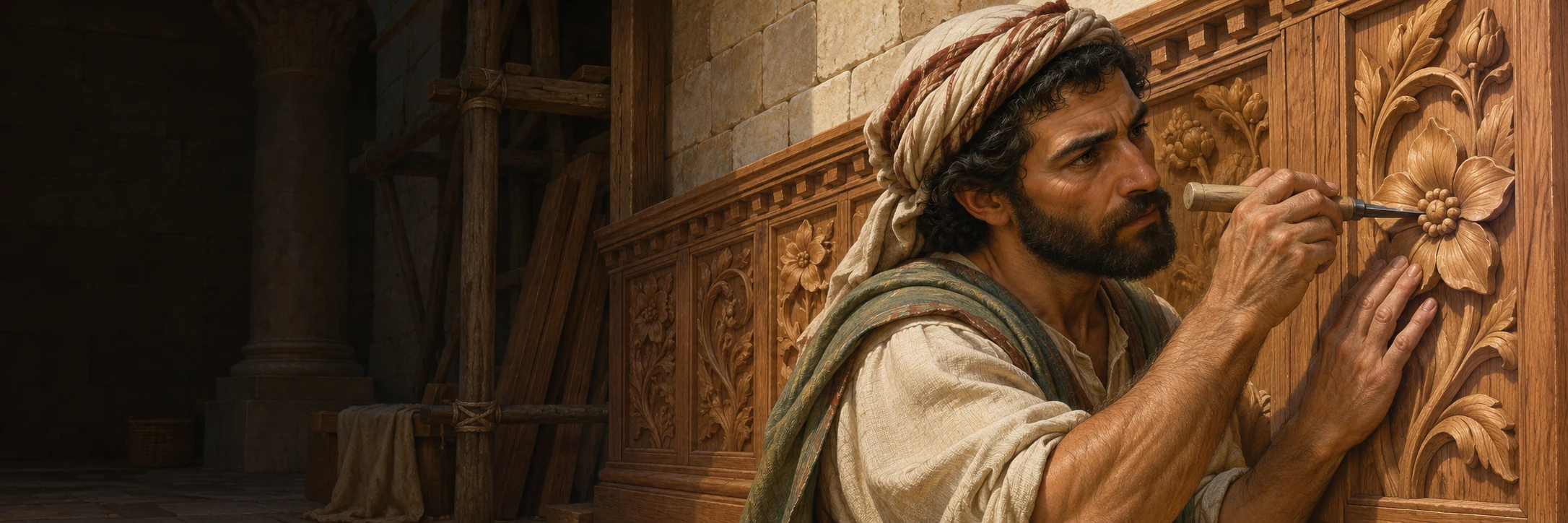
Inside, the whole house was cedar, with carved knobs and flower-work, so that no stone could be seen.

For amongst the Stones they especially are called earthy that are dark, and more heavy; and those waterish, which are transparent, and are compacted of water, as Crystall, Beryll, and Pearls in the Shels of Fishes […]
Heinrich Cornelius Agrippa von Nettesheim (1486–1535)
 De occulta philosophia · 1651 · p. 18–19
Wording of the English edition.
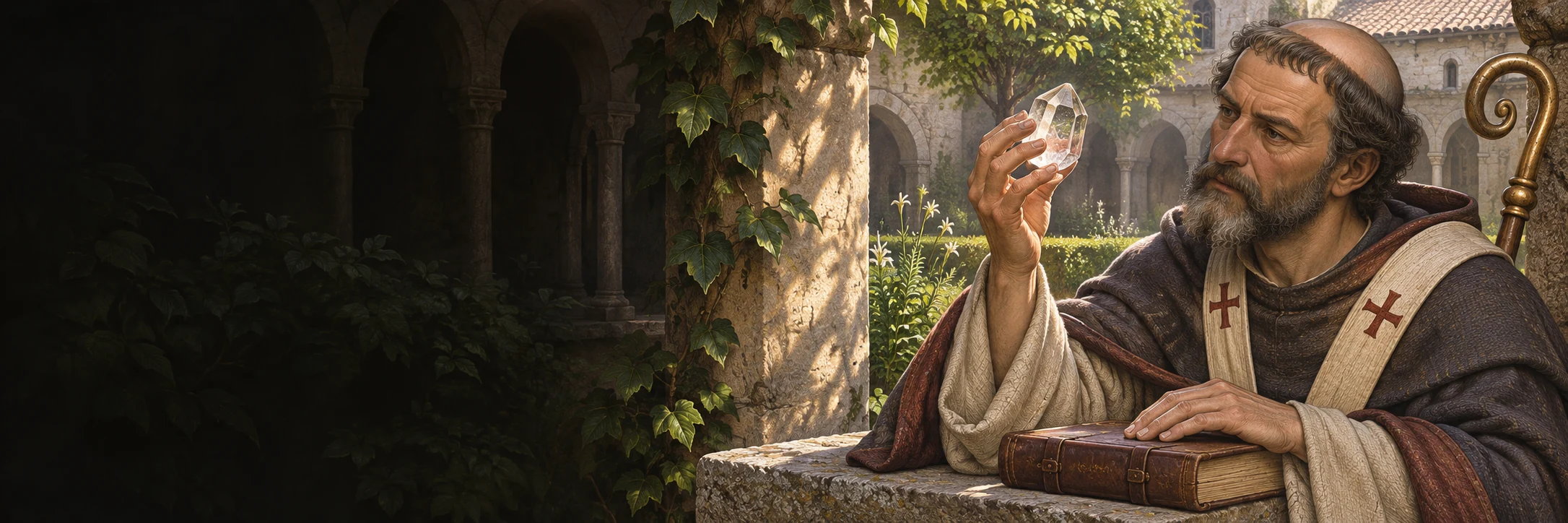
[…] that this stone, placed in the sun, takes fire and with it will kindle tinder fungus brought up close.
Marbod of Rennes (c. 1035–1123)
Liber lapidum · 1799 · p. 70–71
Our translation from the Latin edition.
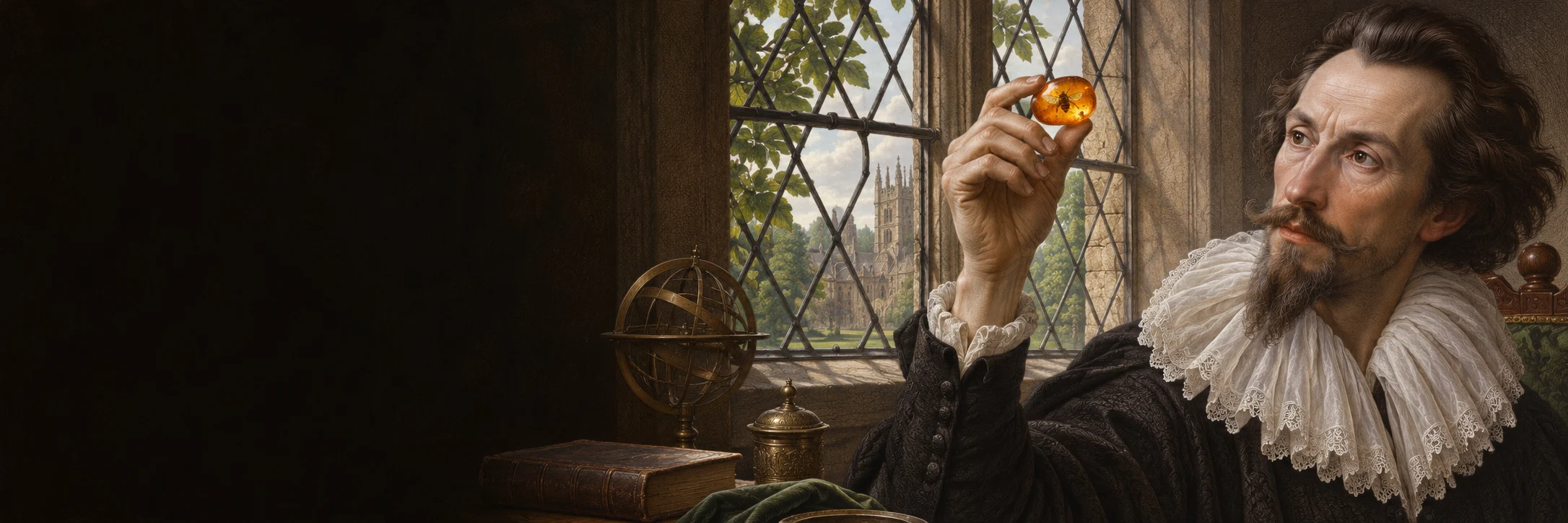
This, as an Amber drop enwraps a Bee, Covering discovers your quicke Soule […]
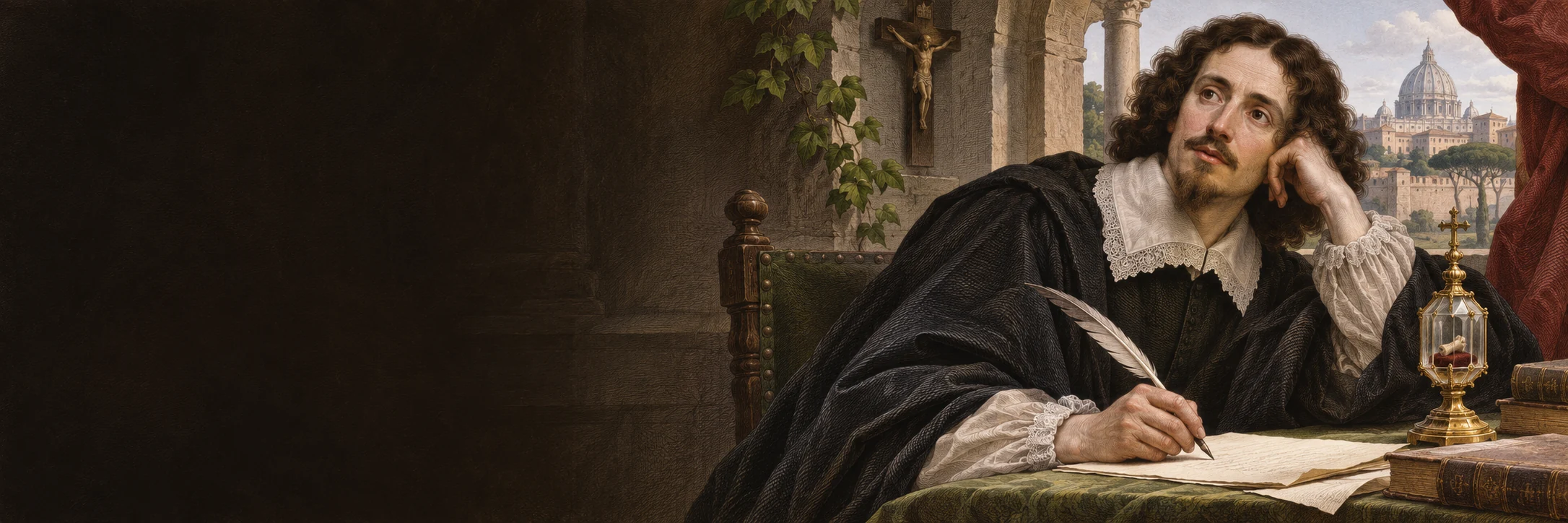
A soul sheath’d in a crystal shrine, Through which all her bright features shine, […]
Richard Crashaw (c. 1613–1649)
In Praise of Lessius His Rule of Health · 1857 · p. 100
Wording of the English edition.
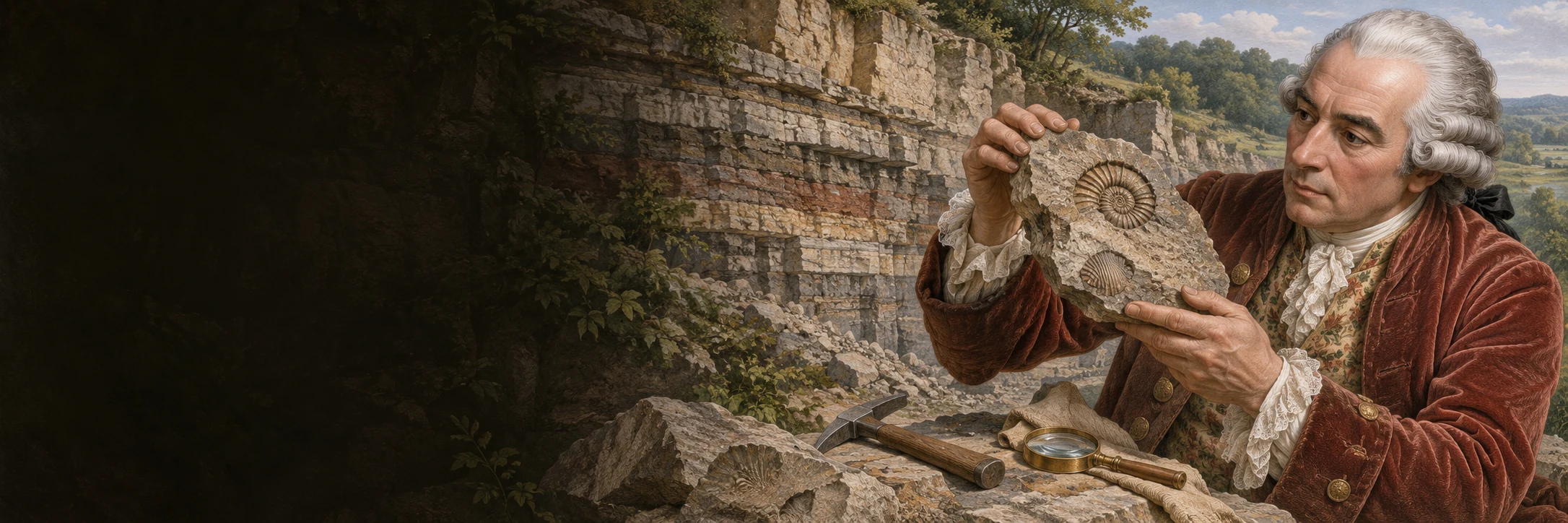
[…] in natural history one must search the archives of the world, draw ancient monuments from the bowels of the earth, collect their fragments and assemble into a body of evidence all the indications of the physical changes […]
Georges-Louis Leclerc de Buffon (1707–1788)
Les Époques de la nature · 1778 · p. 1–2
Our translation from the French edition.
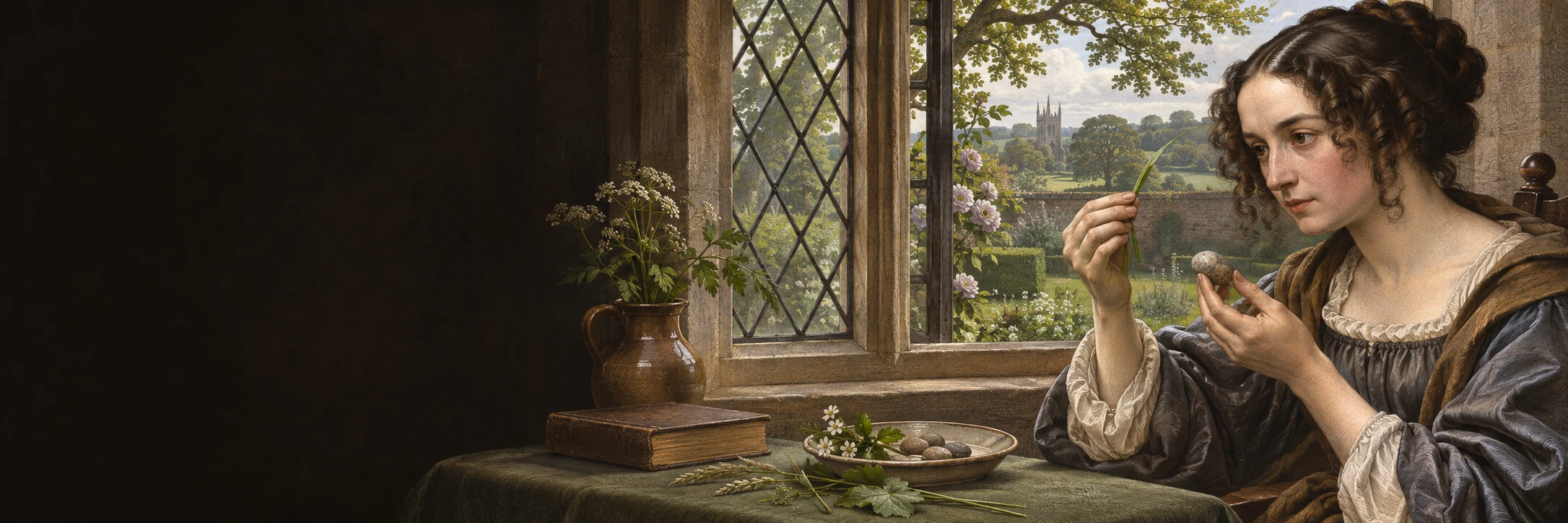
[…] as from a Stone into Earth, and from Earth into Grass, and from Grass to a Sheep, and from a Sheep into Humane Flesh, and from Humane Flesh into the most servile Spirits of Man, and from these into his noblest Spirits […]
Anne Conway (1631–1679)
The Principles of the Most Ancient and Modern Philosophy · 1692 · p. 153
Wording of the English edition.
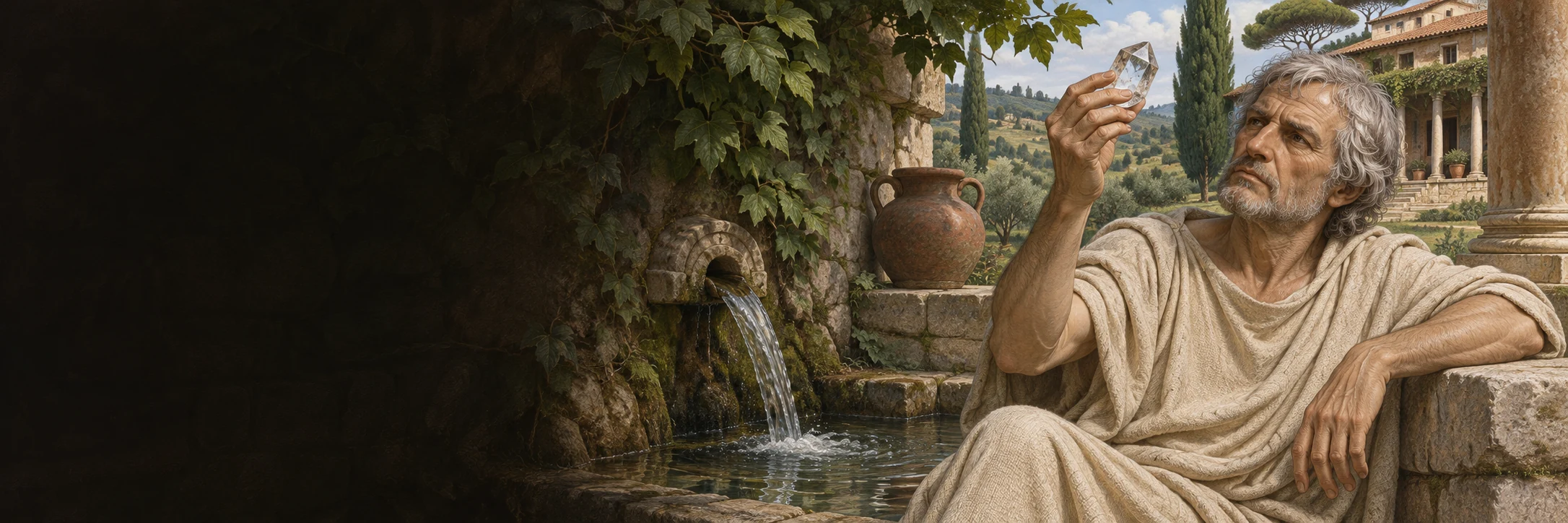
Rain water, which contains very little solid matter, once it is frozen becomes more and more condensed through the persistence of the longer cold until all the air is expelled, and it is compressed to the last degree; then what […]
Lucius Annaeus Seneca (c. 4 BCE–65 CE)
Natural Questions · 1910 · p. 140
Wording of the English edition.
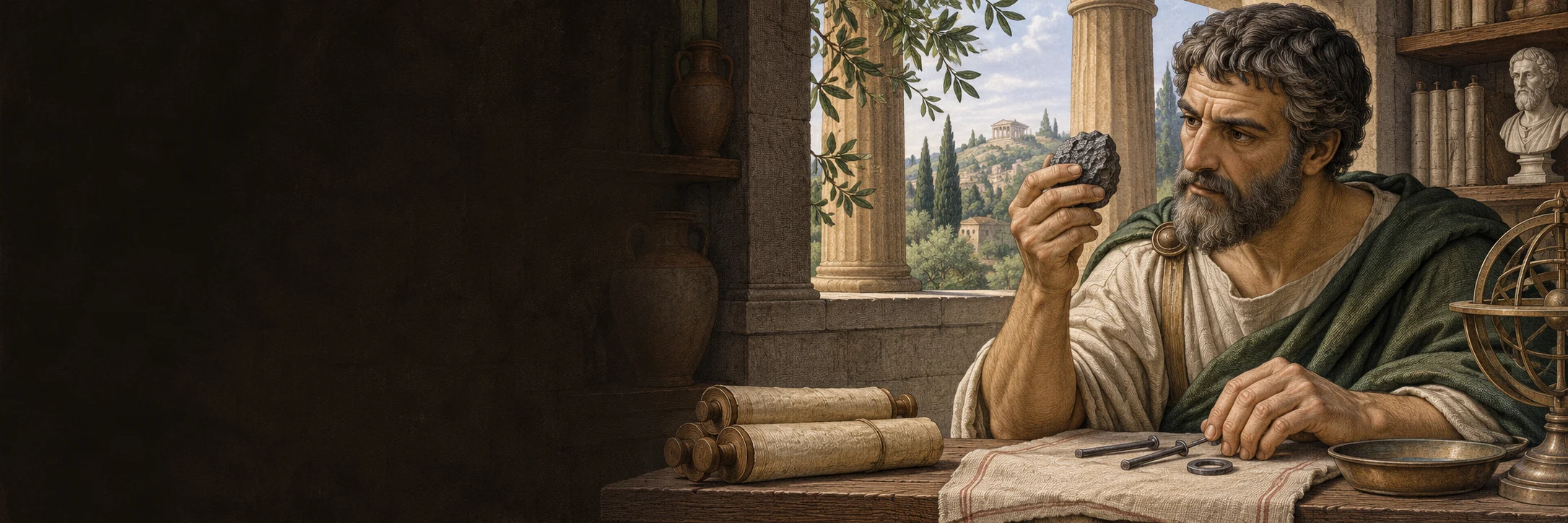
Thus are we moreover informed by Manetho, that the Load-stone is by the Egyptians called the bone of Orus, as Iron is, the bone of Typho.
Plutarch of Chaeronea (c. 45–after 119 CE)
On Isis and Osiris · 1744 · p. 85
Wording of the English edition.
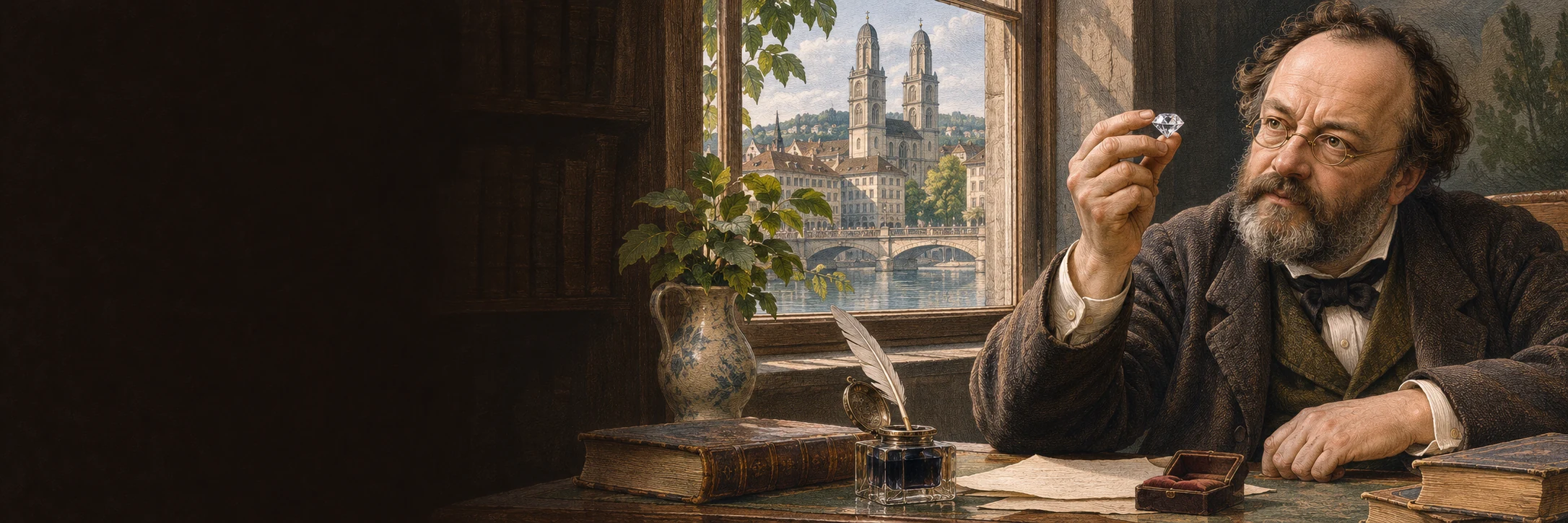
How, then, did the diamond come to be: a unity pervaded throughout, enduring, a purity unclouded, rich in rays, made firm by bonds invisible to us?
Gottfried Keller (1819–1890)
Das Eidgenossen-Volk · 1846 · p. 88
Our translation from the German edition.
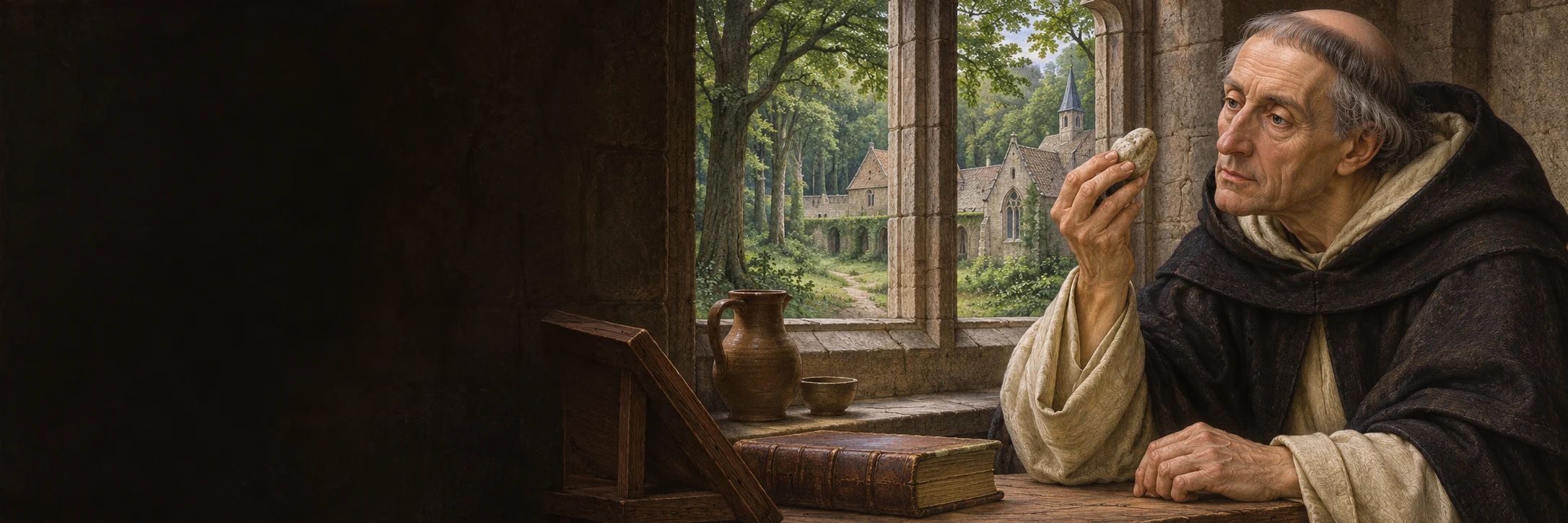
This stone is also like to a fiery flame, for the fiery love of the Eternal Word has filled the whole world with love and wills that all loving spirits be burned up to nothingness in love.
 Cart