
 Phone: +43 677 628 66 628 |


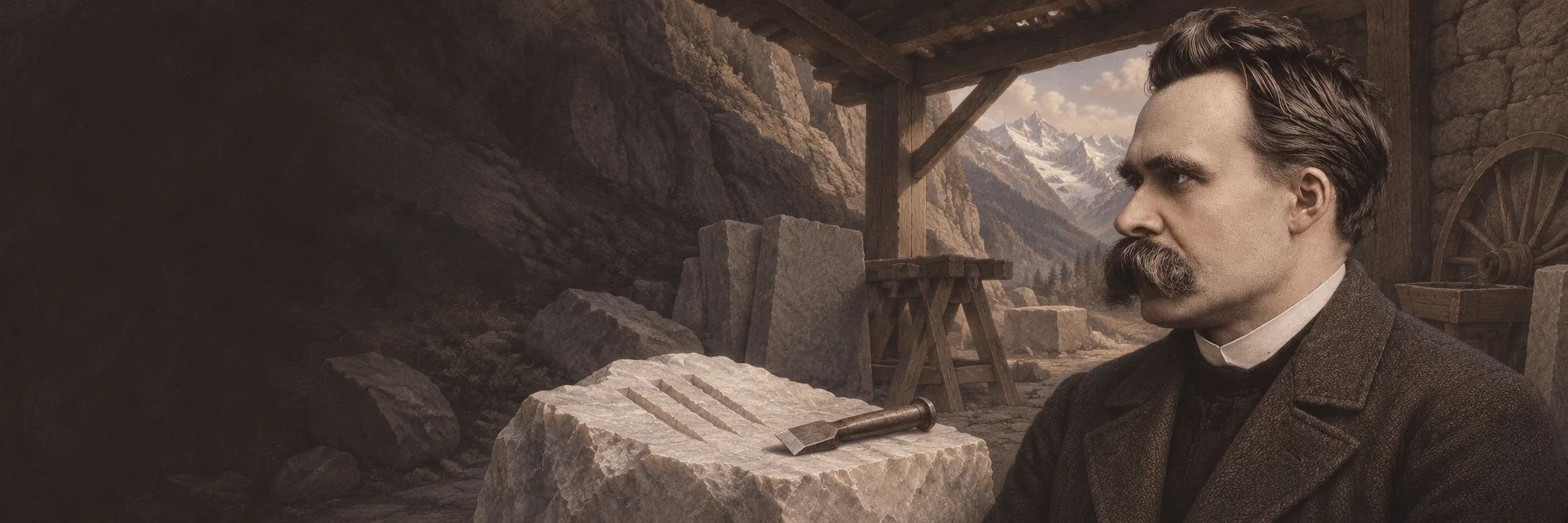
Friedrich Nietzsche
Ah, you human beings, an image lies asleep for me in the stone, the image of my images!
Friedrich Nietzsche (1844–1900)
 Also sprach Zarathustra · 1893 · p. 122
Excerpt. English translation from German.
Seven planets, twelve signs of the zodiac and the hidden relationships between stones and stars all appear on the title page of Coronae gemma nobilissima. It brings the study of gems together with celestial influences and medicine. The author calls himself Wilhelm Eo Neuheuser. Library catalogues also give his name as Wilhelm Eon Neuheuser. His interests extend from the inner constitution of gems to their preparation and their uses.[1][2]
The volume appeared in 1621, uses both German and Latin, and has four unnumbered and 164 numbered pages. The title page announces three parts. Its programme extends from the properties and kinships of stones through their connections with the stars to the chemical preparation of medicines. The description of natural substances and their practical uses belong to the same undertaking.[1][2]
The German subtitle promises a description drawn from repeated practical experience. Each gem is to be understood according to its properties and nature, its “Eigenschafft und Wesen”. Neuheuser asks how the stones are related to other substances, especially metals and minerals. His term “Gewächsse”, or things that grow, also includes these substances. Stones thus belong to a natural world whose products share hidden affinities.[1]
Such affinities were meant to explain why a particular stone possessed particular properties. The programme already brings together two ways of looking at stones. One examines the individual material, the other locates it within a larger order. The seven planets, the signs of the zodiac and the other stars expressly belong to that order.[1]
Neuheuser names the chemical preparation of stones for medicines as a practical goal. His study includes the working and transformation of materials. Knowledge of their inner constitution should also open the way to their use. The experience claimed on the title page thus covers both familiarity with nature and familiarity with the processes by which its substances could be worked.[1]
Passages that George Frederick Kunz reproduced in 1913 give a fuller impression of these relationships. The magnet and iron are joined by their mutual affinity, and both are associated with the planet Mars. The attraction of one substance to another is explained within an order extending to the stars.[5]
Kunz also describes a connection between a human being, a star and a natural object. If a person’s imagination were directed towards an object that agreed with the star under which the person had been born, the three were thought to form a beneficial combination. What mattered was that person and object belonged to the same celestial order. The choice of a stone could thus be justified in terms peculiar to its owner.[5]
Another passage reproduced by Kunz explains how metals and gems came into being. Their first seeds were said to lie deep in the earth. There they needed lasting moisture and gentle warmth, supplied by the sun and the other heavenly bodies. Their enduring properties were understood as an expression of their special kinship with the heavens. Star and stone were therefore thought to be connected from the time the substance first formed.[5]
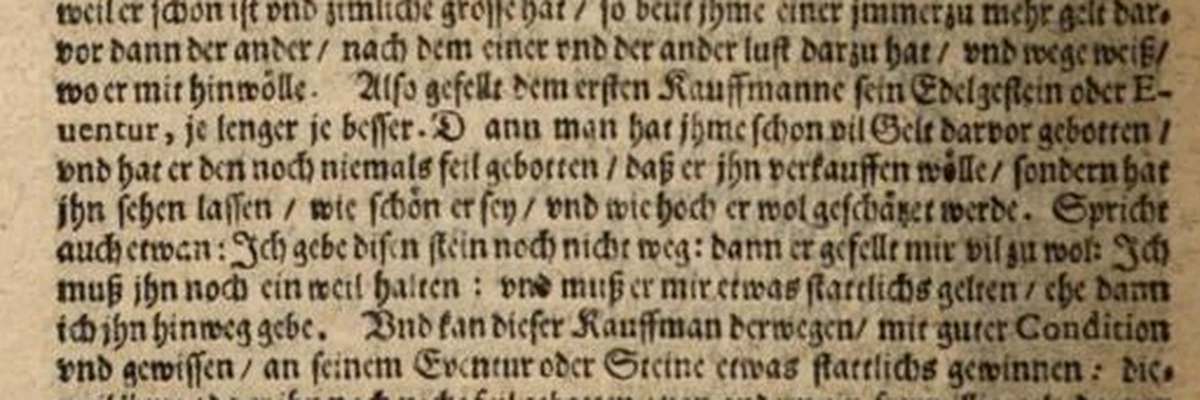
The book also deals with the trade in precious objects. In 1908 George Frederick Kunz and Charles Hugh Stevenson recounted a story about a pearl whose price rose several times within a few days. They expressly referred their readers to pages 32 and 33 of Coronae gemma nobilissima.[6]
A merchant bought the beautiful pearl for 500 gulden and brought it to Nuremberg, where he found a buyer who paid 800. The pearl was then sold for 1,000, then 1,200, and finally 1,500 gulden. Its last owner took it to Venice. There, the story concludes, wealthy women wore costly strings of pearls against their bare skin, and this buyer too was unlikely to have lost money on his purchase.[6]
It is the same pearl that successive merchants value. Its price triples before it leaves Nuremberg. The anecdote illustrates a use for precious substances beyond the preparation of medicines. They could command a price as coveted ornaments and articles of trade. The final journey gives the story its point, for another market already awaits the pearl in Venice.[6]
Neuheuser’s interest in minerals had a professional background. The historian Leigh T. I. Penman places him in Steyr in 1584, working as a mining technician. Neuheuser later said that he had heard a divine voice there. He understood it as a call to unite the world. In numerous writings he outlined a united Christian empire, and in 1612 he presented his ideas at the Imperial Diet in Frankfurt.[3]
His religious expectations also brought him into conflict with other movements, among them the Rosicrucians. In examining his attacks Penman refers to page 113 of Coronae gemma nobilissima. Neuheuser’s interest in hidden powers in nature went hand in hand with religious convictions whose boundaries he drew sharply.[3]
A copy in the Biblioteca Nazionale Braidense belonged to Albrecht von Haller. Another is held in St Louis in the alchemical collection of Ethan Allen Hitchcock.[2][4] Later writers took up different parts of the book. Kunz and Stevenson drew on the pearl anecdote for their account of the trade, while Kunz used the passages on the stars in his history of astrological interpretations of stones.[5][6]
 Search
Ah, you human beings, an image lies asleep for me in the stone, the image of my images!
Friedrich Nietzsche (1844–1900)
Also sprach Zarathustra · 1893 · p. 122
Excerpt. English translation from German.
All substance possesses life, inorganic as well as organic; all things are animate, crystals as much as organisms.
Everything that exists, even a stone, has two sides to its nature. It fiercely maintains its own individuality, its own solidity. And it reaches forth from itself in the subtlest flow of desire.
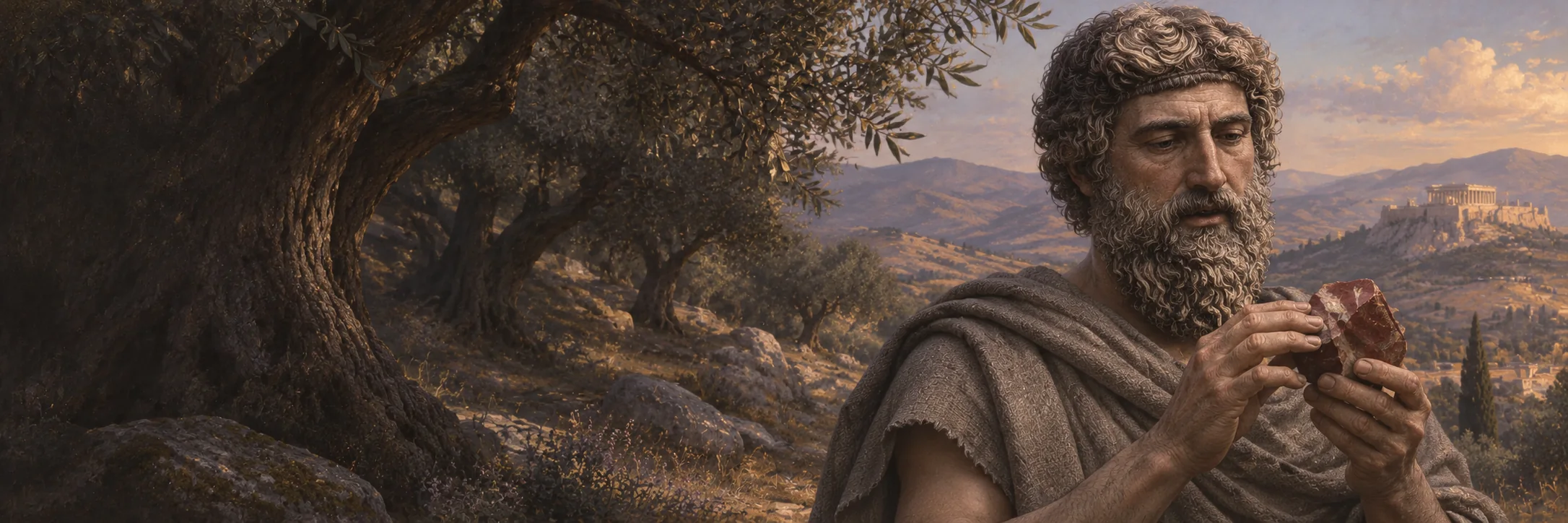
[…] but there all the stones are as our precious stones, and even more beautiful still.
Plato (c. 428/427–348/347 BCE)
Excerpt. English translation by F. J. Church.
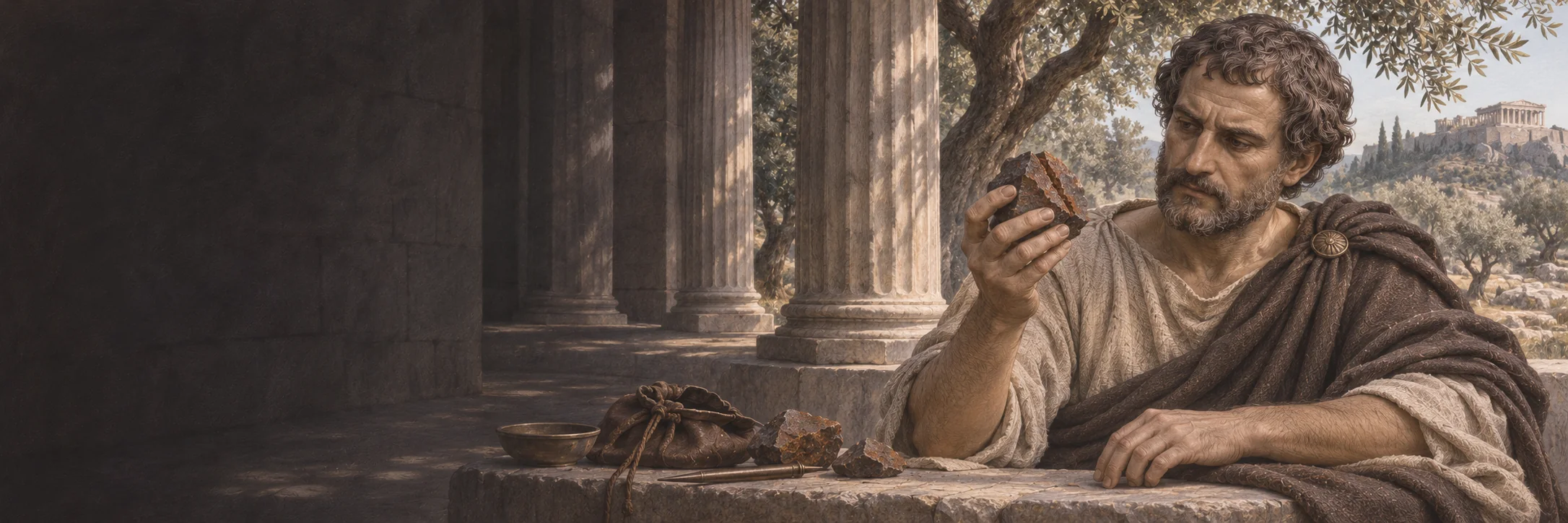
The vapour-like exhalation produces them all when it is trapped, particularly in stones.
Aristotle (384–322 BCE)
Meteorologica · III, 6 (378a) · p. 106
Excerpt. Our translation from the Greek.
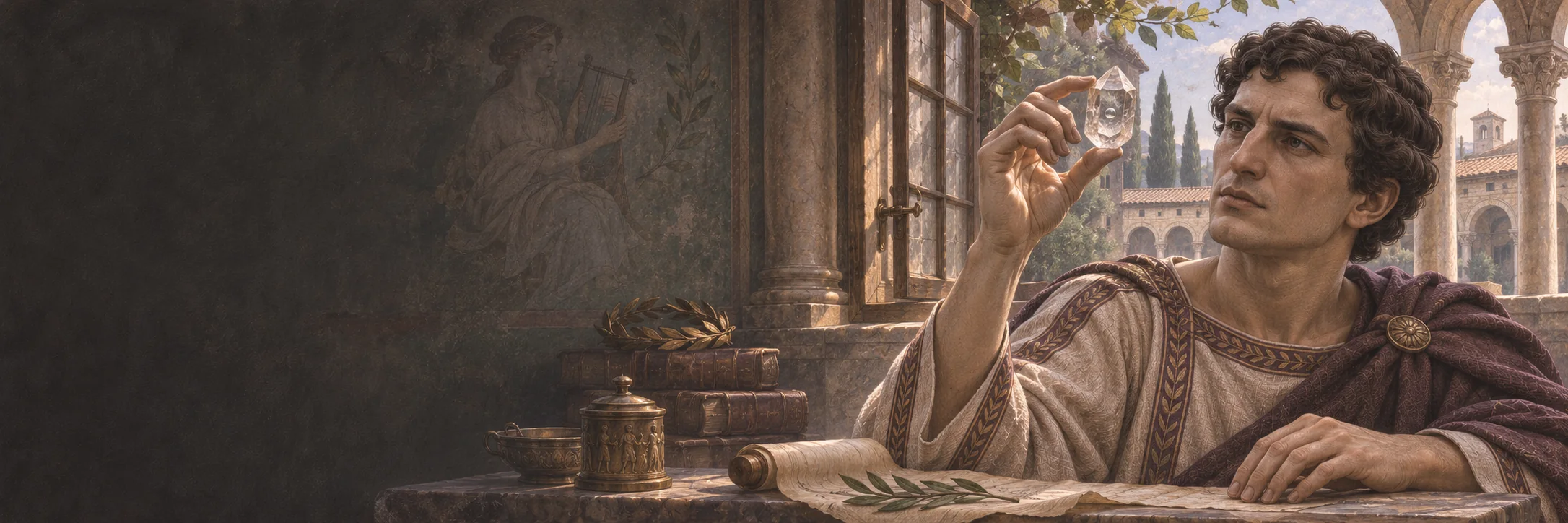
What warmth enclosed within keeps the waters safe? What south wind melted the ice inside?
Claudian (c. 370–c. 404)
Carmina minora · XXXIV (LVII) · p. 250
Lines 5–6. Our translation from the Latin.
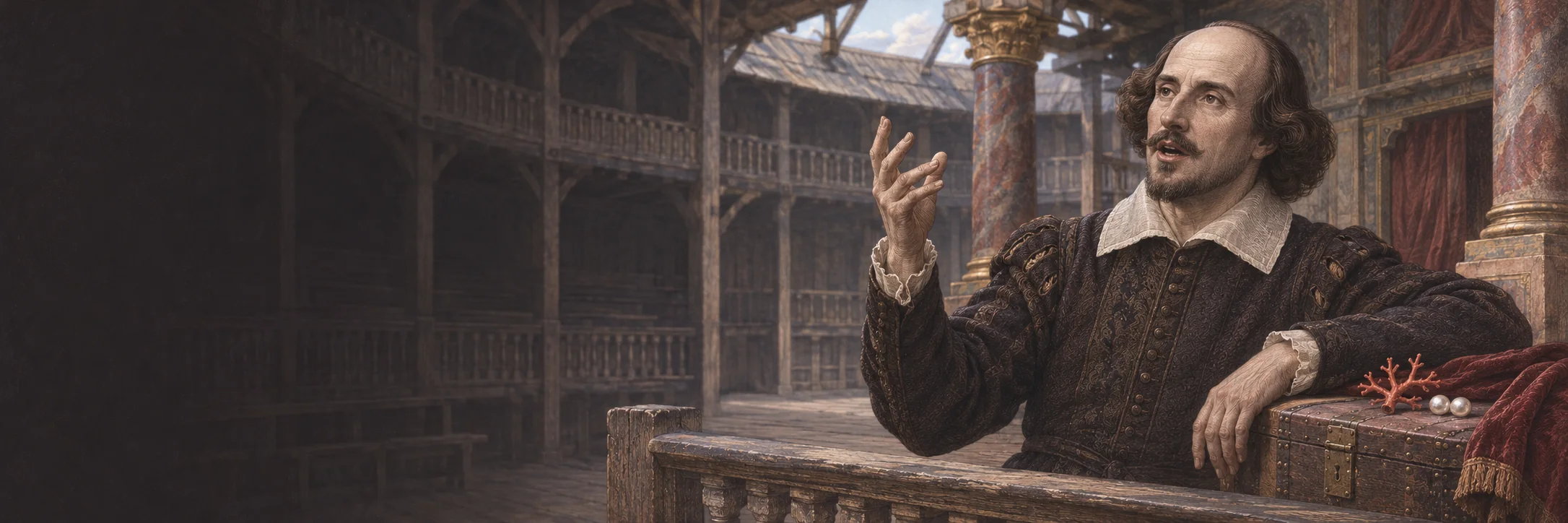
Of his bones are coral made; / Those are pearls that were his eyes:
William Shakespeare (1564–1616)
Excerpt from Ariel’s song in the English original.
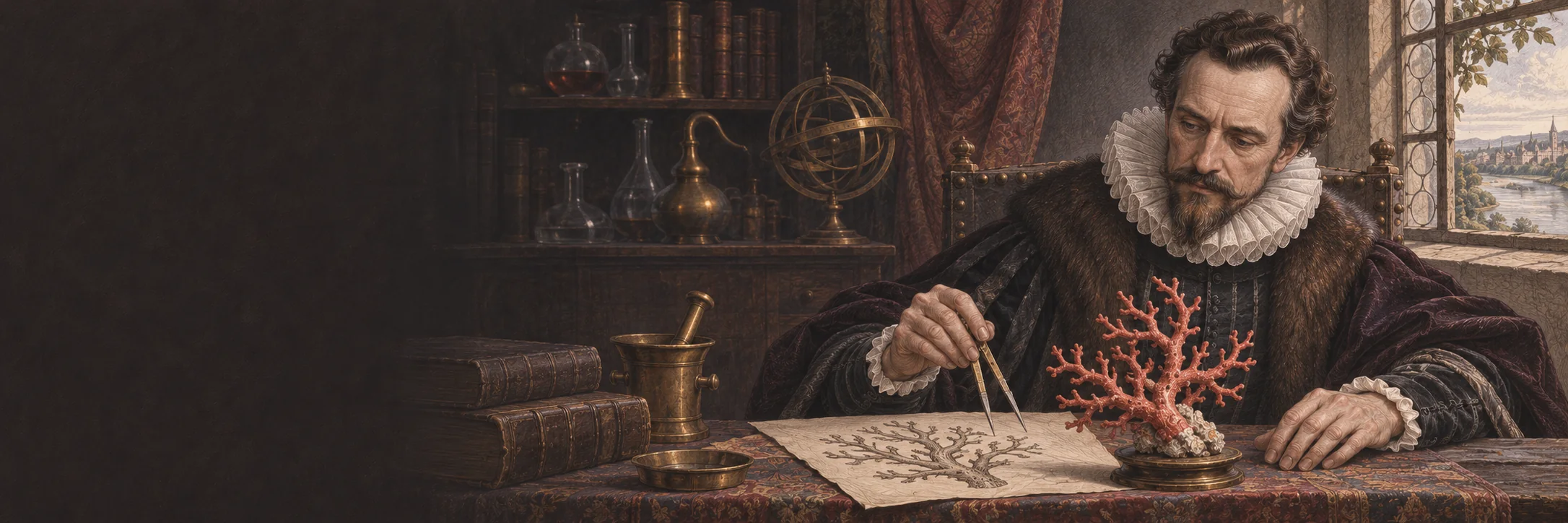
As coral grows under water and hardens in the air, so does the stone.
Michael Maier (1568–1622)
Atalanta fugiens · Emblema XXXII · p. 137
Our translation of the Latin motto.
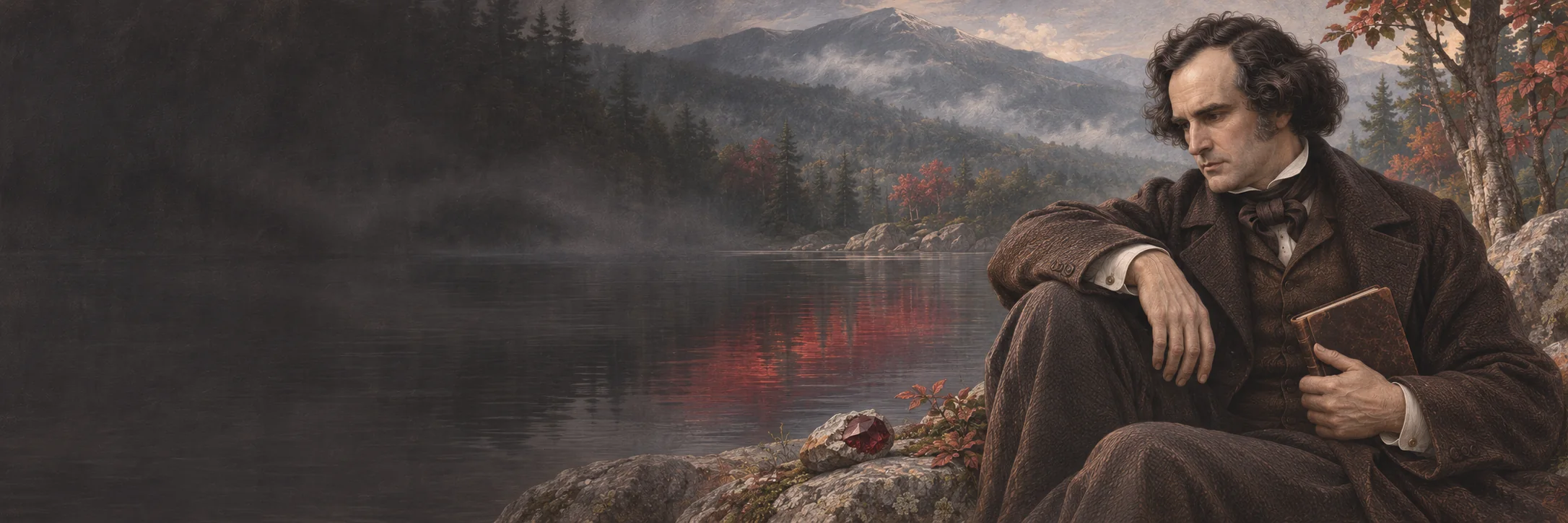
They seemed changed to one another’s eyes, in the red brilliancy that flamed upon their cheeks, while it lent the same fire to the lake, the rocks, and sky, and to the mists which had rolled back before its power.
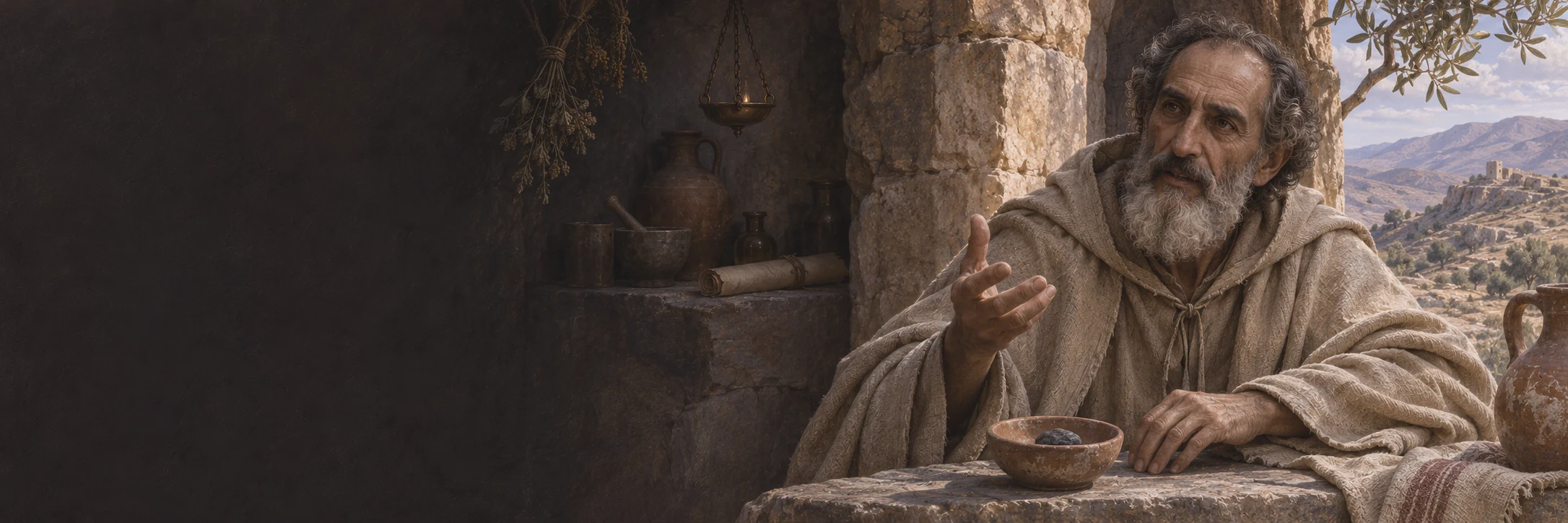
For this stone contains the four elements. It resembles the world and the way the world is put together.
Morienus Romanus (dates unknown)
De transfiguratione metallorum · Dialog mit König Calid · 1559 · fol. 23r
Our translation from Latin
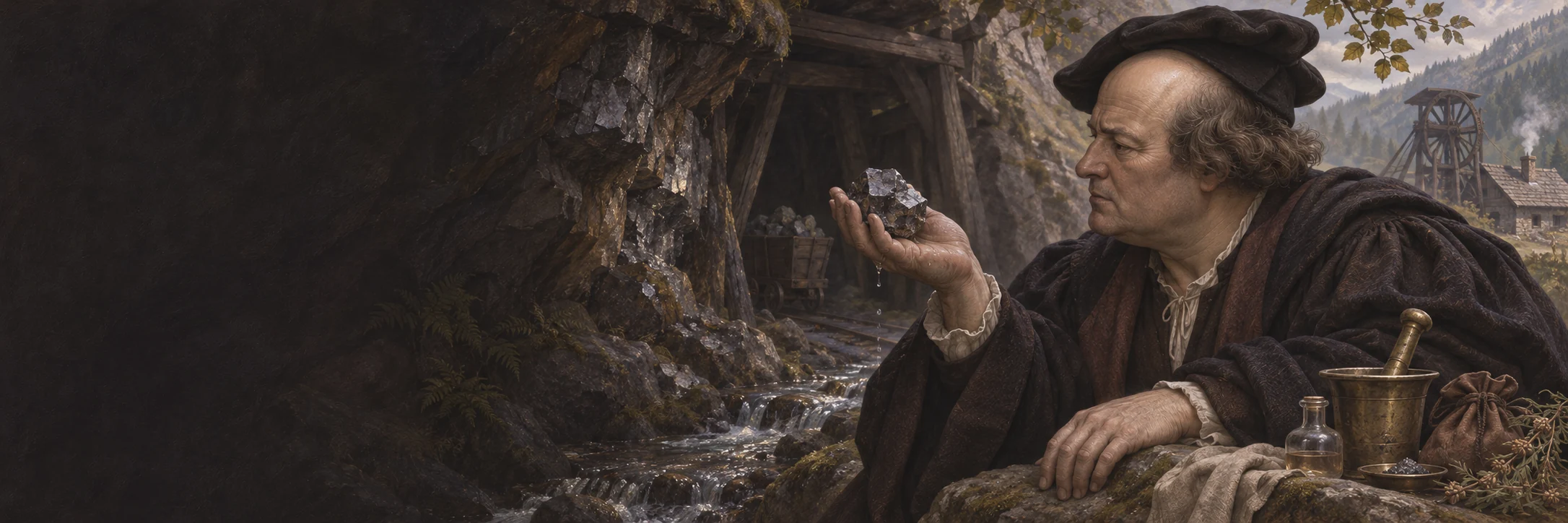
[…] the root of minerals is in the water, as the root of trees and herbs is in the earth.
Paracelsus (1493/94–1541)
A Book about Minerals · 1894 · p. 241
Translation by A. E. Waite · excerpt

We see that fire gives motion to all things. For dense and cold things, such as stones, frozen water, plants and earth, have no motion. But when fire resolves them into smoke and finer vapour, they all move and impart motion to the things to which they attach themselves.
Tommaso Campanella (1568–1639)
Del senso delle cose e della magia · II, 8 · 1925 · p. 53
Our translation from Italian
 Cart