
 Phone: +43 677 628 66 628 |


Friedrich Hebbel
Has everything that surrounds us as an element at rest, as earth and stone, already been alive?
Friedrich Hebbel (1813–1863)
 Friedrich Hebbels Tagebücher, erster Band · p. 295
Excerpt. Our translation
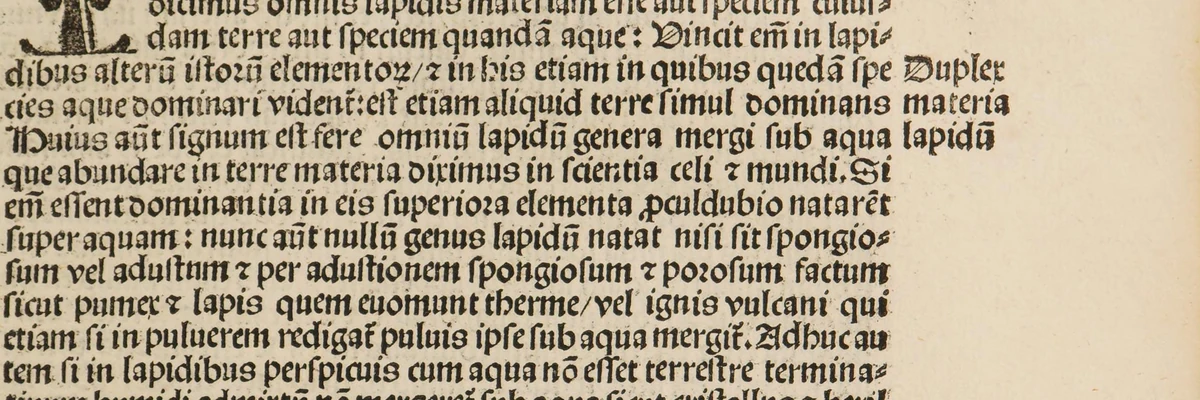
Several needles hang from one another because the first is attracted by a lodestone. Albertus Magnus describes this sight in the stone catalogue of De mineralibus. He explains that the stone transmits its attractive power to iron. He also mentions a large and unusually powerful lodestone from Franconia that he had seen himself. Its black surface reminded him of burnt, rusty iron.[1]
Albertus Magnus worked on his Latin De mineralibus chiefly between about 1248 and 1252. Of its five books the first two treat stones, the third and fourth metals, and the fifth substances placed between those two groups. The treatment of stones moves from general questions of formation and composition through particular powers to an alphabetical catalogue, and finally to images in stones. The work supplements Albertus’s exposition of Aristotle’s natural philosophy with a sustained investigation of minerals.[1][2][5]
This work is one of Albertus’s own writings on nature. It is distinct from Walther Hermann Ryff’s later Ein newer Albertus Magnus. Ryff’s compilation on childbirth, herbs, animals and the powers of stones belongs to the tradition of domestic medical manuals circulated under the name of Albertus.[3]
At the outset Albertus explains why he finds the existing books insufficient. Earlier authors had described particular stones and their properties, but had said too little about the common causes of their formation. He therefore begins by asking what makes a stone a stone. His aim is to explain its material, how it takes shape and the properties that result, as parts of a single process.[5]
The questions Albertus examines include differences in colour, hardness and transparency, as well as why some stones split regularly while others fracture irregularly. The properties of individual kinds are to be understood through the same general principles.[1][5]
In considering the matter of stones Albertus starts chiefly from mixtures of earth and water. Pure earth would fall apart, so a binding moisture was needed. Conversely, even transparent stones that seemed chiefly watery must contain some earth. His argument rests on their weight. Rock crystal sinks in water whereas ice floats. Observable differences between substances thus supply reasons for his model.[5]
The search for causes also leads Albertus to examine doctrines about the heavens. He does not dismiss the influence of the stars on earthly nature. Yet a general reference to Mars or another celestial force does little to explain how a particular stone forms. He wants to identify the processes acting directly in the material and giving it its particular constitution.[5]
“Having rejected all these views, we say with Constantine and certain others that the power of a stone arises from its very kind and substantial form.”
– Albertus Magnus, De mineralibus, II, tract I, ch. 4, Augsburg, 1519. Our translation from Latin.[6]
This distinction matters for his method. If a general celestial cause counted as a complete explanation, the same answer could account for almost any change in nature, leaving differences between substances unexplained. Albertus therefore asks more closely about heat and cold, moisture and dryness, and the particular union of the components. Within his natural philosophy he considers a force that forms stones.[5]
He does not, however, attribute souls to stones. They do not feed, perceive or exhibit other activities characteristic of living beings. Nor does one stone arise from another by reproduction of its kind. Although he believes that stones can form, change and possess special powers, this does not suffice to class them as beings with souls.[5]
The chapter on hardness shows how closely general questions could be linked to the uses of stone. Albertus compares hard gems and flints with softer tuffs and chalk-like materials. He also asks which stones are suitable for building. Very hard stones might take mortar poorly because their pores are too close. Other stones became harder in a building over time, while some crumbled after frost followed by the warmth of the sun. He tries to explain these differences through the balance of moisture, dryness and internal cohesion.[5]
The catalogue also contains quite different kinds of reports. Alongside the account of hanging needles, the entry on the lodestone includes the claim that garlic could prevent magnetic attraction. Other passages concern magical uses. Albertus sometimes identifies these statements as reports by others, whereas he expressly says that he saw the Franconian specimen himself. The entry preserves both observed phenomena and inherited stories. His detailed inquiry into common causes thus by no means entailed rejecting all earlier reports about stones.[1]
A separate treatise within the second book deals with images in stones. Albertus distinguishes natural formations from representations made by human hands. He compares shapes resembling human faces or other figures with the changing images we see in clouds. He seeks to explain such likenesses as processes of nature.[5]
He did not always recognise the work of a stonecutter. A large onyx with heads in profile that he saw in Cologne seemed to him to have formed naturally. Scholars have associated his description with an ancient sardonyx cameo now in Vienna. The passage shows both his interest in individual objects and the limits of his identification.[2]
He also tries to explain the powers attributed to engraved images. In his view a favourable celestial configuration might influence the making of an image and impart particular properties to it. The list that follows includes Hercules and Mercury, figures that readers were meant to identify on existing gems and associate with particular effects.[2]
The work later appeared in print. A Venetian edition was issued on 22 June 1495 by Giovanni and Gregorio de Gregori. Its treatment of the formation and composition of stones, its alphabetical catalogue and its explanations of images in stones remained together in a single work, along with the subsequent books on metals and intermediate substances.[4][5]
 Search
Has everything that surrounds us as an element at rest, as earth and stone, already been alive?
Friedrich Hebbel (1813–1863)
Friedrich Hebbels Tagebücher, erster Band · p. 295
Excerpt. Our translation
For, though Moses have left no mention of minerals, nor made any other description than suits unto the apparent and visible creation, yet is there, unquestionably, a very large class of creatures in the earth, far above the condition of elementarity.
Thomas Browne (1605–1682)
The Works of Sir Thomas Browne, vol. I, containing four books of Vulgar Errors · p. 109
Original wording

Blue lambent light around the Sapphire plays, Bright Rubies blush, and living Diamonds blaze.
A snow-crystal is the same to-day as when the first snows fell.
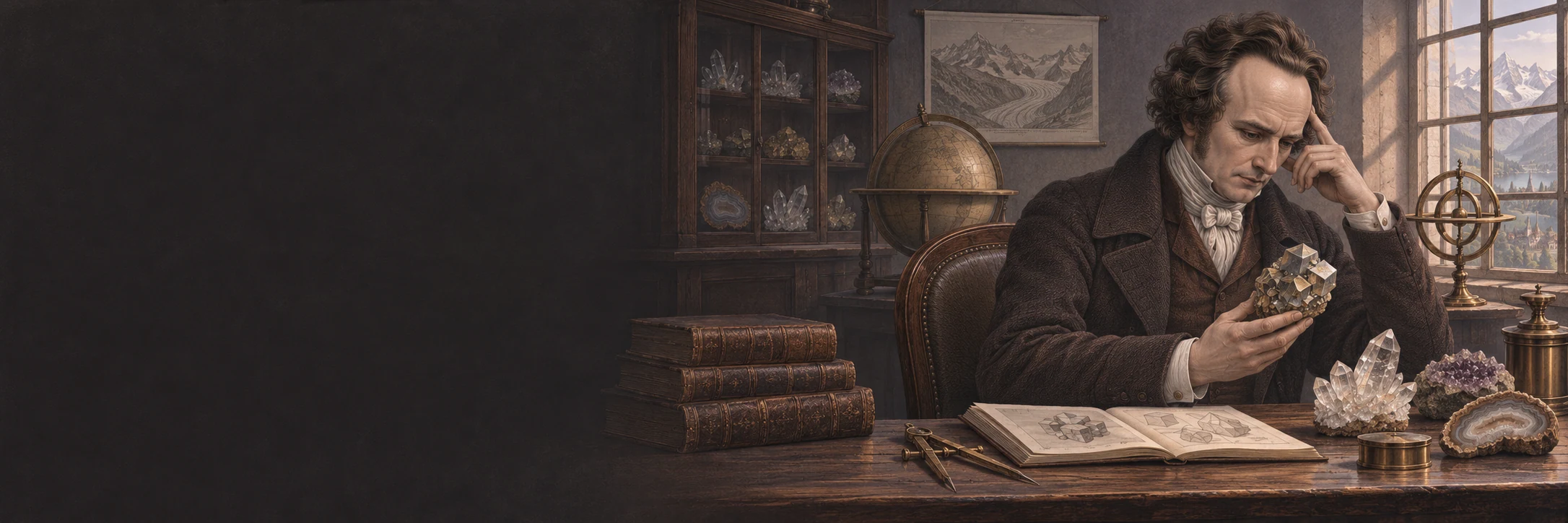
A crystal is an entire celestial body. It is determined by central forces, which are in turn awakened and guided by forces that divide, by forces of light.
Lorenz Oken (1779–1851)
Lehrbuch der Naturphilosophie. Zweite umgearbeitete Auflage · p. 82
Our translation
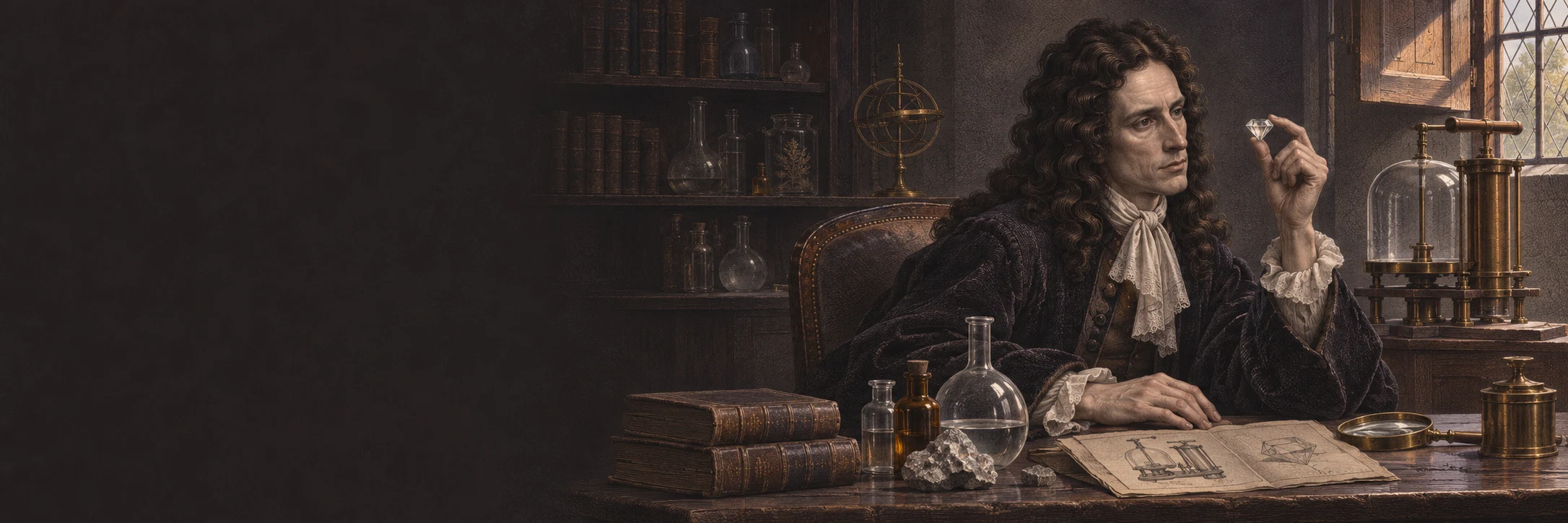
Eleventhly, I also brought it to some kind of Glimmering Light, by taking it into Bed with me, and holding it a good while upon a warm part of my Naked Body.

The hand works ceaselessly and with care, the heart has withered to all that is human, the hard stone has begun to feel;
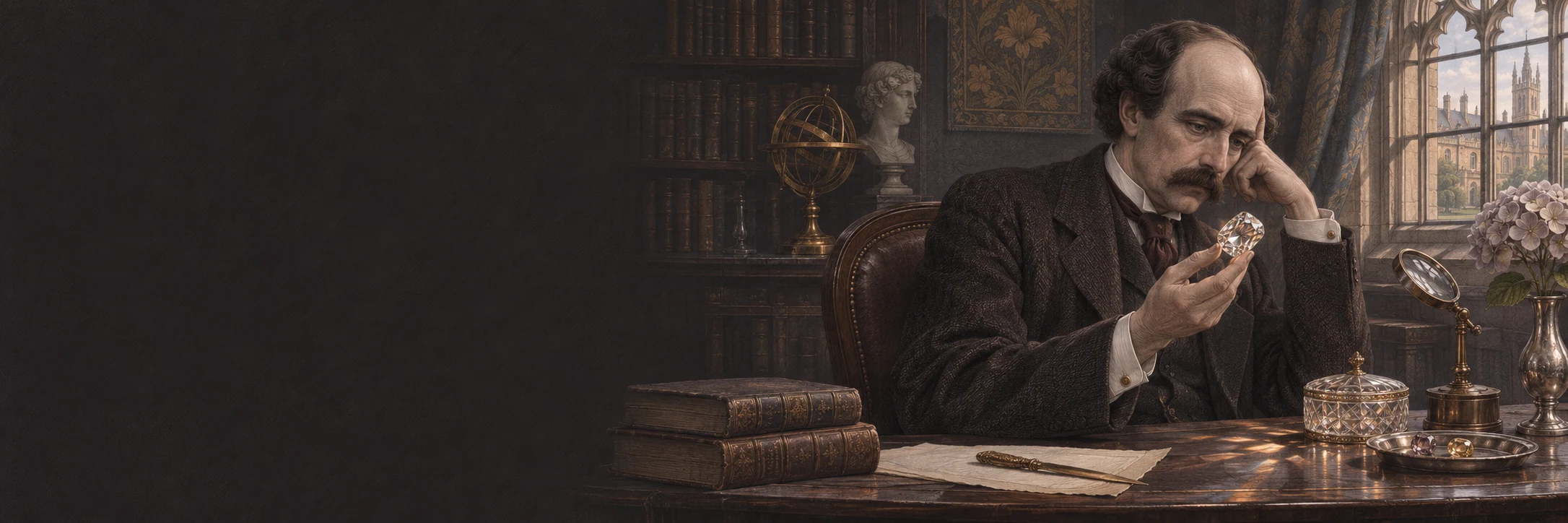
To burn always with this hard, gemlike flame, to maintain this ecstasy, is success in life.
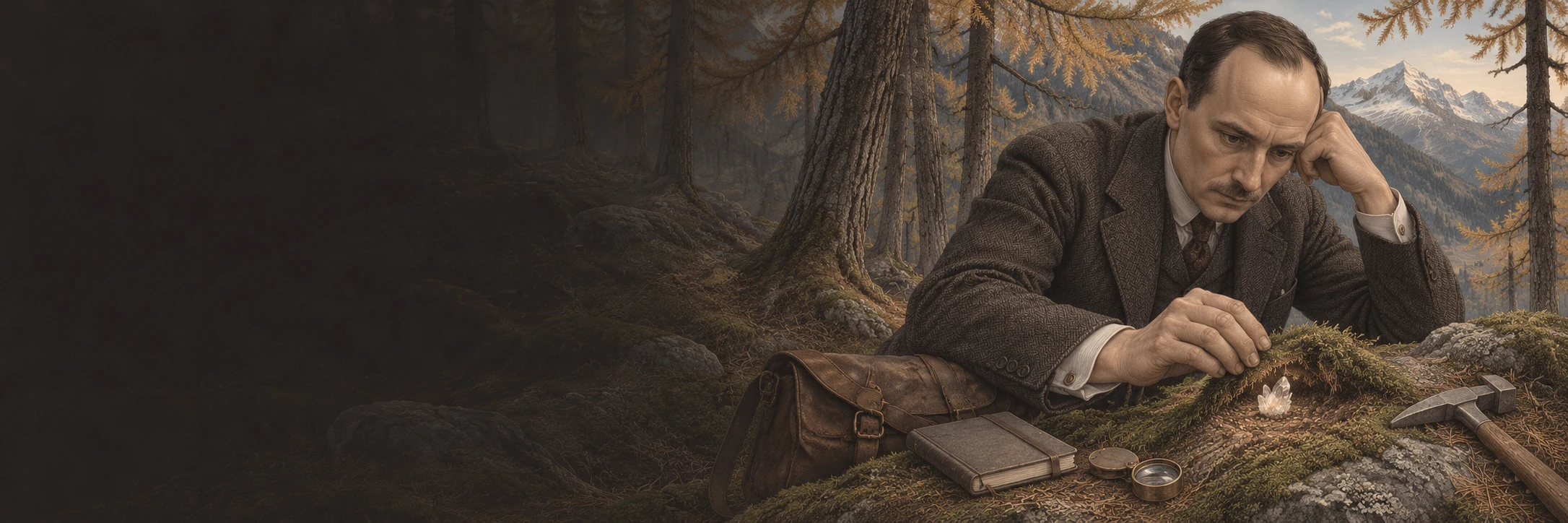
A fairy-tale forest of old larch trunks, covered in fine green hair, stood on an emerald slope. Beneath the moss violet and white crystals might be alive.
Robert Musil (1880–1942)
Grigia. Novelle. Mit sechs Radierungen von Alfred Zangerl · p. 16
Our translation
The first thing within the mass of the solid earth that foreshadows and prepares the way for the individual life of creatures later to inhabit its surface is the crystal.
Carl Gustav Carus (1789–1869)
Natur und Idee oder das Werdende und sein Gesetz · p. 178
Our translation
The greatest, however, and most wonderful of all the Qualities of Stones is that (if the Accounts of it are true) of those which bring forth young.
Theophrastos von Eresos (c. 371–c. 287 BCE)
Über die Steine · 1774 · p. 27
English translation by John Hill
Take the shining, transparent crystal in your hands, the stone, an outflow of undying, fiery radiance.
 Cart