
 Phone: +43 677 628 66 628 |


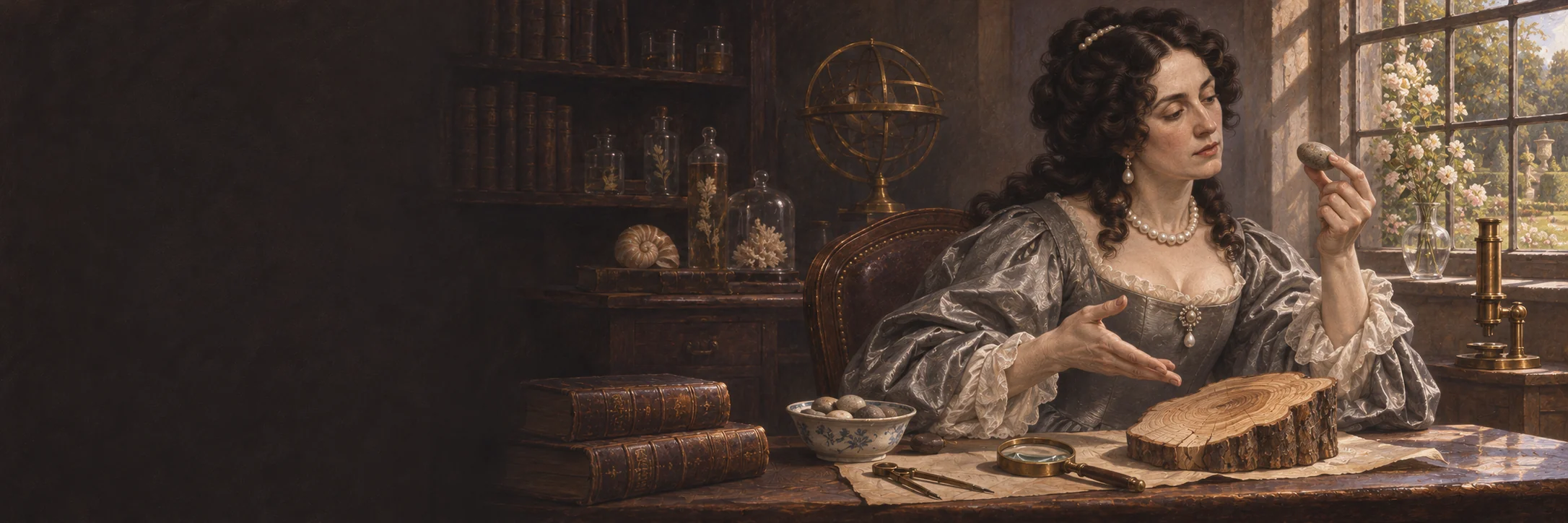
Margaret Cavendish
I do not deny that a Stone has Reason, or doth partake of the Rational Soul of Nature as well as Man doth […]
Margaret Cavendish (1623–1673)
 Observations upon Experimental Philosophy · p. 46
Original wording · Excerpt
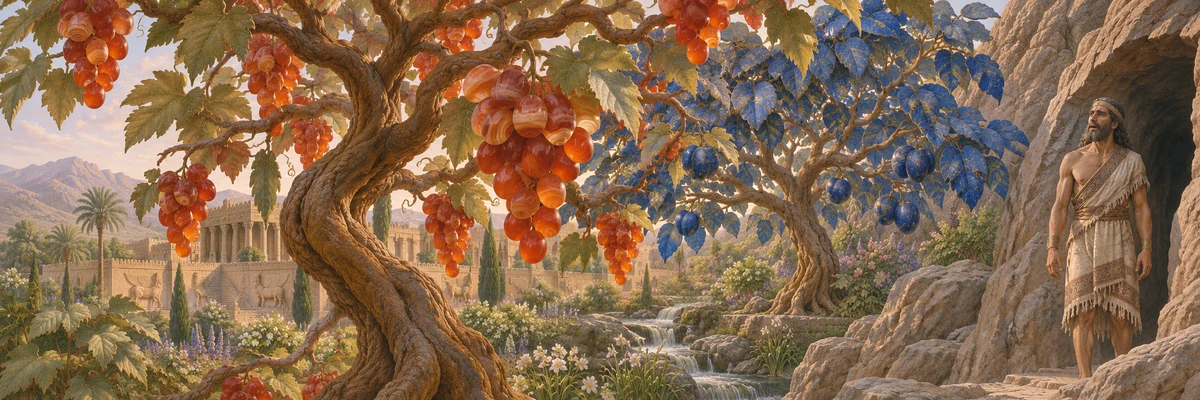
A free retelling from the Epic of Gilgamesh about grief, the fear of death and a garden where gemstones bear fruit.
Gilgamesh is the legendary king of Uruk in ancient Mesopotamia. This story comes from the ninth tablet of the Epic of Gilgamesh in its Standard Babylonian version, which probably took shape late in the second millennium BC.[1]
Enkidu was dead.
Gilgamesh had lost his friend, the companion of his adventures. Now he wept for him, and with grief came a fear that would not let him go. What had happened to Enkidu could happen to him too. Neither his strength nor his kingship could shield him from it.
“I shall die, and shall I not then be as Enkidu?”
Gilgamesh went out into the wild. He was looking for Utnapishtim, a man who had gained eternal life. From him he hoped to learn whether there was a way to escape death.[2]
His wanderings brought him to the twin mountains of Mashu. Their peaks reached up to the sky and their depths went down to the underworld. The path of the sun god ran through these mountains. Two fearsome beings stood guard at its entrance, a scorpion-man and his mate.
When Gilgamesh saw them, he covered his face in fear. Then he steadied himself and drew closer.
The guardians recognised his divine ancestry. Two-thirds of him was god and one-third human. Yet the wanderer standing before them was seeking an answer to the question that had haunted him since Enkidu’s death.
The scorpion-man asked about his journey. Gilgamesh explained whom he hoped to find. The guardian warned him about the way through the mountain. It stretched for twelve double-hours through a darkness no light could penetrate.
Gilgamesh held to his purpose.
At last the guardian let him pass and wished him a safe journey. Gilgamesh took the path of the sun.[3]
Soon there was nothing but darkness around him.
After the first double-hour, he could see nothing behind him. After the second, it was just as dark. He went on. The third stretch brought no light. Neither did the fourth.
Only by walking on could he know the way.
Five double-hours. Six. Seven.
Gilgamesh pressed on through the mountain. Beyond the eighth stretch the same blackness still surrounded him. Only in the ninth did the north wind stir and touch his face. Still it was dark.
At last, after twelve double-hours, he reached the way out. He had come through ahead of the sun.[4]
Light spread before him.
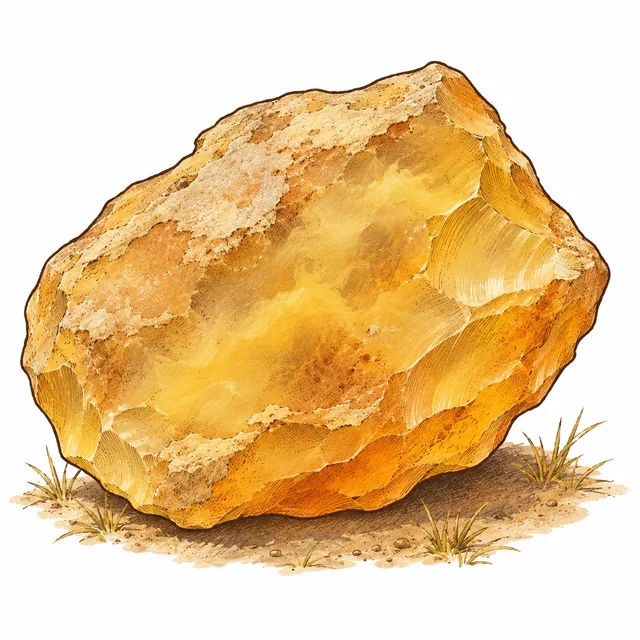
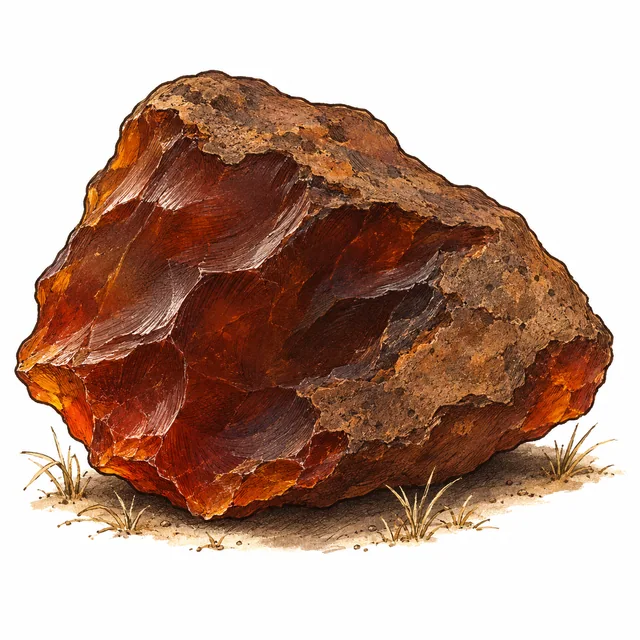
Gilgamesh saw trees the like of which no ordinary garden had ever grown. A tree of carnelian bore fruit in bunches like grapes. A tree of lapis lazuli was thick with leaves and fruit. The stones had taken on the forms of living things. Together they made a garden.
Gilgamesh walked towards the trees of the gods.
After the long darkness his gaze could linger again. Before him lay a wealth of shapes and colours, gleaming in the light. What people kept as treasure grew here like fruit on the trees.
Among them stood the wanderer who mourned the dead and went in search of life. Behind him lay the dark passage of the sun. Before him was a world where gemstones put forth leaves and bore fruit.[5]
The story shows how the longing for life can carry a person through the deepest darkness and bring them to the very limits of their world.
Only part of the description of the gemstone garden survives. This retelling follows Andrew George’s translation in naming the stones. In Tablet IX, lines 173–176, a carnelian tree bears bunches of grapes and a lapis lazuli tree carries leaves and fruit. There are substantial gaps in the lines that follow.[5]
R. Campbell Thompson’s older translation of 1928 uses the words “ruby” and “azure” in this passage. Such differences are part of the history of deciphering and translating the epic. Gilgamesh’s quest beyond the garden continues in the next tablet.[5][6]
The short quotation follows Andrew George’s English translation. The German version gives our own rendering of it.
 Search
I do not deny that a Stone has Reason, or doth partake of the Rational Soul of Nature as well as Man doth […]
Margaret Cavendish (1623–1673)
Observations upon Experimental Philosophy · p. 46
Original wording · Excerpt

[…] how nature took the greatest care to represent the colours of those elements, painting them into four most excellent jewels […]
Benvenuto Cellini (1500–1571)
Our translation · Excerpt
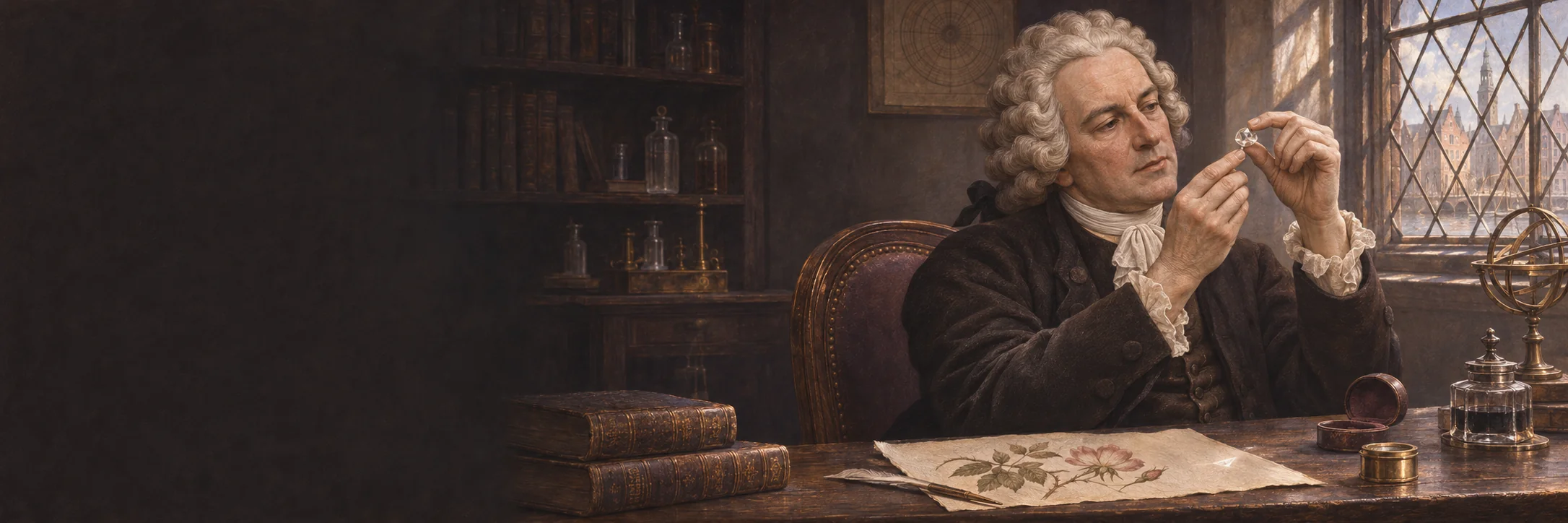
Within its neatly polished corners both blaze and flood seem lodged, as in a thousand ways the light breaks upon its facets.
Barthold Heinrich Brockes (1680–1747)
Physikalische und moralische Gedanken über die drey Reiche der Natur · p. 69
Our translation · Excerpt

the many-coloured beauty of the gems would sometimes call me away from outward cares […]
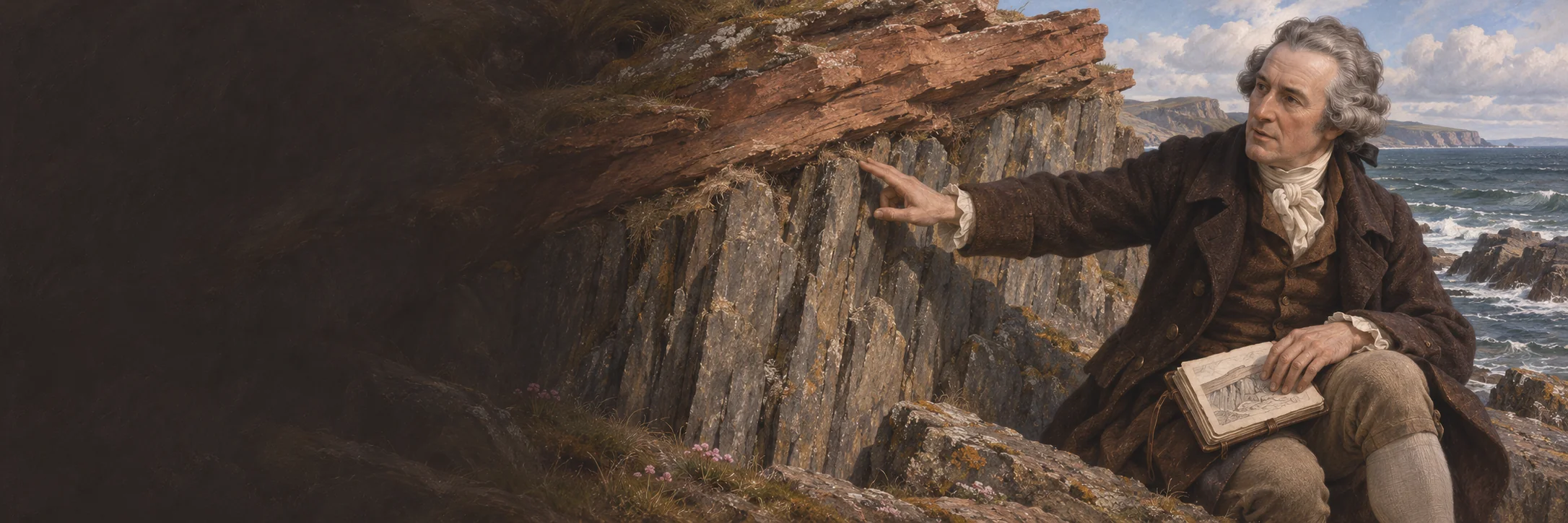
The mind seemed to grow giddy by looking so far into the abyss of time […]
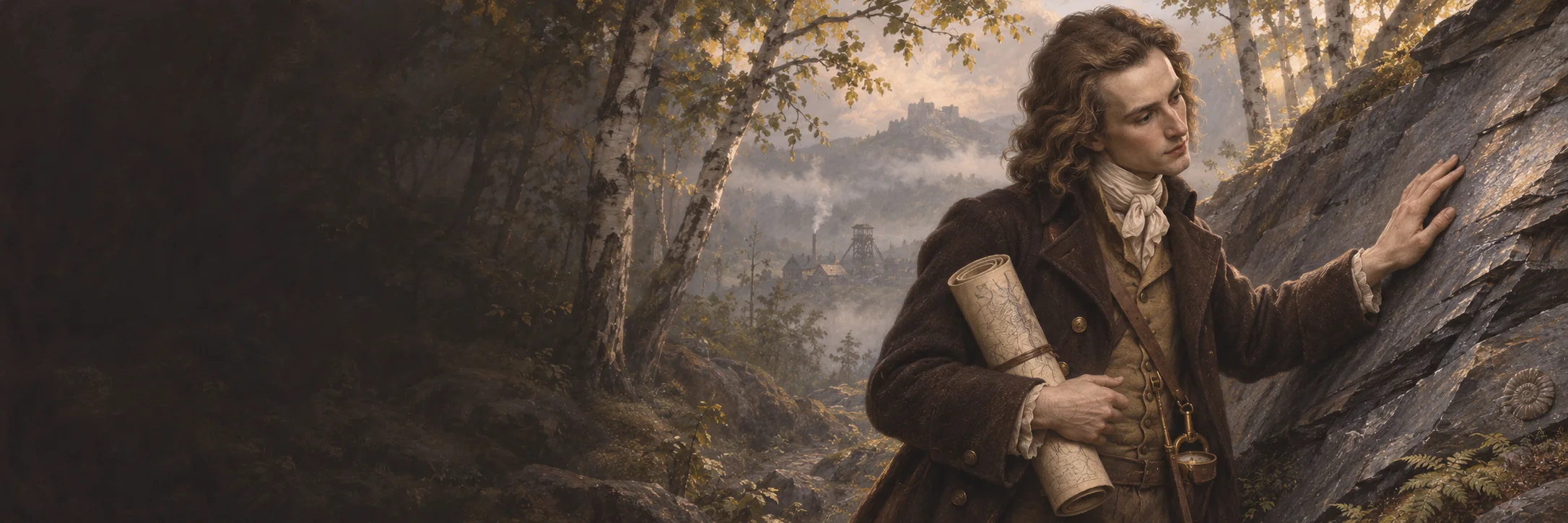
Does not the rock become individual when I address it?
Novalis (1772–1801)
The Disciples at Sais and Other Fragments · p. 129
Translated by F. V. M. T. and U. C. B.
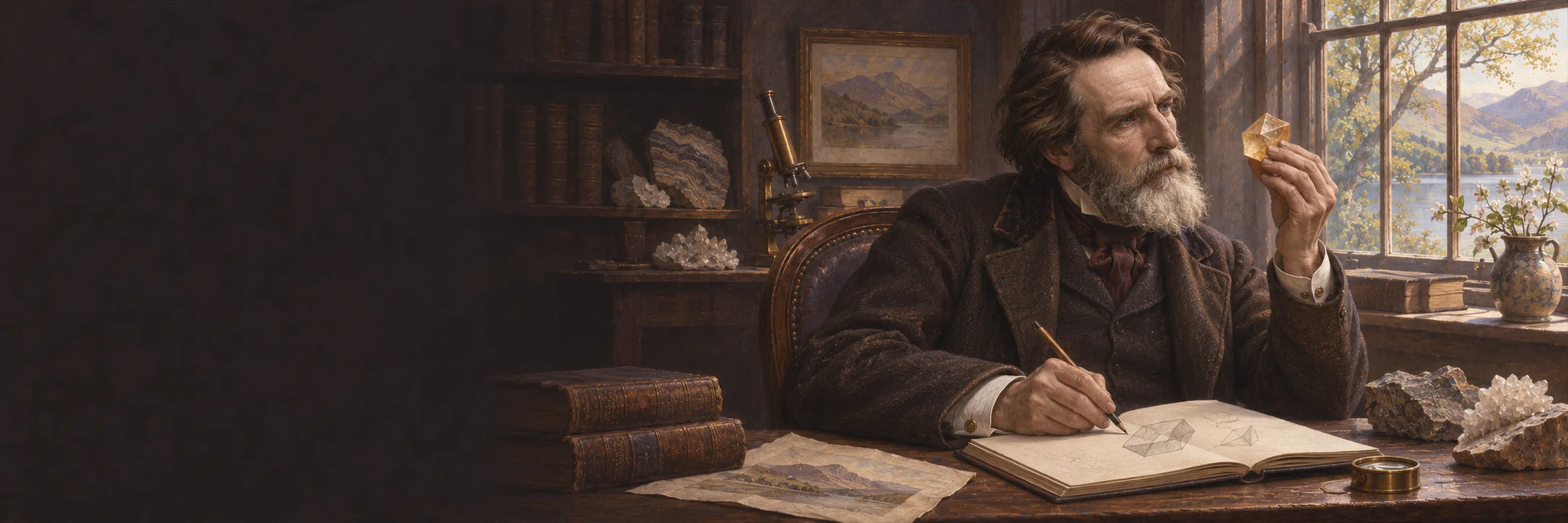
There seem to be in some crystals, from the beginning, an unconquerable purity of vital power, and strength of crystal spirit.
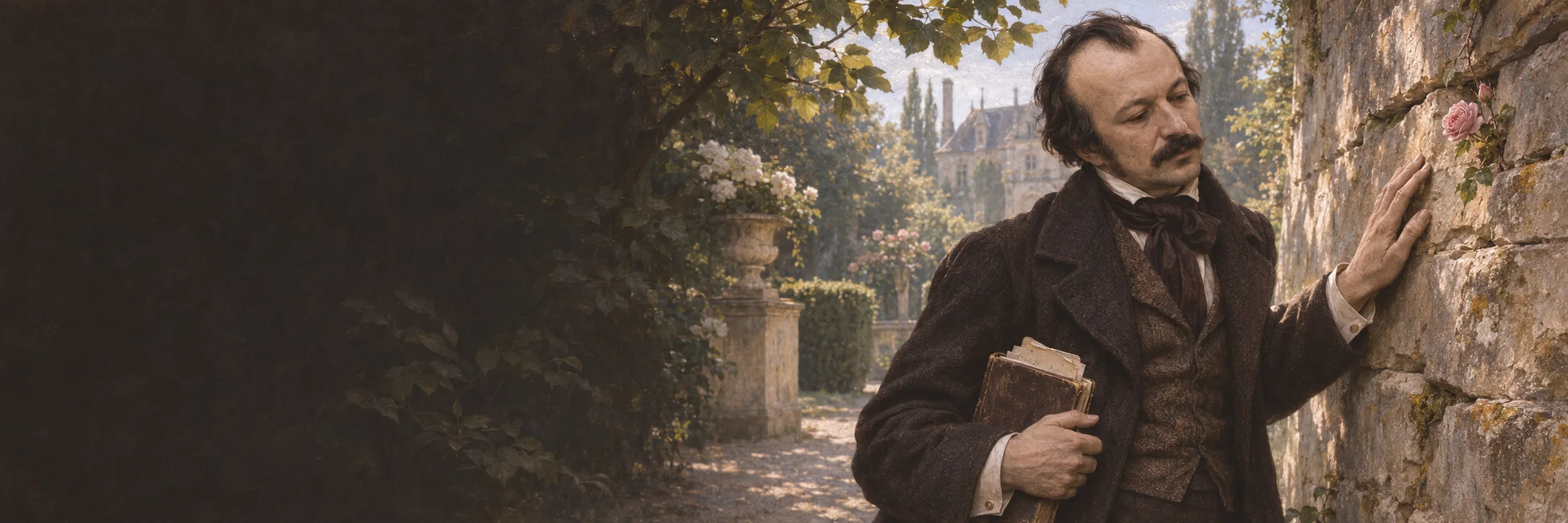
Often a hidden god dwells in the obscure being; and like a nascent eye covered by its lids, a pure spirit grows beneath the bark of stones.
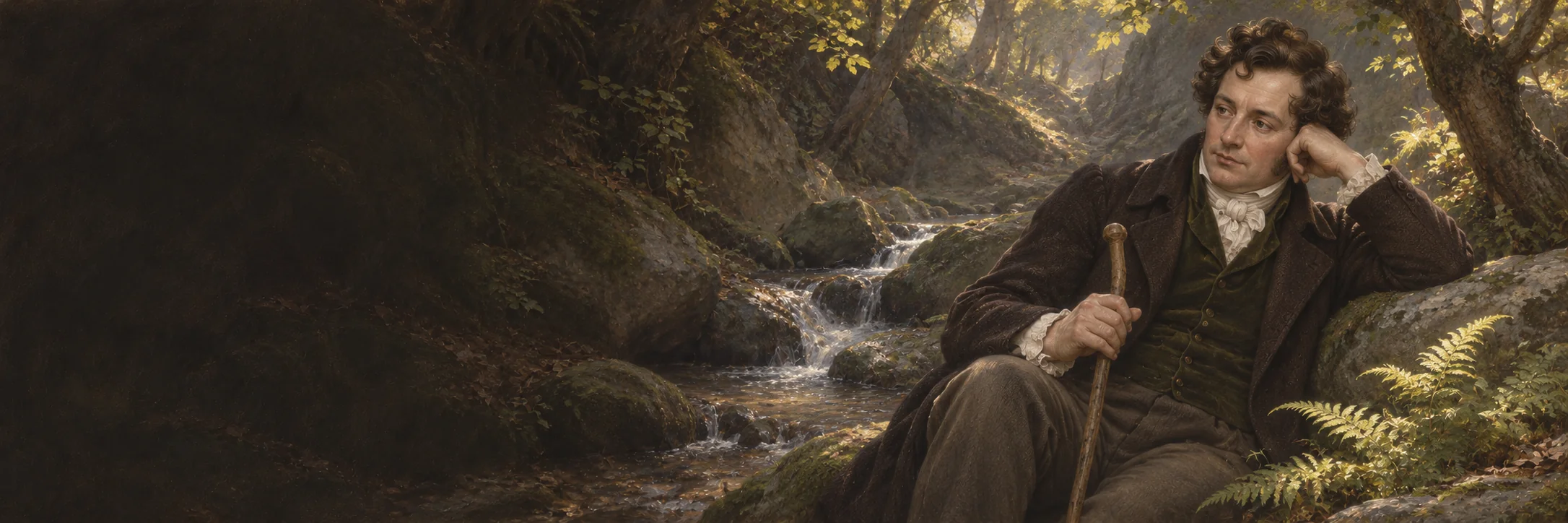
Only ask the rocks, thou wilt be astonished when thou hearest them speak.
Ludwig Tieck (1773–1853)
Tales from the Phantasus, etc. · p. 21
Historical English translation (1845)
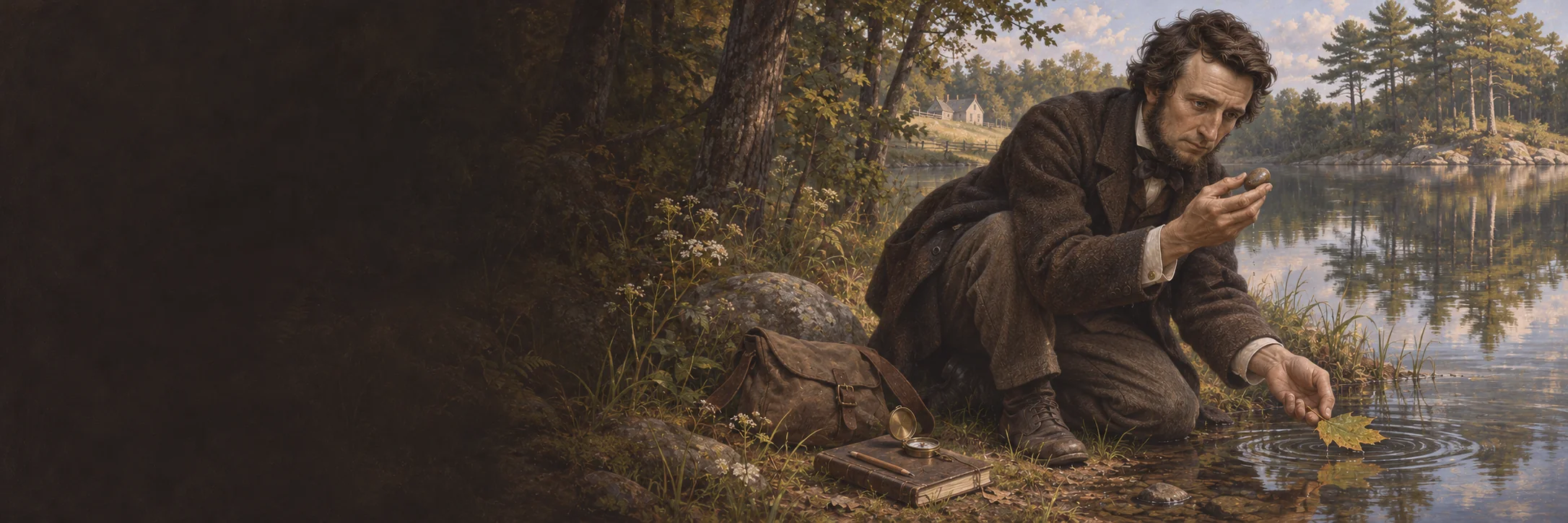
There must be all degrees of life, from a stone—if we can find any starting-point—to God.
Henry David Thoreau (1817–1862)
The First and Last Journeys of Thoreau, vol. I · p. 74–75
Original wording
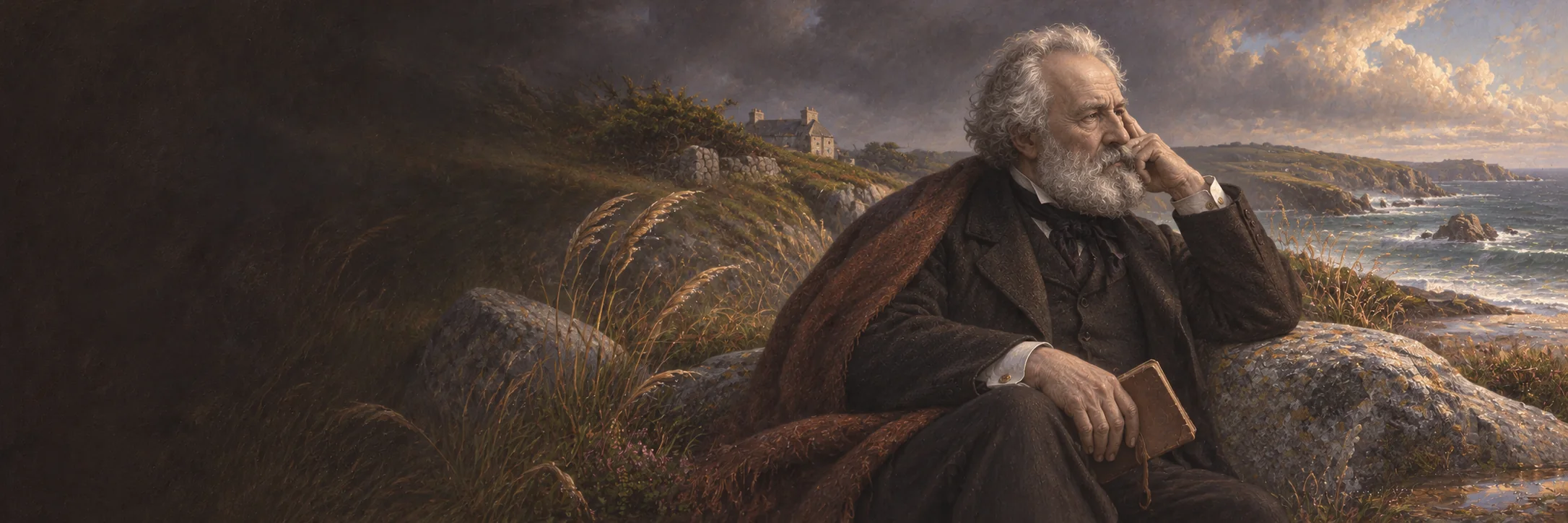
For winds, waves, flames, trees, reeds, rocks, all live! Everything is full of souls.
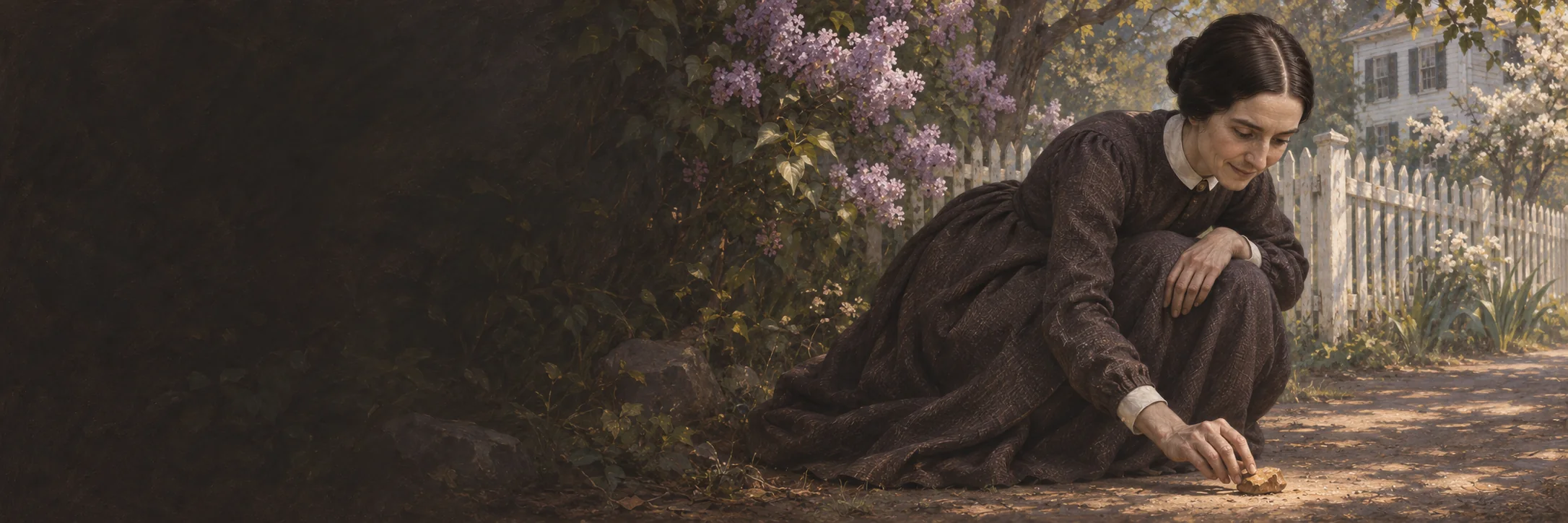
How happy is the little stone That rambles in the road alone, And does n’t care about careers, And exigencies never fears;
 Cart