The Gart der Gesundheit, attributed to Johann Wonnecke von Kaub, belongs to the German-language natural and medicinal literature of the late Middle Ages. Its subject matter extends beyond plants to other natural substances. The edition of 1487 linked here makes this book tradition accessible as a historical printing.[1]
A garden of knowledge
The garden in the title suggests an organised collection. Individual entries allow readers to consult a substance and connect its description with inherited uses. Stones could also find a place in this framework: their significance was not determined solely by ornamental value or outward beauty.[1]
Observation and tradition
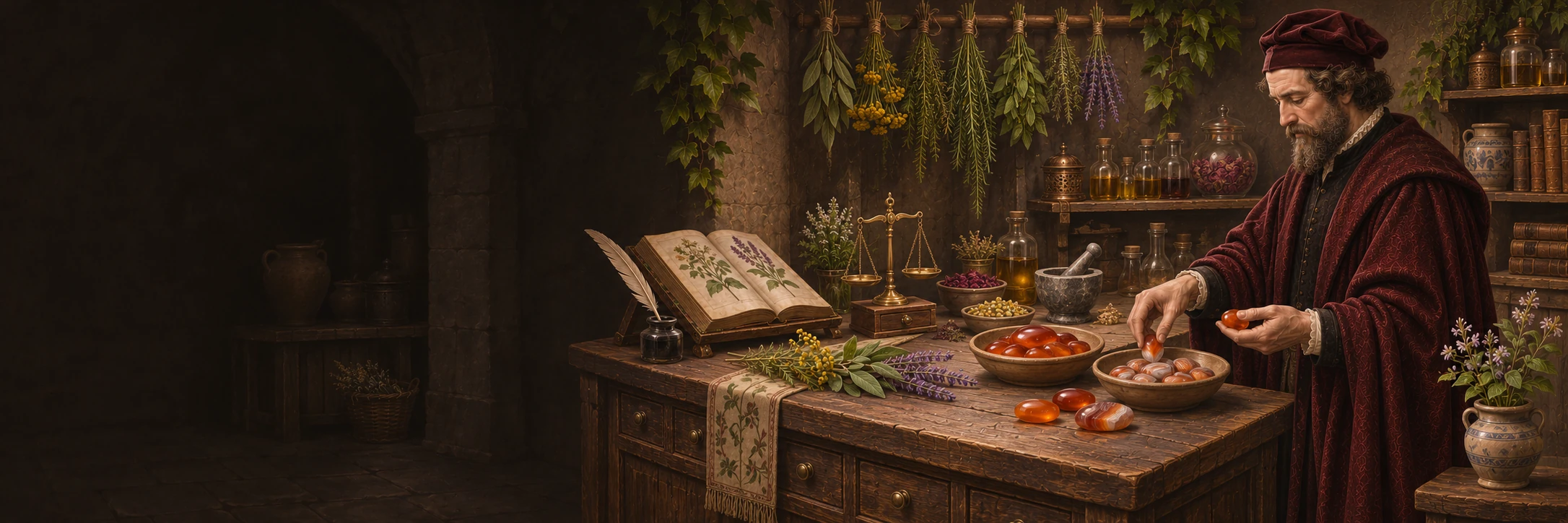
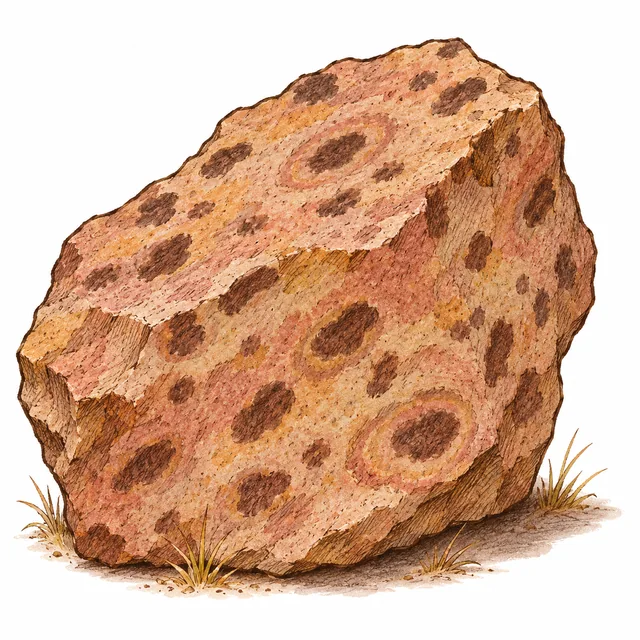
The illustration’s reddish stones, herbs and book evoke this shared field of study. The stones provide a visual connection to historical knowledge of substances. They do not establish a therapeutic effect or a secure modern identification for every old mineral name. This article introduces the work’s context without presenting an unchecked historical instruction as a verbatim quotation.[1]

 Phone: +43 677 628 66 628 |


 Search









 The Magick of Kirani King of Persia, and of Harpocration. 1685.







 Cart