As Magnes grazed his herd in India, a stone is said to have clung to the nails of his sandals and the tip of his staff. In his Etymologiae, Isidore of Seville tells how the lodestone took its name from the man who discovered it.[1]
Isidore (c. 560–636), bishop of Seville, compiled his encyclopaedia in the early seventh century. By gathering and arranging the learning of earlier authors, he made it accessible to many generations of medieval readers.[2][3]
A world in twenty books
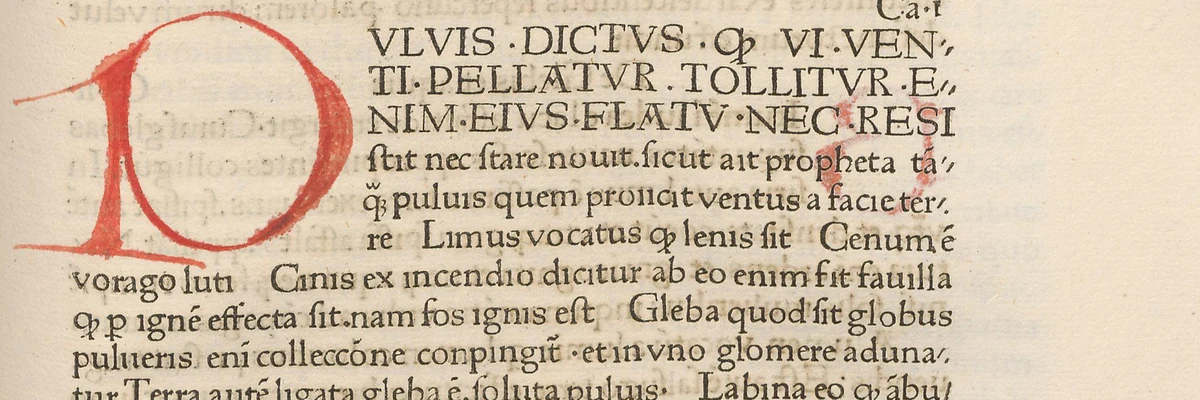
The Etymologiae, also known as the Origines, has come down to us in twenty books. Its subjects range from language, medicine, law and religion to animals, plants and crafts. Isidore repeatedly uses the explanation of a word as a way into the subject it names.[2]
Book XVI bears the title De lapidibus et metallis, “On Stones and Metals”. Alongside stones it covers earths, salts, glass and metals, as well as weights and measures. Isidore expressly says that, of the countless gemstones, he has included only the most important or best known.[1]
What names reveal
For Isidore, the origin of a word could help explain the thing itself. He even accounted for the Latin lapis, meaning stone, by what a stone does: it hurts the foot, laedat pedem. His reading of the word linked the name to an everyday experience.[1]
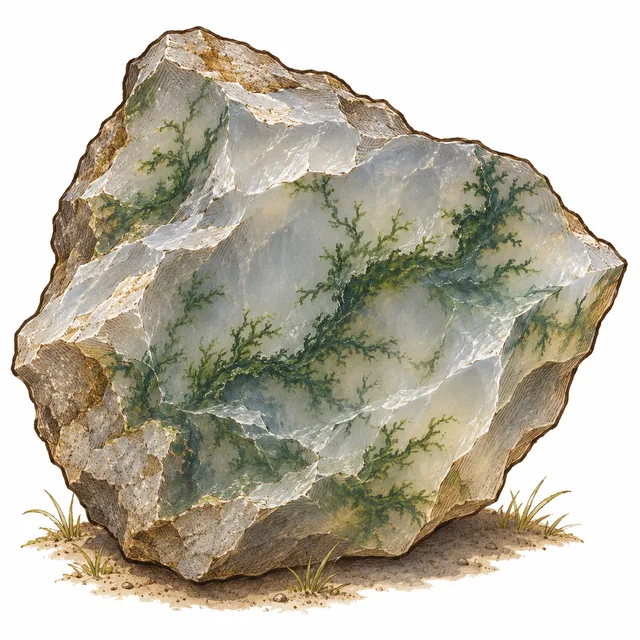
He traced the name of agate to a river of the same name in Sicily. He described its black and white markings and reported that magicians could use smoke from the stone to ward off storms and halt rivers. He qualified this claim with the words si creditur, “if one believes it”.[1]
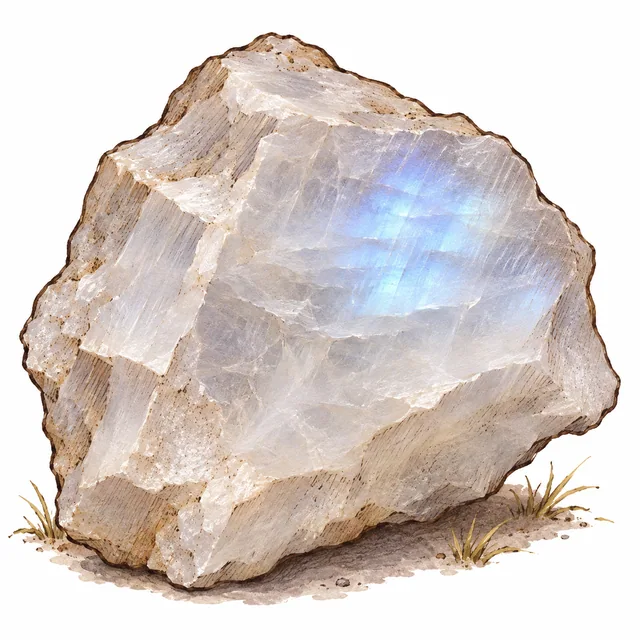
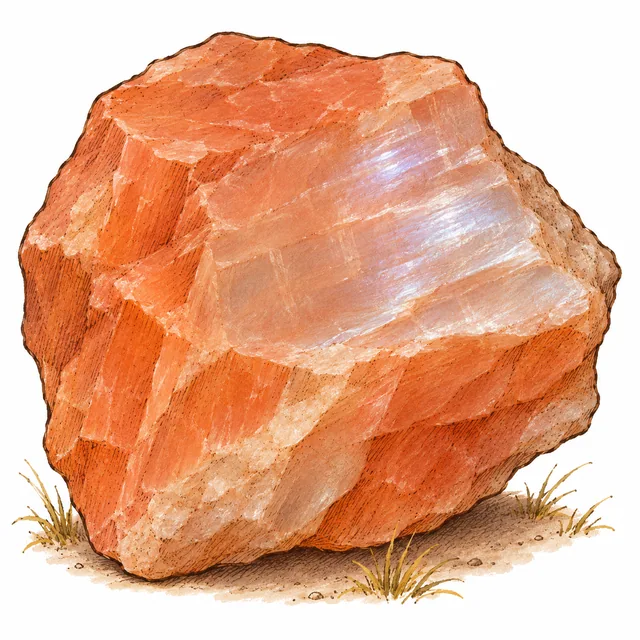
“Selenites, whose name in Latin means moonstone, because its inner brightness is said to wax and wane with the moon, is formed in Persia.”
– Isidore of Seville, Etymologiae, XVI, 4, 6. Our translation from Latin.[1]
A work for many generations
For centuries the Etymologiae was one of the great medieval compendia of learning. Book XVI became an important source for later writing on stones. Marbod of Rennes drew on Isidore in his Liber lapidum, as did the natural encyclopaedias of the thirteenth century. Isidore’s selection of ancient lore about stones thus continued to shape writing long after his own time.[3]
Copies and excerpts carried the work from one generation to the next. Evina Steinová catalogued 443 manuscripts dating from the seventh to the early eleventh century that preserve all or part of Isidore’s Etymologiae. Manuscripts from the monastery of St Emmeram in Regensburg show the practical uses readers found for the text. They extracted individual explanations for teaching and for reading earlier authors.[4][5]
Today Book XVI offers evidence of how ancient knowledge of stones was gathered, organised and explained through language in the early Middle Ages. Isidore’s etymologies show the connections he drew between a stone’s name, origin and properties. The surviving copies and later adaptations also reveal which parts of this knowledge passed on and how readers put them to use.[3][4]

 Phone: +43 677 628 66 628 |


 Search

 Tiangong kaiwu · o. J. · Ch. 18, 珠玉, section 寶










 Cart