
 Phone: +43 677 628 66 628 |


Friedrich Hebbel
Has everything that surrounds us as an element at rest, as earth and stone, already been alive?
Friedrich Hebbel (1813–1863)
 Friedrich Hebbels Tagebücher, erster Band · p. 295
Excerpt. Our translation
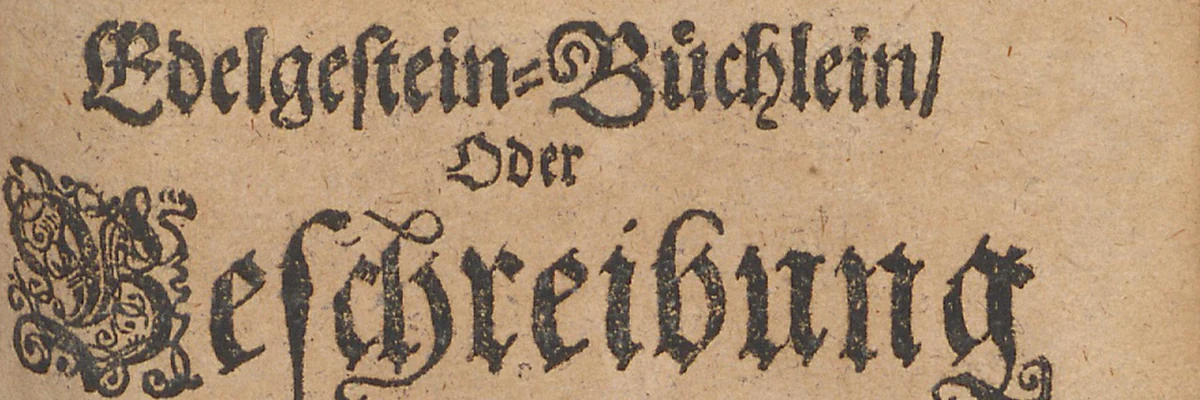
Thomas Nicols opened his book on stones with a word of advice for readers who wished to judge the unusual powers attributed to gemstones.
“[…] First, read the General part of this Historie […]”
– Thomas Nicols, Gemmarius Fidelius, 1659, “An Admonition or Advertisement to the Reader”.[1]
There he examined which powers could belong to a stone by nature and which claims went beyond its capacities.[1]
The book first appeared in Cambridge in 1652 as A Lapidary, or, The History of Pretious Stones. When it was offered for sale again in London in 1659 under the title Gemmarius Fidelius, or The Faithful Lapidary, the previously printed sheets were issued with a new title page.[2]
Nicols acknowledged that stones had natural properties and effects. Making people invisible, granting them eloquence or suddenly making them rich, however, lay beyond a stone’s powers.[1]
His explanation remained rooted in the religious thought of his time. He allowed for supernatural effects but attributed them to God or the devil. A stone could, at most, serve as an instrument. The cause would then lie outside its own nature.[1]
The general discussion is followed by descriptions of individual stones. Nicols collected accounts of their properties and also discussed counterfeits, the dyeing of stones and the use of foils to alter their appearance when set in jewellery. His book thus addressed readers who wanted to judge gemstones for themselves and guard against fraud.[2]
For sapphire he lists Hebrew, Greek and Latin terms alongside names in other languages. He connects the Hebrew name with Exodus 28:18. He also observes that Pliny sometimes uses the name sapphire for a stone that Nicols himself identifies as lapis lazuli.[1]
Nicols’ book is considered one of the early independent works on gemstones by a British author. He relied particularly on Anselmus Boetius de Boodt and also drew on earlier writers such as Pliny. A substantial part of his achievement lay in collecting and arranging this knowledge for readers of English.[2]
Johann Lange’s German translation introduced the work to a further readership. Published in Hamburg in 1675 as the Edelgestein-Büchlein, its title already promised descriptions of the form, powers, properties and value of stones, together with warnings about fraud.[3]
Today the book helps us trace how earlier knowledge about stones was transmitted in the early modern period. Its accounts of reputed powers sit beside practical questions of the gem trade. Together they illuminate ideas about nature, the handling of precious materials and the movement of knowledge from one language to another.[2][3]
 Search
Has everything that surrounds us as an element at rest, as earth and stone, already been alive?
Friedrich Hebbel (1813–1863)
Friedrich Hebbels Tagebücher, erster Band · p. 295
Excerpt. Our translation
For, though Moses have left no mention of minerals, nor made any other description than suits unto the apparent and visible creation, yet is there, unquestionably, a very large class of creatures in the earth, far above the condition of elementarity.
Thomas Browne (1605–1682)
The Works of Sir Thomas Browne, vol. I, containing four books of Vulgar Errors · p. 109
Original wording
Blue lambent light around the Sapphire plays, Bright Rubies blush, and living Diamonds blaze.
A snow-crystal is the same to-day as when the first snows fell.
A crystal is an entire celestial body. It is determined by central forces, which are in turn awakened and guided by forces that divide, by forces of light.
Lorenz Oken (1779–1851)
Lehrbuch der Naturphilosophie. Zweite umgearbeitete Auflage · p. 82
Our translation
Eleventhly, I also brought it to some kind of Glimmering Light, by taking it into Bed with me, and holding it a good while upon a warm part of my Naked Body.

The hand works ceaselessly and with care, the heart has withered to all that is human, the hard stone has begun to feel;
To burn always with this hard, gemlike flame, to maintain this ecstasy, is success in life.
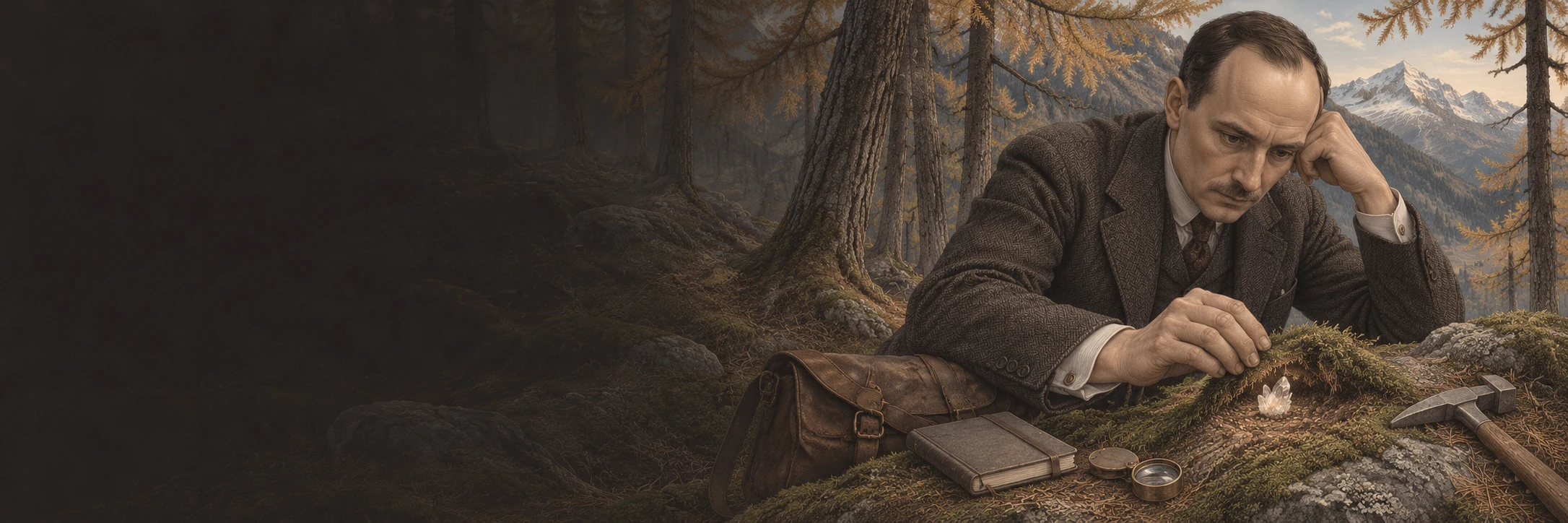
A fairy-tale forest of old larch trunks, covered in fine green hair, stood on an emerald slope. Beneath the moss violet and white crystals might be alive.
Robert Musil (1880–1942)
Grigia. Novelle. Mit sechs Radierungen von Alfred Zangerl · p. 16
Our translation
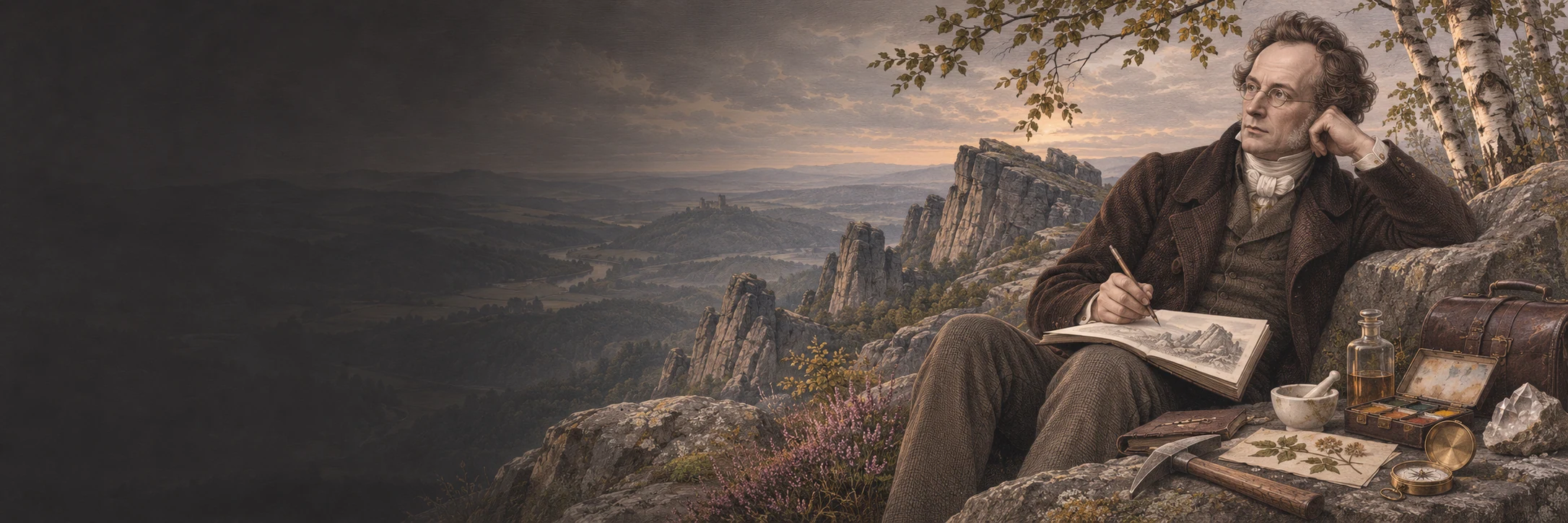
The first thing within the mass of the solid earth that foreshadows and prepares the way for the individual life of creatures later to inhabit its surface is the crystal.
Carl Gustav Carus (1789–1869)
Natur und Idee oder das Werdende und sein Gesetz · p. 178
Our translation
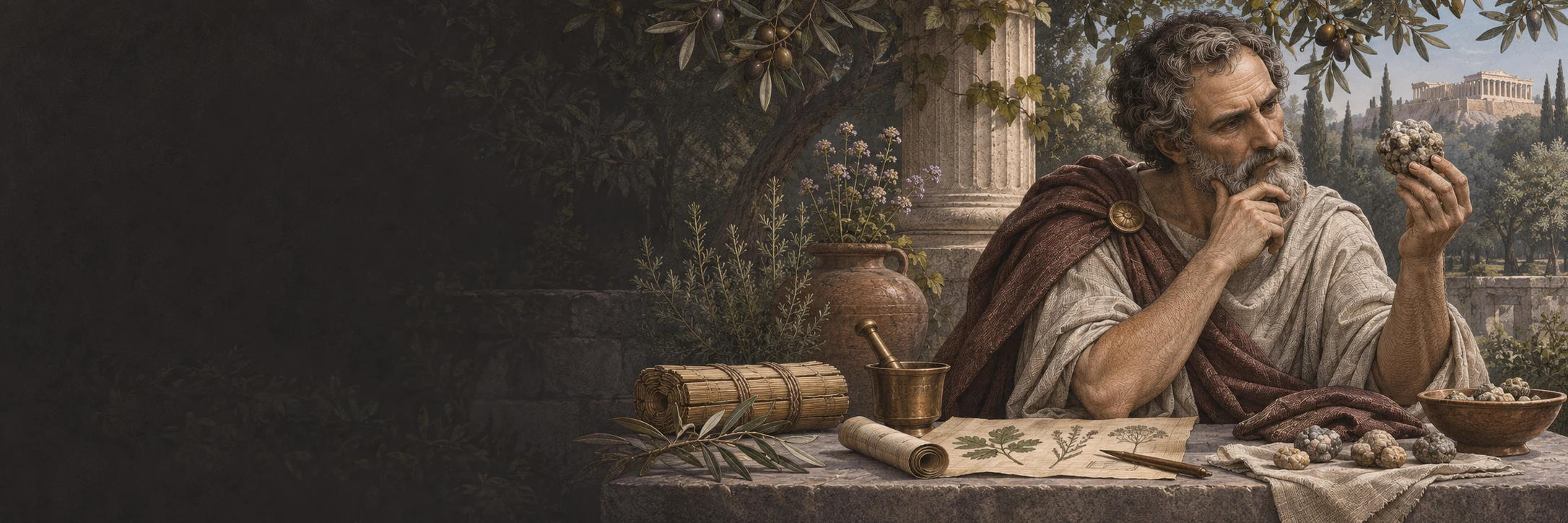
The greatest, however, and most wonderful of all the Qualities of Stones is that (if the Accounts of it are true) of those which bring forth young.
Theophrastos von Eresos (c. 371–c. 287 BCE)
Über die Steine · 1774 · p. 27
English translation by John Hill
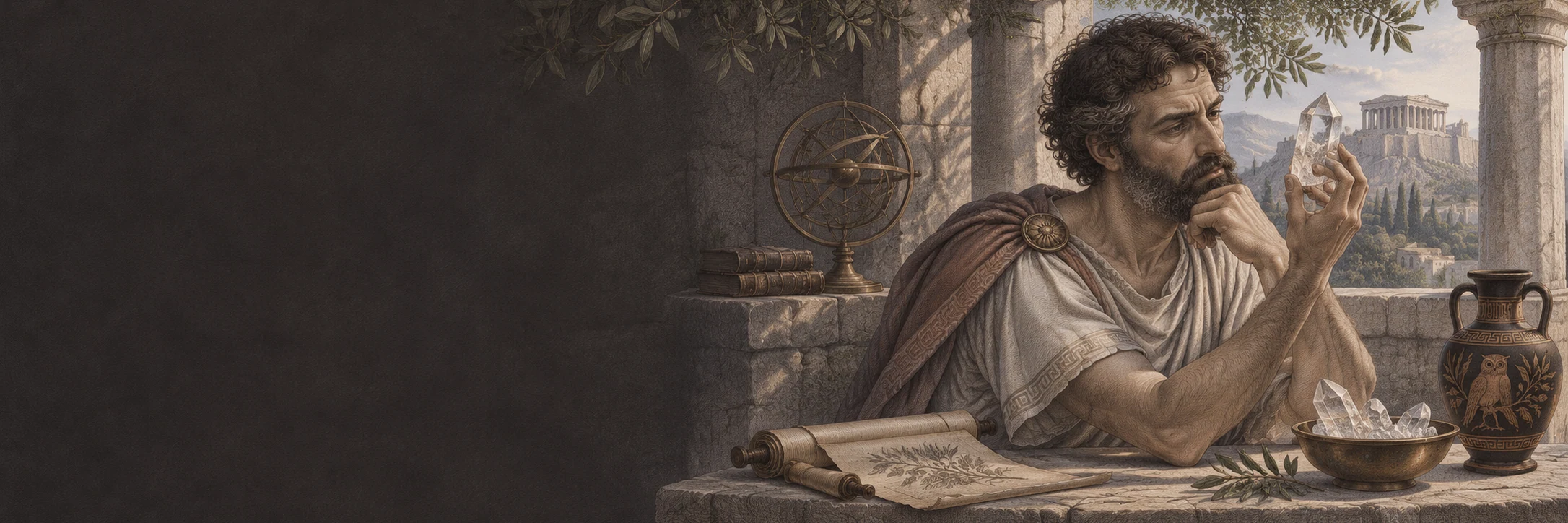
Take the shining, transparent crystal in your hands, the stone, an outflow of undying, fiery radiance.
 Cart