
 Phone: +43 677 628 66 628 |


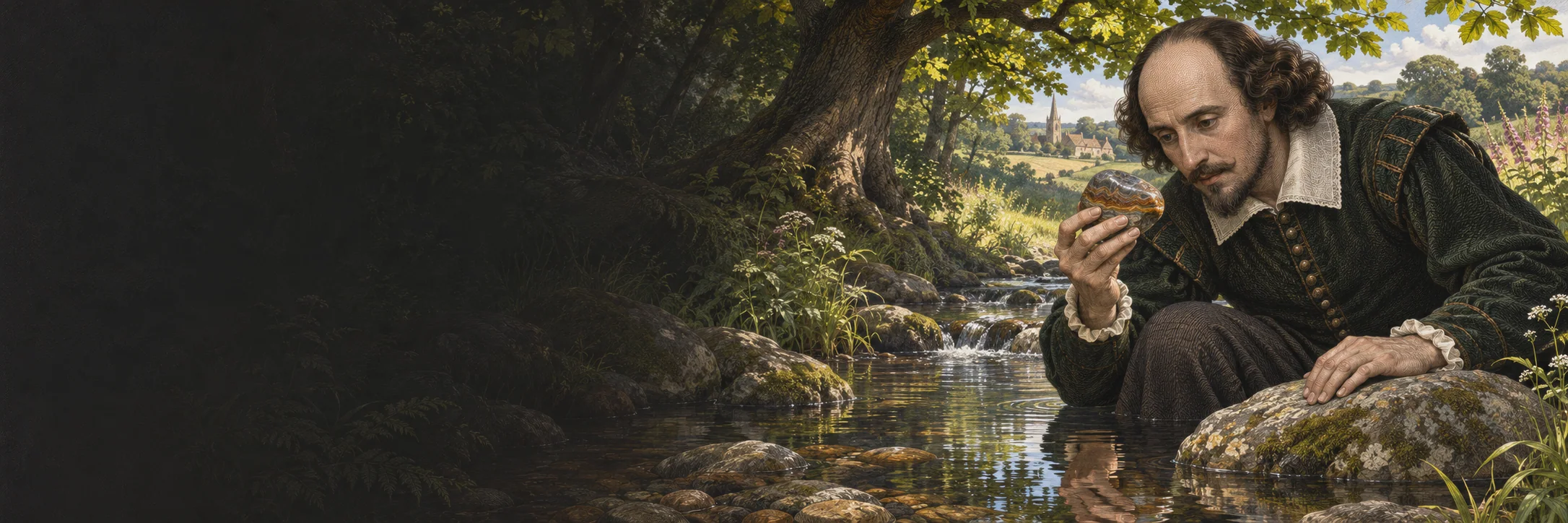
William Shakespeare
And this our life exempt from public haunt Finds tongues in trees, books in the running brooks, Sermons in stones and good in every thing.
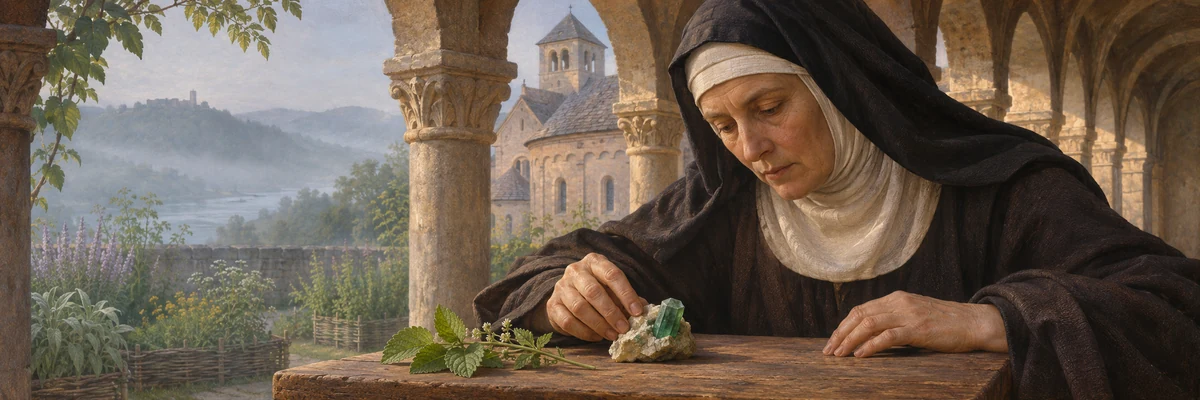
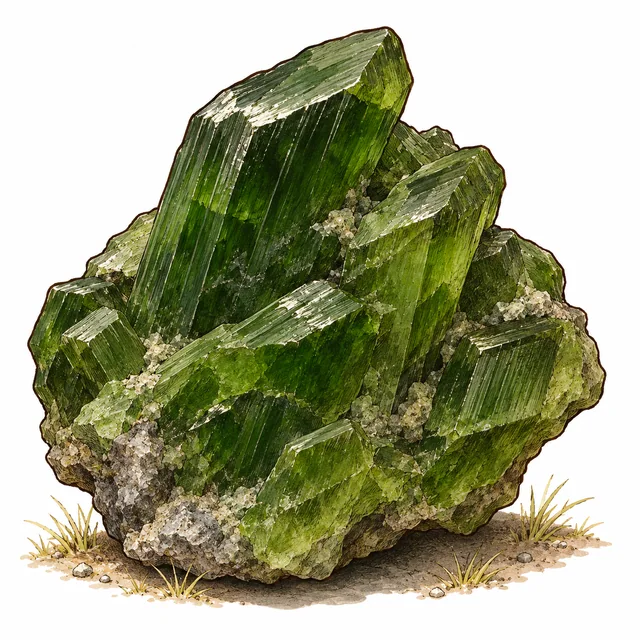
In the early morning, when the air is still cool and the sun already gives warmth, the emerald grows. This is how Hildegard of Bingen described the formation of the green stone. At that hour, she wrote, the “greening power” that enables plants to grow is especially strong. The emerald, too, owes its distinctive qualities to this power.[1]
The Benedictine nun Hildegard of Bingen (1098–1179) was then living on the Rupertsberg near Bingen. Around 1150 she had moved there with her community to live in the monastery. In the years that followed, she worked on a natural history known today as the Physica. In it she wrote about plants and animals, metals and stones. She wanted to describe the powers hidden in creation that she believed could help people.[2]
The Physica comprises nine books. The fourth is devoted to stones and contains 26 chapters. They cover emerald, sapphire and amethyst, as well as pearls, lime and ordinary fieldstones. A modern German translation of the complete work bears the title Heilsame Schöpfung – Die natürliche Wirkkraft der Dinge. The descriptions focus above all on the ways in which nature might benefit human health.[1][3]
In the hot lands of the East, Hildegard explained in the preface, rivers overflow their banks and touch mountains heated by the sun. Foam forms and hardens into gemstones. The time of day determines their colour and powers. Later floods carry them to the places where people find them.[1]
Hildegard attributed to the emerald’s greening power the ability to ease pain. The sight of it, she wrote, could bring joy. The story of Lucifer also had a place in her book of stones. After his fall, she recounted, God preserved the beauty and power of the gemstones so that people might benefit from them.[1]
Hildegard’s natural history thus belongs to a world in which bodily well-being and the order of divine creation were closely connected. In her descriptions, inherited knowledge took on a form of its own. How much of it came from experience passed on by word of mouth, and how it found its way into the texts, can only partly be determined.[2]
Hildegard’s book of stones is significant because it records medieval ideas about the nature of stones in detail. It relates their formation to their properties and to the powers attributed to them. The doctrine of the elements plays a central part in this account.[1]
These descriptions survive today thanks to manuscript copies of the book of stones. They preserved the text over the centuries. The first printed edition of the Physica also shows how much depended on those copies. When the work appeared in Strasbourg in 1533, the book of stones was missing.[4][5]
It is this manuscript tradition that makes the book of stones an important historical source today, particularly for the association of stones with the elements. Hildegard, for example, traced the power of beryl more to air and water than to fire. Such descriptions allow us to compare present-day associations with medieval ideas. Scholarly editions take account of differences between the manuscripts and help readers recognise later additions.[1] [4]
 Search
And this our life exempt from public haunt Finds tongues in trees, books in the running brooks, Sermons in stones and good in every thing.

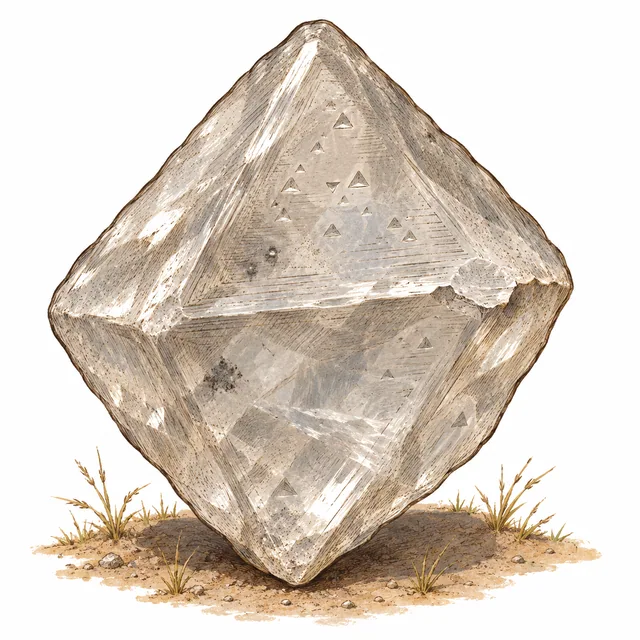
And so the diamond would have the loveliest of all these little souls, the cut diamond even one shaped and ennobled by education; loveliest of all if it is the diamond on the finger of a woman who has a still higher and lovelier soul in the head above it.
Gustav Theodor Fechner (1801–1887)
 Die Tagesansicht gegenüber der Nachtansicht · p. 87
Our translation
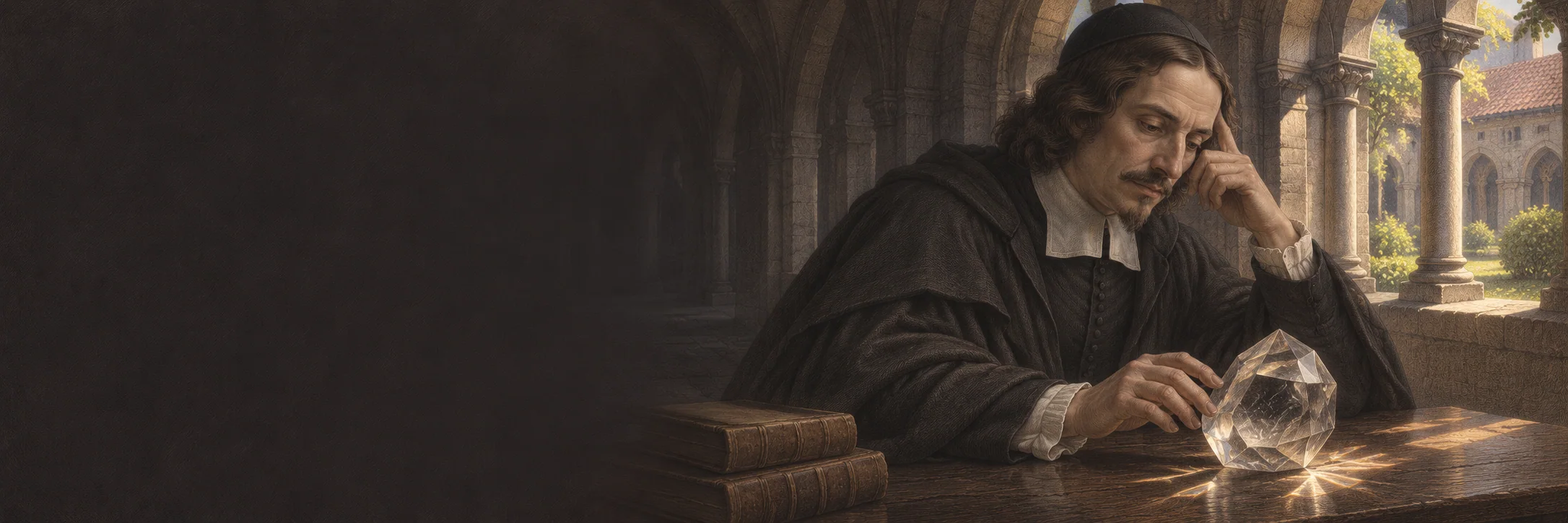
The soul is a crystal, the Godhead is its light: The body in which you live is the shrine of both.
Angelus Silesius (1624–1677)
Des Angelus Silesius Cherubinischer Wandersmann · p. 75
Our translation
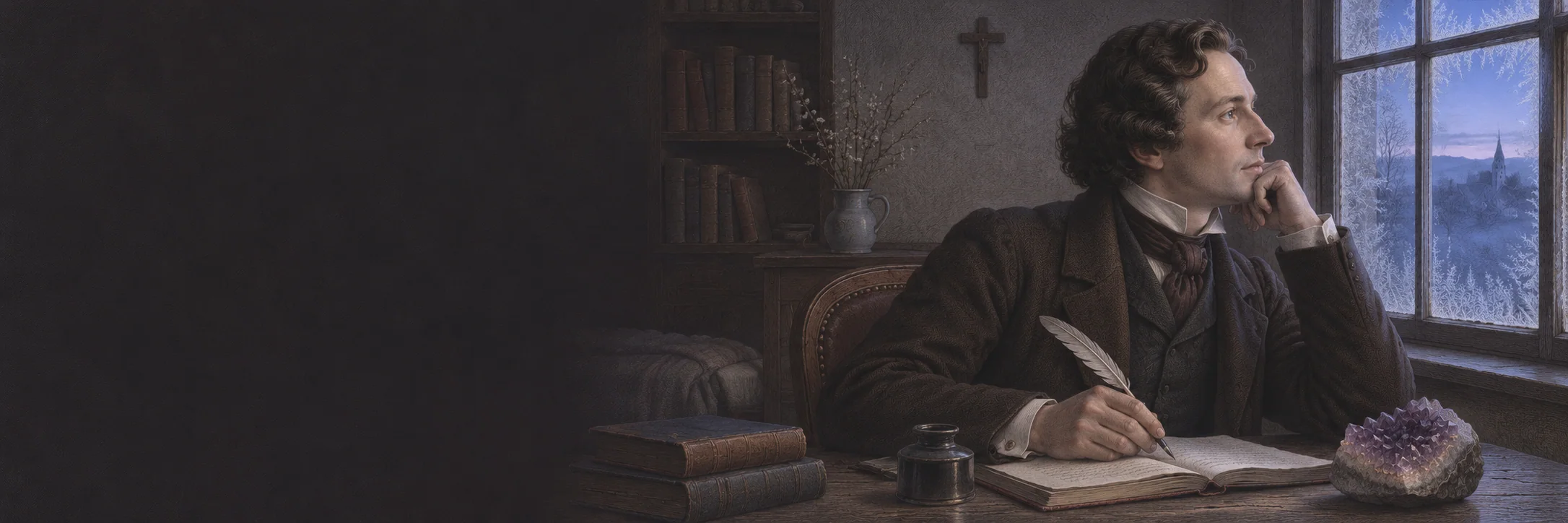
My soul now resembles a crystal That no false ray of light has yet struck; […]
[…] I am earth and air in one; part of that blue heaven which you love, and long for, is already in me […]

[…] the curse of all the heart-aches and blasted hopes had made its every stone thirsty and hungry […]
Rabindranath Tagore (1861–1941)
The Hungry Stones and Other Stories · p. 23–24
Historical English translation, 1916 · excerpt
The primordial crystal is the diamond of the earth, in which every eye delights, recognising it as the first-born son of light and gravity.
Georg Wilhelm Friedrich Hegel (1770–1831)
Vorlesungen über die Naturphilosophie · p. 280
Our translation
I walked on, waking the living, warm breaths; and the jewels looked, and wings rose without a sound.
I am beautiful, mortals, like a dream of stone, And my breast, on which each in turn has bruised himself, Is made to inspire in the poet a love As eternal and mute as matter.
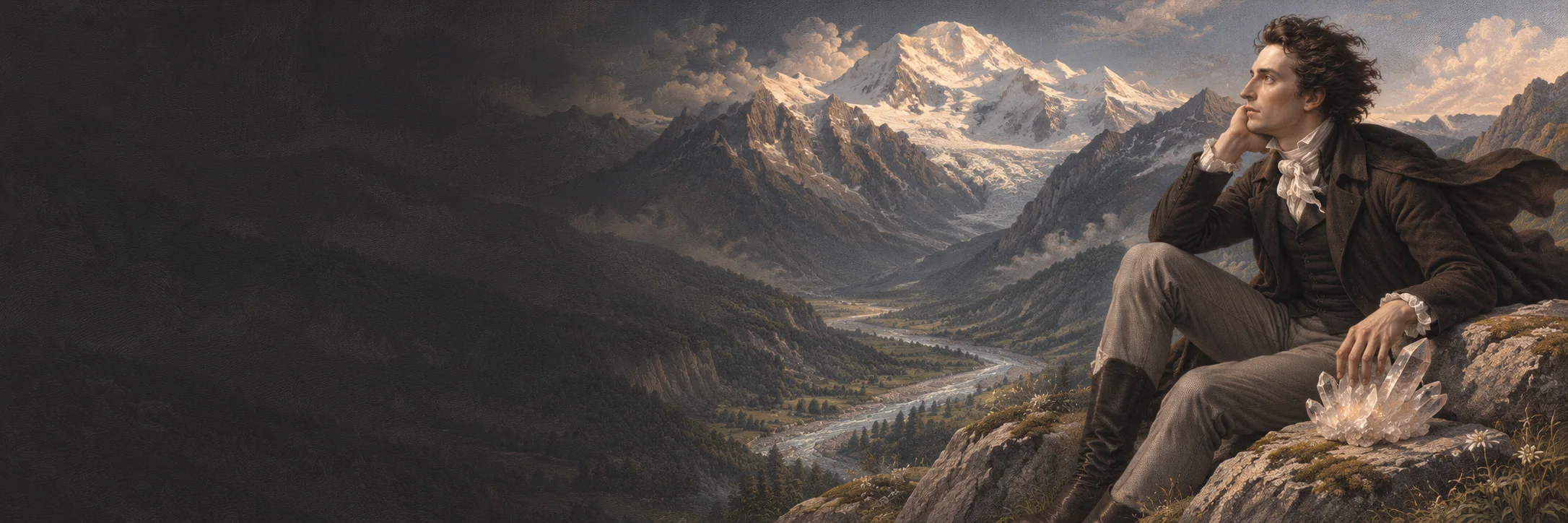
The secret strength of things Which governs thought, and to the infinite dome Of heaven is as a law, inhabits thee!
Percy Bysshe Shelley (1792–1822)
The Poetical Works of Percy Bysshe Shelley, III · p. 33
Original wording
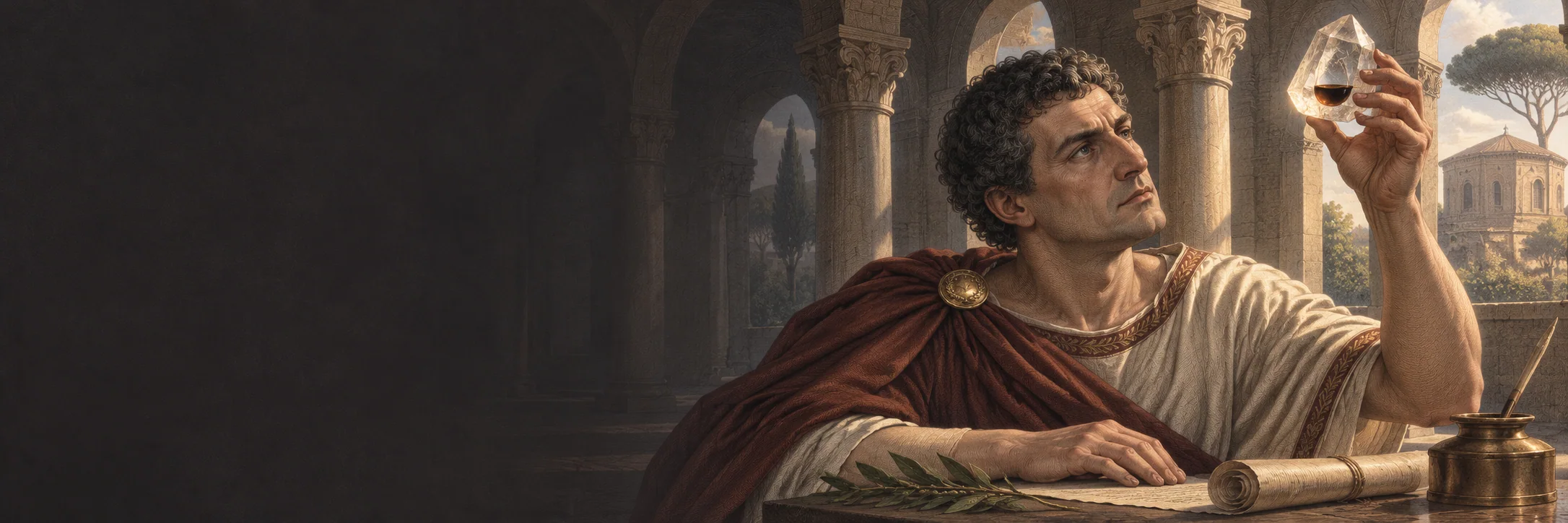
Marvellous stone and marvellous water! With good reason it surpasses rivers and stones, for it flows and is a stone.

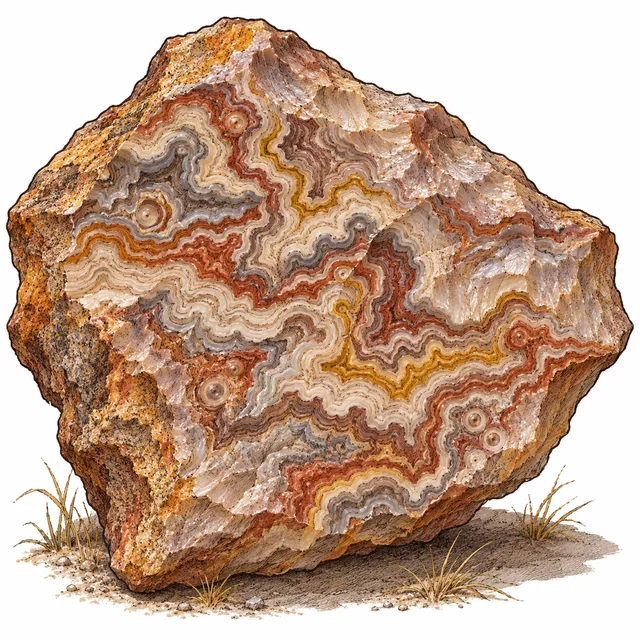
For he is said to have owned an agate in which the nine Muses and Apollo playing the lyre could be seen, not by art but because the markings naturally distinguished themselves so well that even the individual Muses had their own attributes.
Pliny the Elder (23/24–79)
C. Plini Secundi Naturalis historiae libri XXXVII, V · p. 382
Our translation
 Cart