
 Phone: +43 677 628 66 628 |


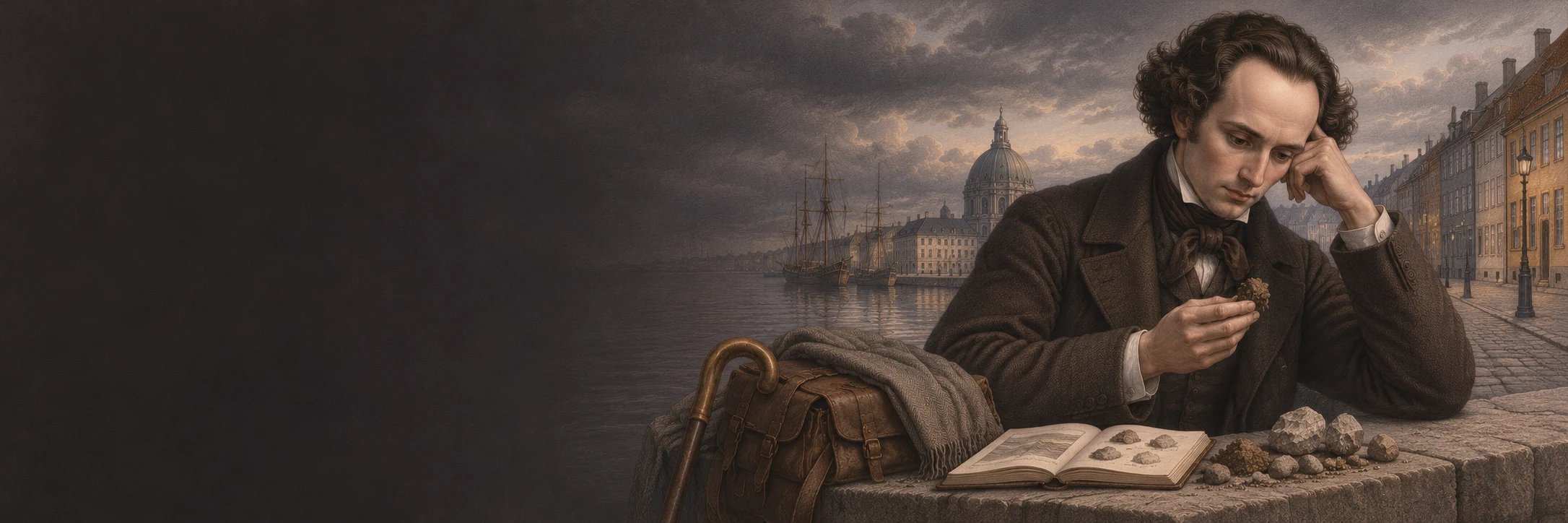
Friedrich Hebbel
Has everything that surrounds us as an element at rest, as earth and stone, already been alive?
Friedrich Hebbel (1813–1863)
 Friedrich Hebbels Tagebücher, erster Band · p. 295
Excerpt. Our translation
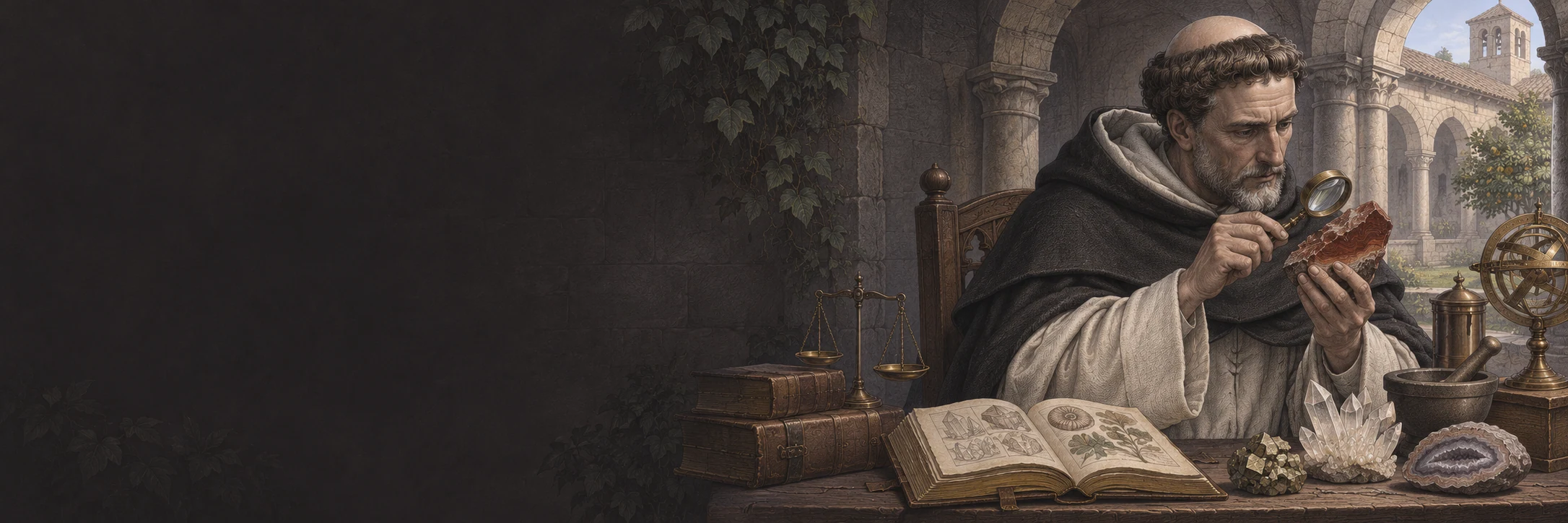
Albertus Magnus (c. 1200–1280), a German Dominican friar and natural philosopher, opens his investigation of gemstones with a problem of explanation. Saying that a stone possesses a particular power gives a name to an observation or a report. What is it about this particular stone that would make it behave in this way? In the second book of his work on minerals Albert weighs several answers before offering his own.
Having rejected all these views, we say with Constantine and certain others that the power of a stone arises from its very kind and substantial form.
– Albertus Magnus, De mineralibus, 1519, unpaginated.[1]
Hearing the word “form,” someone holding a gem might think of the outline that a finger can trace. Albert’s example points elsewhere. He asks his reader to consider the human capacity for thought. Taking the elements of a body separately would scarcely explain how a human being is able to think. In the case of the stone he likewise seeks something that makes its material a whole of a particular kind. His term for this is “substantial form.” The question of whether a specimen is round or angular would take the reader only a little way towards his meaning.
A familiar difficulty emerges as the discussion proceeds. Even specimens assigned to the same kind can differ. For Albert the particular material helps determine how fully a capacity can act in it. His account can therefore recognise both a kind held in common and differences between specimens. Towards the end he even distinguishes what a stone still looks like from what it can still do. Colour and outline might remain familiar to the eye longer than the property whose cause set the whole inquiry in motion.
 Search
Has everything that surrounds us as an element at rest, as earth and stone, already been alive?
Friedrich Hebbel (1813–1863)
Friedrich Hebbels Tagebücher, erster Band · p. 295
Excerpt. Our translation
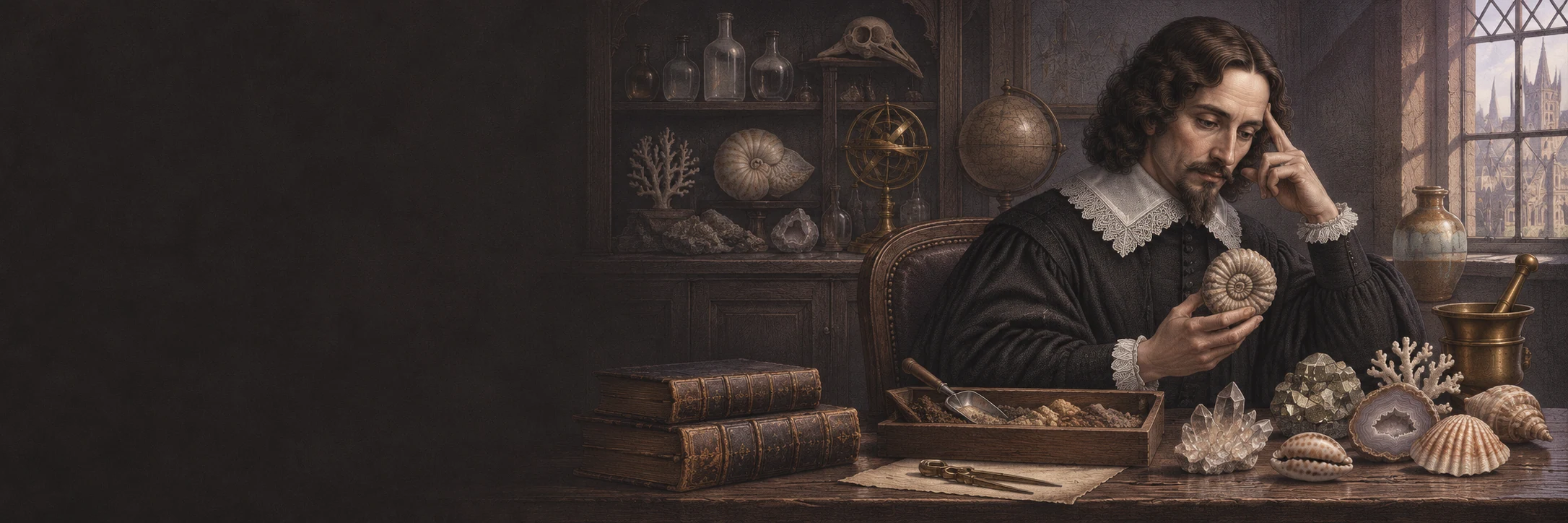
For, though Moses have left no mention of minerals, nor made any other description than suits unto the apparent and visible creation, yet is there, unquestionably, a very large class of creatures in the earth, far above the condition of elementarity.
Thomas Browne (1605–1682)
The Works of Sir Thomas Browne, vol. I, containing four books of Vulgar Errors · p. 109
Original wording
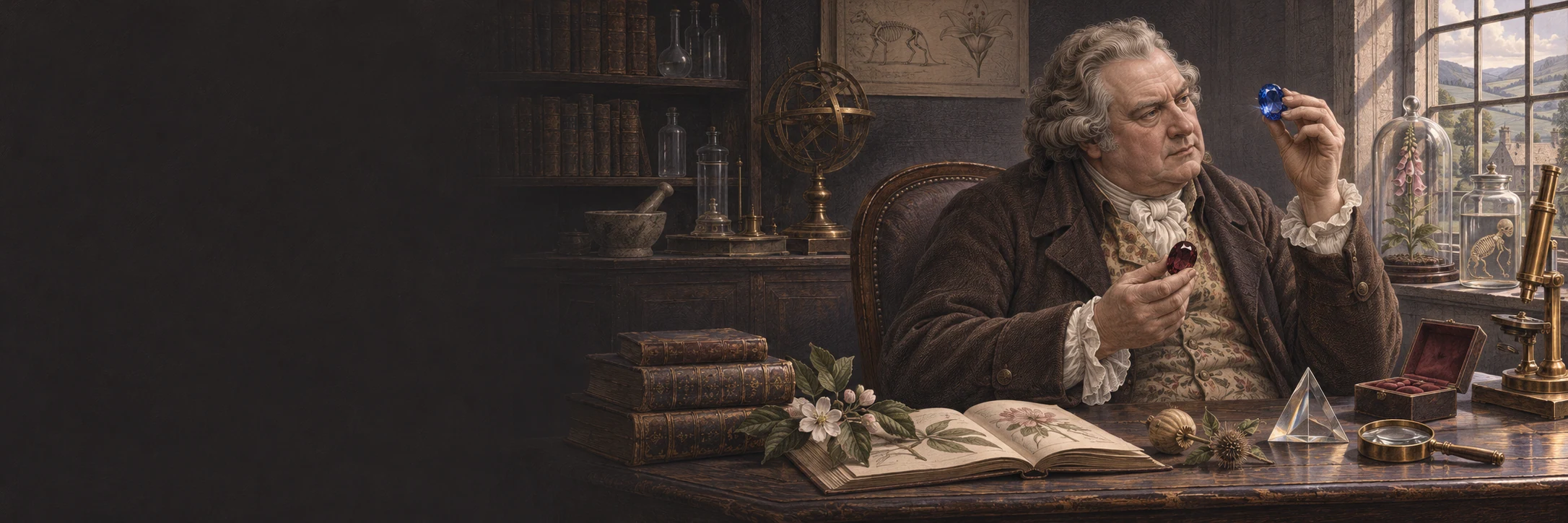
Blue lambent light around the Sapphire plays, Bright Rubies blush, and living Diamonds blaze.
A snow-crystal is the same to-day as when the first snows fell.
A crystal is an entire celestial body. It is determined by central forces, which are in turn awakened and guided by forces that divide, by forces of light.
Lorenz Oken (1779–1851)
Lehrbuch der Naturphilosophie. Zweite umgearbeitete Auflage · p. 82
Our translation
Eleventhly, I also brought it to some kind of Glimmering Light, by taking it into Bed with me, and holding it a good while upon a warm part of my Naked Body.

The hand works ceaselessly and with care, the heart has withered to all that is human, the hard stone has begun to feel;
To burn always with this hard, gemlike flame, to maintain this ecstasy, is success in life.
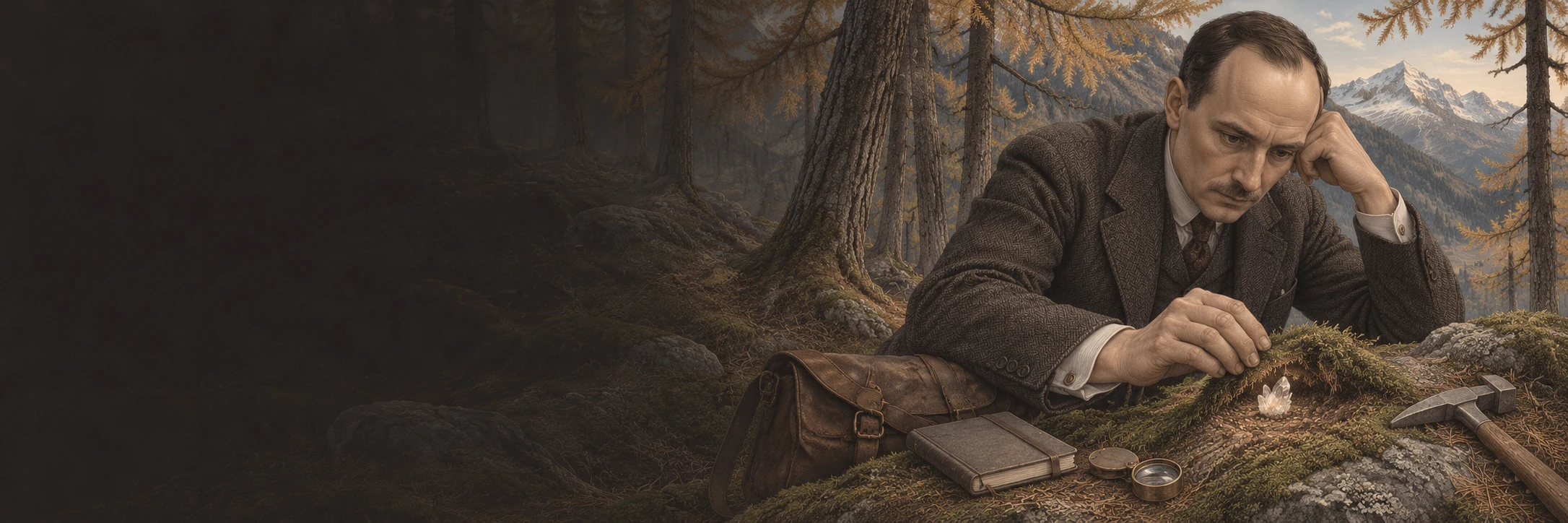
A fairy-tale forest of old larch trunks, covered in fine green hair, stood on an emerald slope. Beneath the moss violet and white crystals might be alive.
Robert Musil (1880–1942)
Grigia. Novelle. Mit sechs Radierungen von Alfred Zangerl · p. 16
Our translation
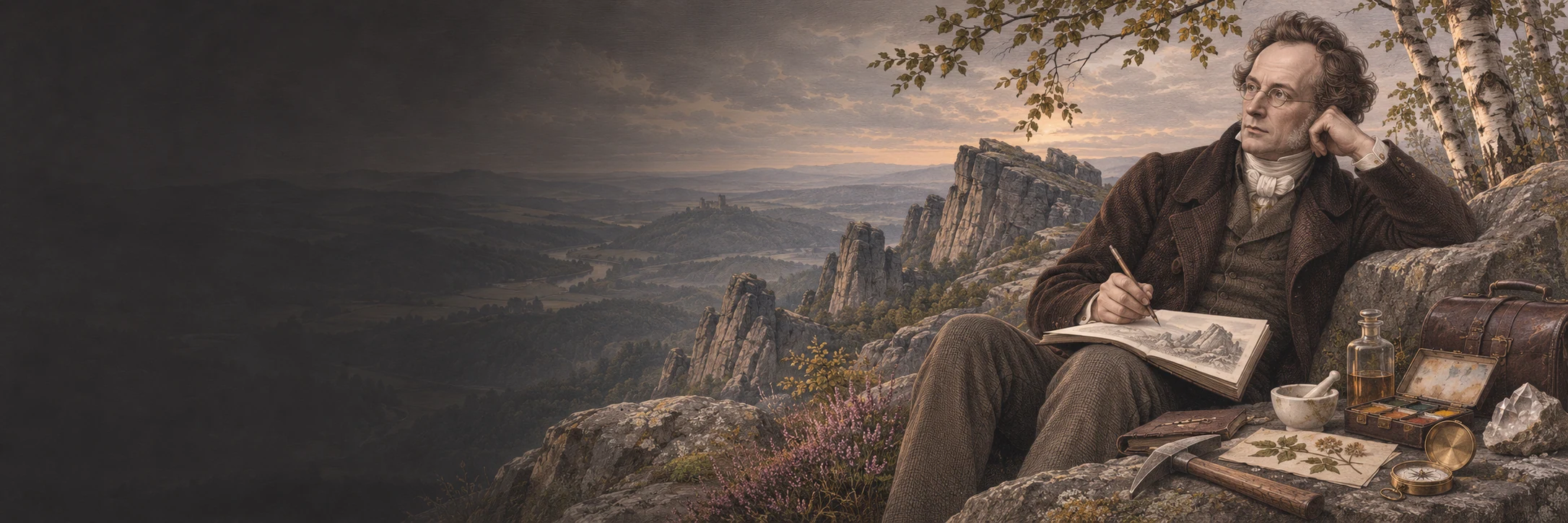
The first thing within the mass of the solid earth that foreshadows and prepares the way for the individual life of creatures later to inhabit its surface is the crystal.
Carl Gustav Carus (1789–1869)
Natur und Idee oder das Werdende und sein Gesetz · p. 178
Our translation
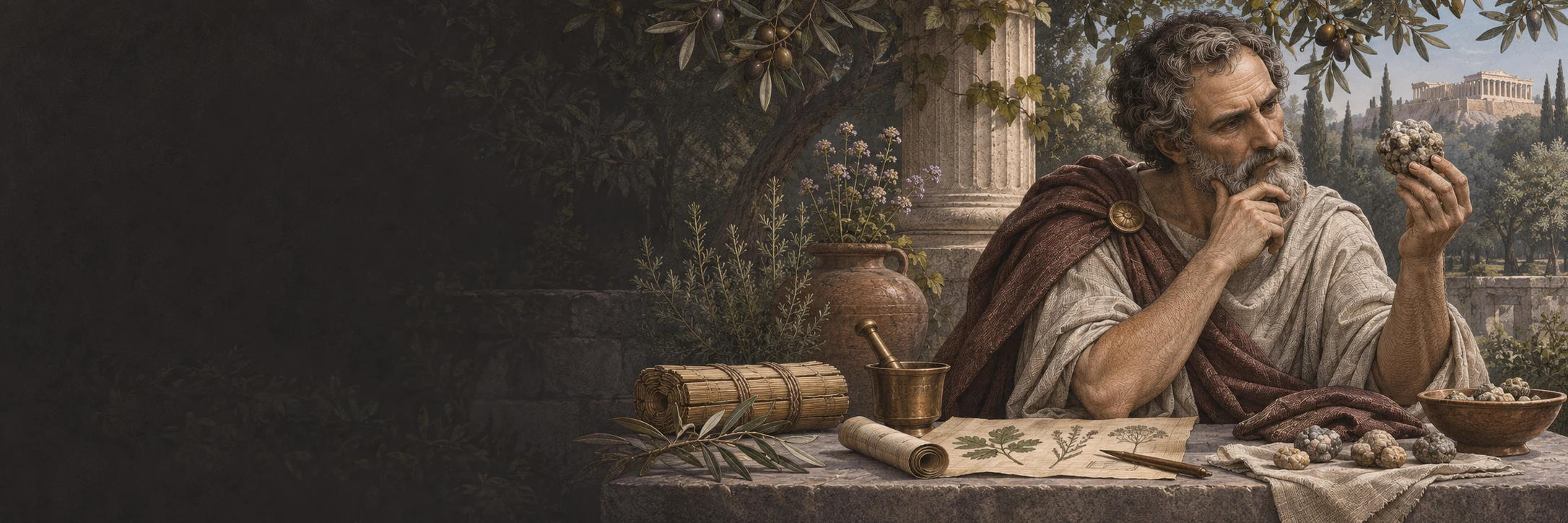
The greatest, however, and most wonderful of all the Qualities of Stones is that (if the Accounts of it are true) of those which bring forth young.
Theophrastos von Eresos (c. 371–c. 287 BCE)
Über die Steine · 1774 · p. 27
English translation by John Hill
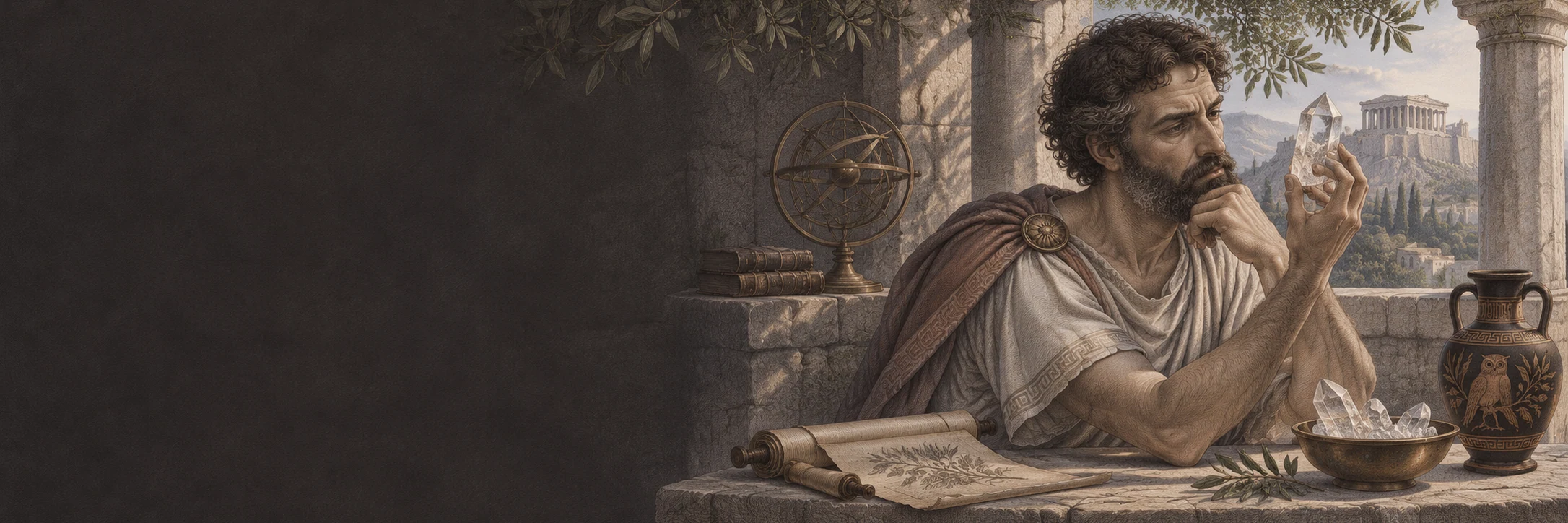
Take the shining, transparent crystal in your hands, the stone, an outflow of undying, fiery radiance.
 Cart