
 Phone: +43 677 628 66 628 |


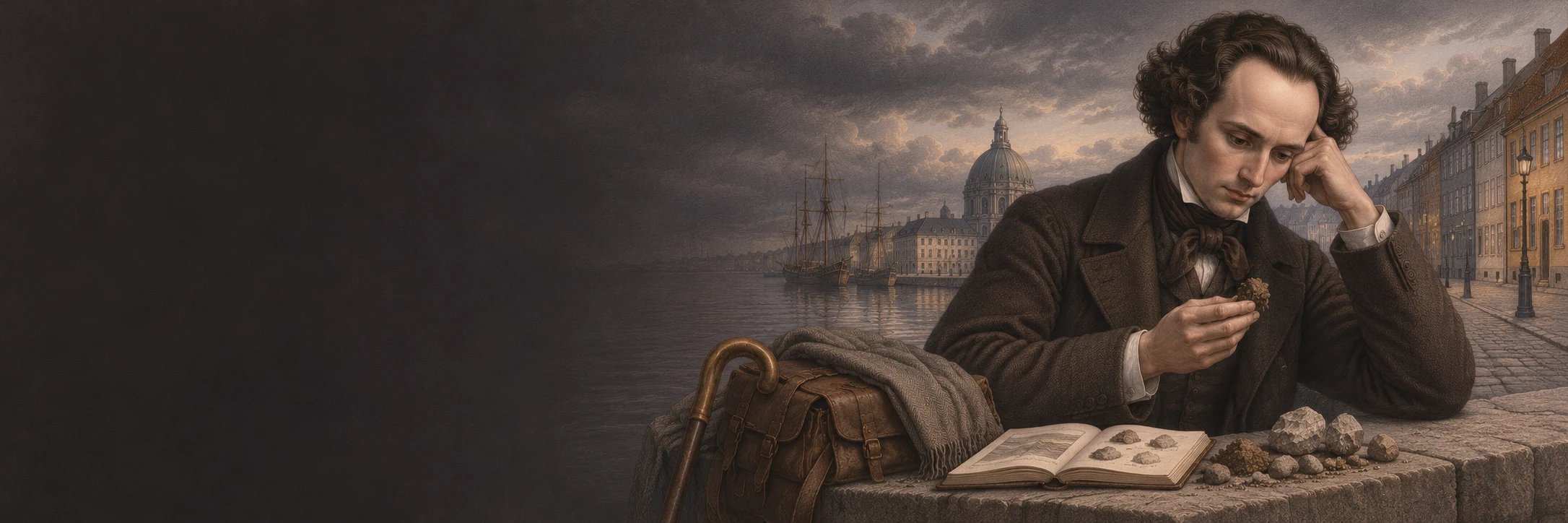
Friedrich Hebbel
Has everything that surrounds us as an element at rest, as earth and stone, already been alive?
Friedrich Hebbel (1813–1863)
 Friedrich Hebbels Tagebücher, erster Band · p. 295
Excerpt. Our translation

Wallace Stevens (1879–1955) was an American poet. In the last section of The Rock, a succession of lines keeps returning to the rock. At first it is a particular grey thing in a human life. A few lines later it mirrors the planets. Its colour changes under the light that falls on it in the evening. By the time Stevens calls the rock a dwelling for the whole, it has already changed several times before our eyes.
The rock is the habitation of the whole,
Its strength and measure […]– Wallace Stevens, The Rock, 1950 · edition 1954, The Rock, III, Forms of the Rock in a Night-Hymn, p. 528.[1]
A dwelling usually encloses something smaller than itself. Here one has the strange prospect of finding the world in something one could reach on a walk and touch with a hand. The next expression helps make sense of this. A rock can serve as a measure. Stand at its foot and it towers over you. Look across from the hillside opposite and it seems quite small. The change of distance alters a part of the world within which you locate yourself.
Stevens takes the thought from a point A to a point B. Each position can provide the beginning of another view. The solid stone thus acquires an unexpected task. In attending to it one can discover how things arrange themselves in relation to each other whenever somebody looks from a particular place. Stevens calls these verses a night hymn. As the outlines of a landscape fade, what the eye can still hold on to becomes a question of some urgency.
 Search
Has everything that surrounds us as an element at rest, as earth and stone, already been alive?
Friedrich Hebbel (1813–1863)
Friedrich Hebbels Tagebücher, erster Band · p. 295
Excerpt. Our translation
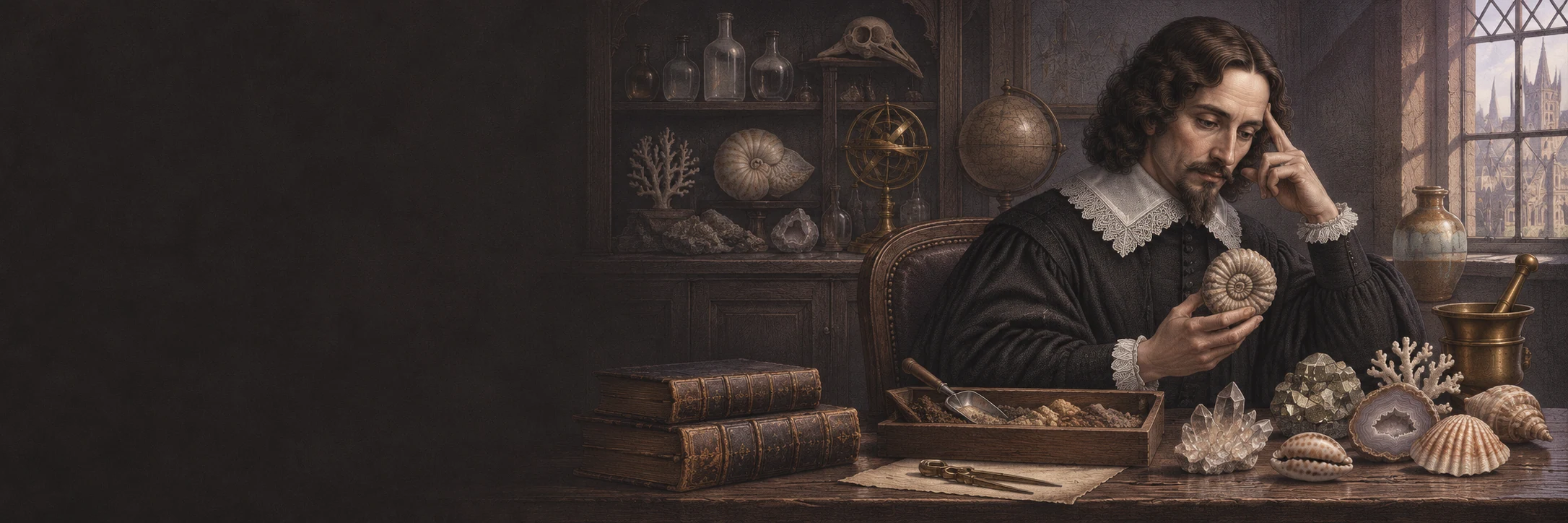
For, though Moses have left no mention of minerals, nor made any other description than suits unto the apparent and visible creation, yet is there, unquestionably, a very large class of creatures in the earth, far above the condition of elementarity.
Thomas Browne (1605–1682)
The Works of Sir Thomas Browne, vol. I, containing four books of Vulgar Errors · p. 109
Original wording

Blue lambent light around the Sapphire plays, Bright Rubies blush, and living Diamonds blaze.
A snow-crystal is the same to-day as when the first snows fell.
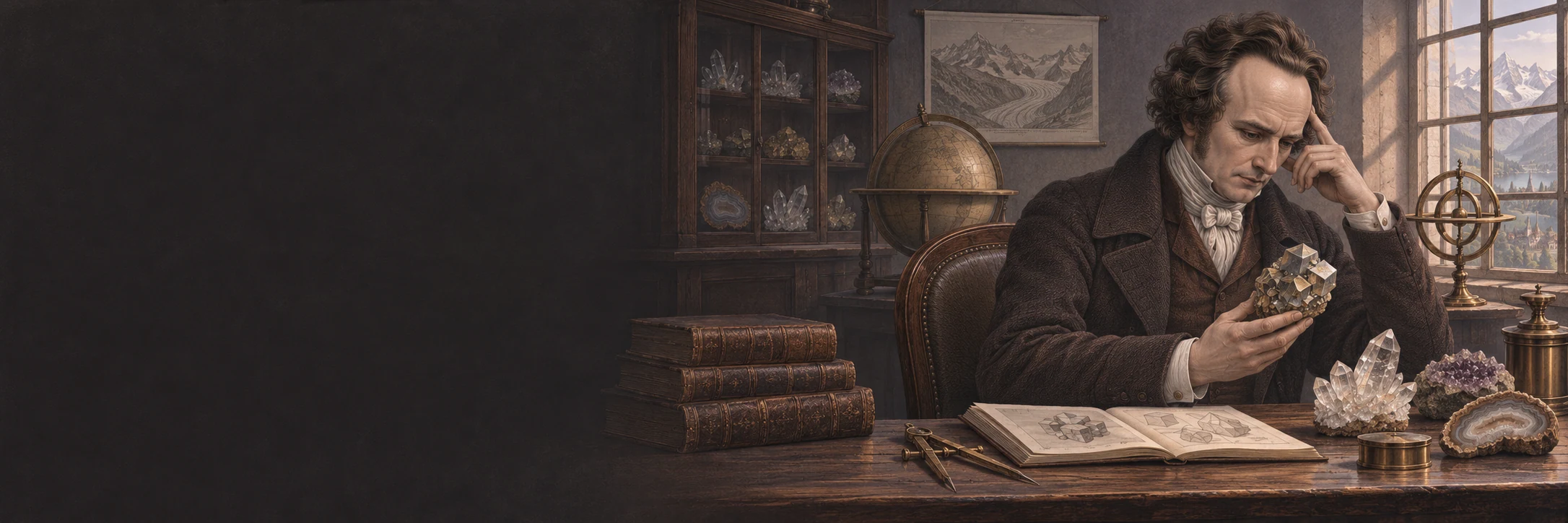
A crystal is an entire celestial body. It is determined by central forces, which are in turn awakened and guided by forces that divide, by forces of light.
Lorenz Oken (1779–1851)
Lehrbuch der Naturphilosophie. Zweite umgearbeitete Auflage · p. 82
Our translation
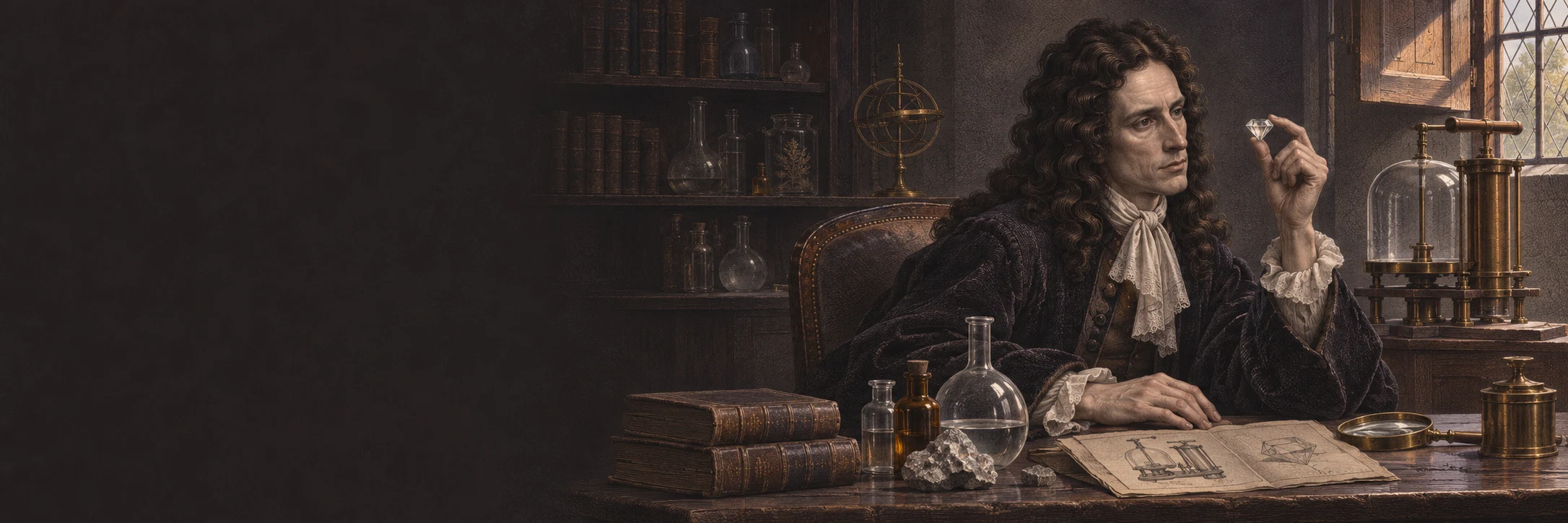
Eleventhly, I also brought it to some kind of Glimmering Light, by taking it into Bed with me, and holding it a good while upon a warm part of my Naked Body.

The hand works ceaselessly and with care, the heart has withered to all that is human, the hard stone has begun to feel;

To burn always with this hard, gemlike flame, to maintain this ecstasy, is success in life.
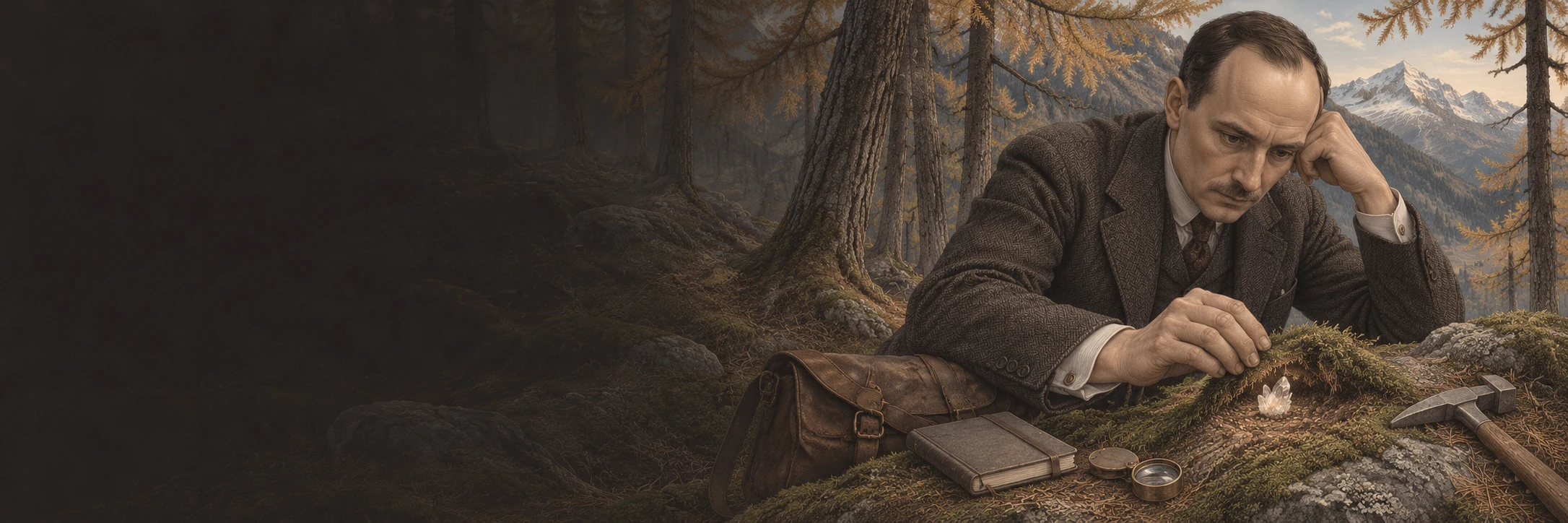
A fairy-tale forest of old larch trunks, covered in fine green hair, stood on an emerald slope. Beneath the moss violet and white crystals might be alive.
Robert Musil (1880–1942)
Grigia. Novelle. Mit sechs Radierungen von Alfred Zangerl · p. 16
Our translation
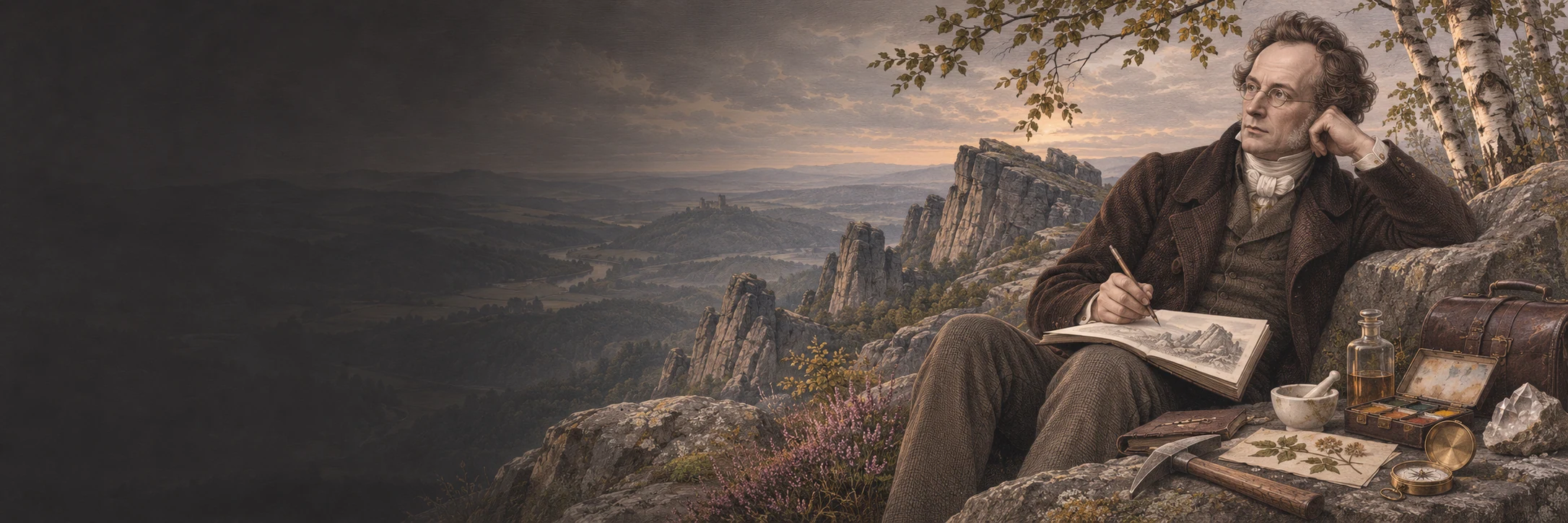
The first thing within the mass of the solid earth that foreshadows and prepares the way for the individual life of creatures later to inhabit its surface is the crystal.
Carl Gustav Carus (1789–1869)
Natur und Idee oder das Werdende und sein Gesetz · p. 178
Our translation
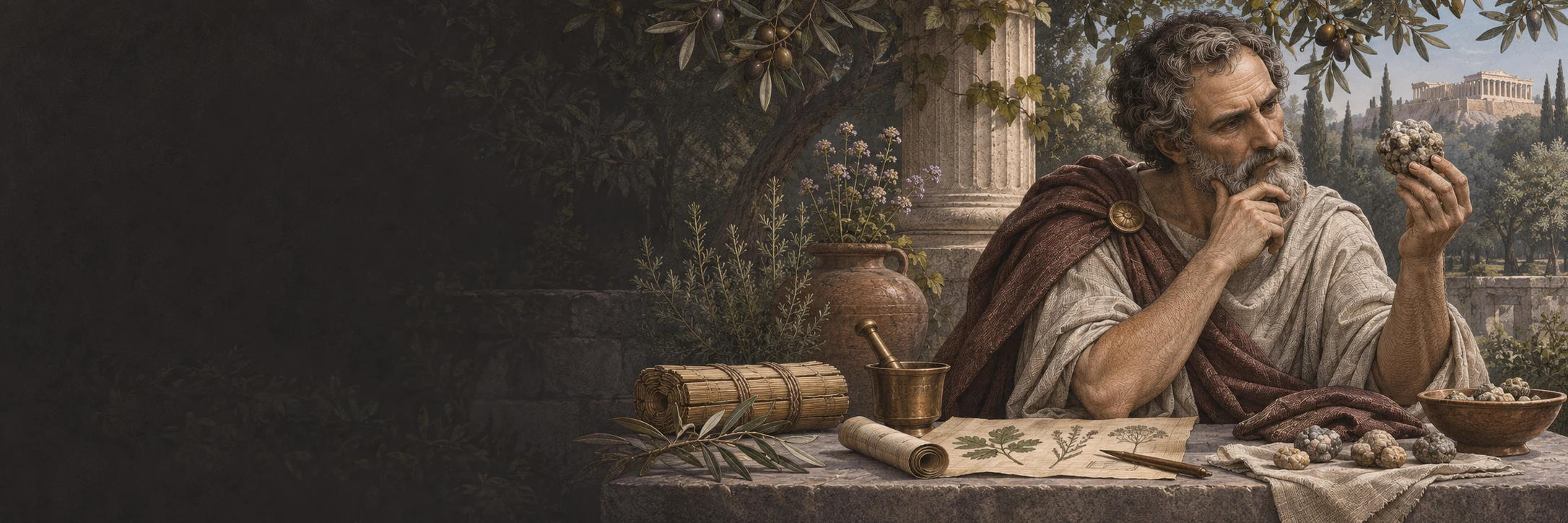
The greatest, however, and most wonderful of all the Qualities of Stones is that (if the Accounts of it are true) of those which bring forth young.
Theophrastos von Eresos (c. 371–c. 287 BCE)
Über die Steine · 1774 · p. 27
English translation by John Hill
Take the shining, transparent crystal in your hands, the stone, an outflow of undying, fiery radiance.
 Cart