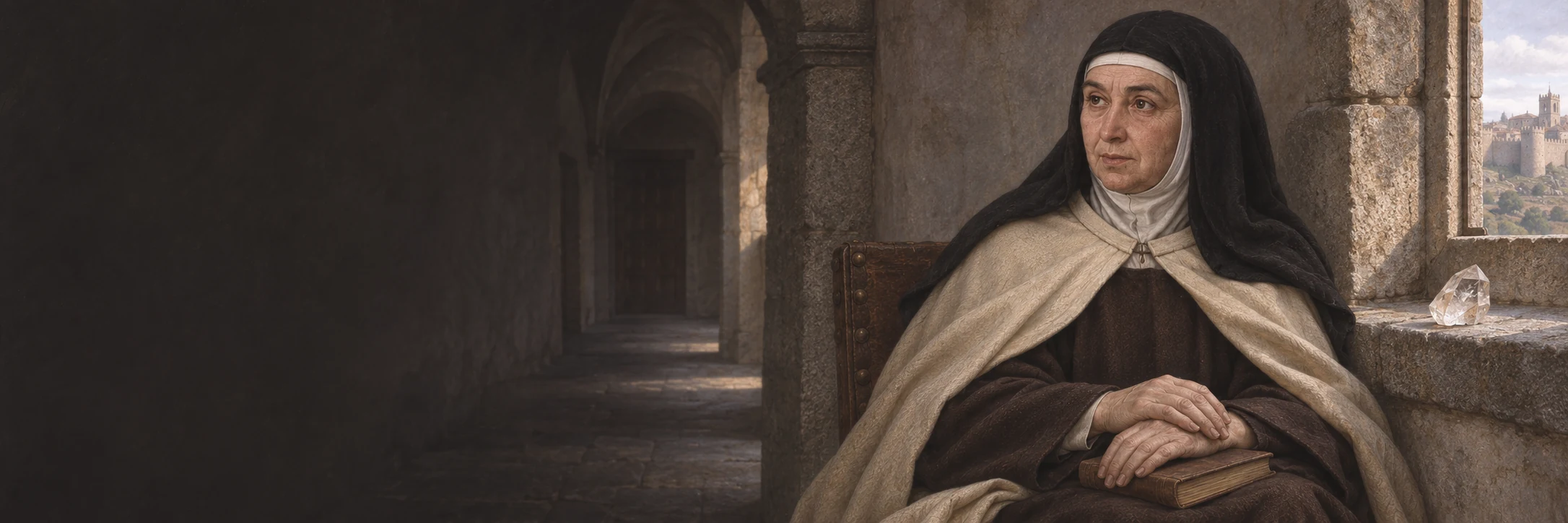
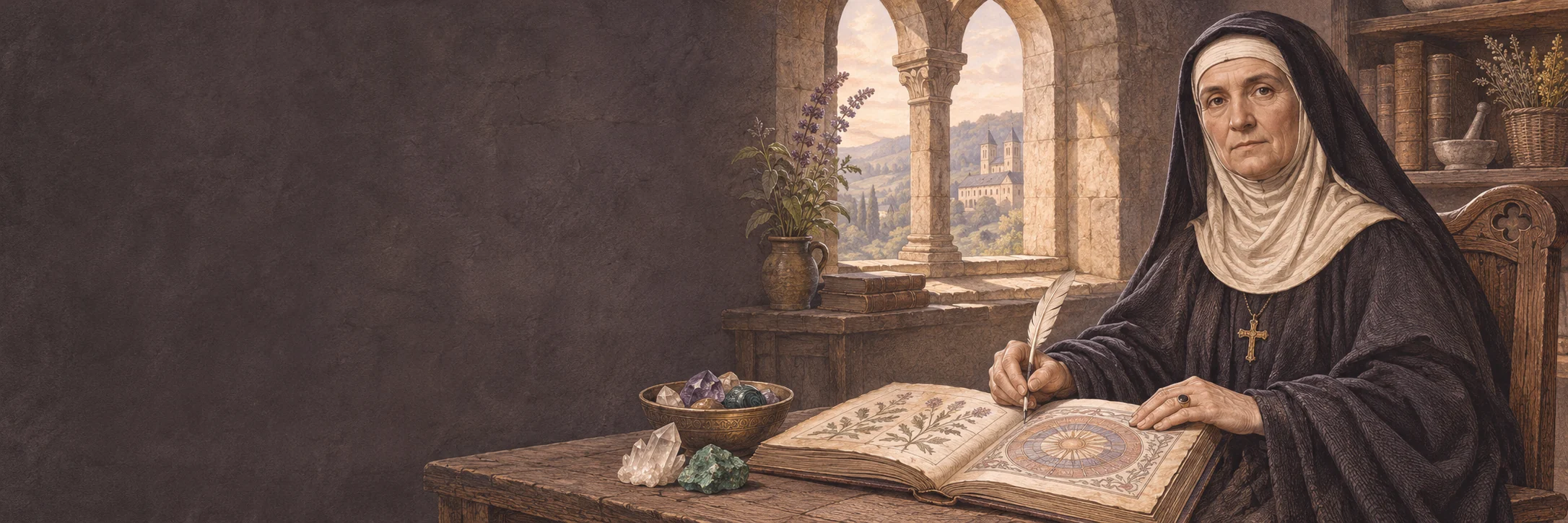
Teresa of Ávila (1515–1582) was a Spanish Carmelite nun, writer and mystic. In her Interior Castle, she describes the soul as a space of great beauty and breadth. Diamond and clear crystal give this idea a visible form: for her, a depth lies within the human person that becomes accessible through attentive inward turning.[1]
A castle of clear crystal
Teresa begins with a difficulty in writing. She is searching for words to describe the inner life and asks God to speak through her. The image of a castle with many chambers takes shape. The complete opening passage reads:
“Today, as I was asking our Lord to speak through me, because I could think of nothing to say and did not know how to begin carrying out this task in obedience, the thought I shall now describe occurred to me, so that I might begin with some foundation: to consider our soul as a castle made entirely of a single diamond or very clear crystal, in which there are many chambers, just as there are many dwellings in heaven. For if we consider it well, sisters, the soul of the righteous is nothing other than a paradise in which he says he takes his delight. What, then, do you think the chamber must be like in which a king so powerful, so wise, so pure and so filled with every good takes his delight? I can find nothing with which to compare the great beauty of a soul and its great capacity.”
Teresa of Ávila, The Interior Castle, First Mansions, chapter I, opening; our translation from the Spanish edition of 1861, p. 435, without omissions within this passage.[1]
The solidity of diamond and the clarity of crystal are joined here to an interior that can be inhabited. The soul has many rooms, with the chamber in which Teresa places the intimate encounter between God and the human person at its centre. Her comparison reveals something precious that has yet to be explored. Attention confined to outward appearances remains at the threshold of the possibilities within.
Entering the inner space
For Teresa, it is possible to remain a stranger to oneself. We know that we have a soul, yet seldom consider its value or who dwells within it. Entering the castle therefore begins with a deliberate turning of attention. Teresa calls prayer and reflection its doorway: what matters is awareness of whom one is addressing and what one is asking for.[1]
In the following chapter she returns to the image of crystal. A dark cloth can prevent the light from working visibly in the crystal, while the sun itself loses none of its brightness. Within the Christian setting of her text, the image represents the darkening effect of sin and God’s enduring presence within. The clarity of crystal thus makes a relationship tangible: between light that is present and openness to receiving it.[1]
In this way of thinking, self-knowledge reaches beyond merely circling around oneself. Teresa connects it with humility and with attention to God. The soul should consider its rooms in their spaciousness rather than confine itself to a single corner. The image of crystal invites us to recognise an inner space whose possibilities can easily remain hidden through habit and inattention.

 Phone: +43 677 628 66 628 |


 Search
 The Problem of Increasing Human Energy · 1900 · p. 180
 Cart